Rethinking Time in Schools: From Rigid Blocks to Meaningful Learning
I recently visited two different schools on back-to-back days, and I was struck by the stark contrast in the schedules and the impact on the learning environment. In the first school, the day was broken up into short blocks of reading, math, intervention, recess, lunch, and science. This type of schedule is often a result of trying to fit it all in.
The second school had a different approach to learning anchored in connection and interdisciplinary, deep learning. As a result, their schedule had time to connect through morning meetings, ELA, math, and a long block of project time that included WIN (what I need) time for students to complete their work, read a book, meet with the teacher one on one, or whatever else they needed to achieve their goals.
As Annie Dillard highlights, “How we spend our days is, of course, how we spend our lives.” Our schedules show what we value and prioritize, and they can profoundly impact the depth, quality, and relevance of student learning experiences. When the day is rigidly divided into short 30-45-minute blocks, we prioritize efficiency over engagement. These structured time blocks often emphasize task completion, remediation, and test preparation, leaving little room for meaningful exploration or inquiry.
When students are shuffled from one task to another in rapid succession, they often lack the time needed to fully process or apply their learning in a real-world context. This prevents them from internalizing knowledge or seeing how it connects to their interests or future goals. Without opportunities to engage in authentic tasks or applications—like solving complex problems, collaborating on projects, or exploring creative solutions—students may struggle to find relevance in their learning.
As a result, the education experience becomes more about covering content and less about cultivating curiosity, critical thinking, and a love of learning. This diminishes engagement and fails to reach the depth of understanding and personal connection essential for meaningful education.
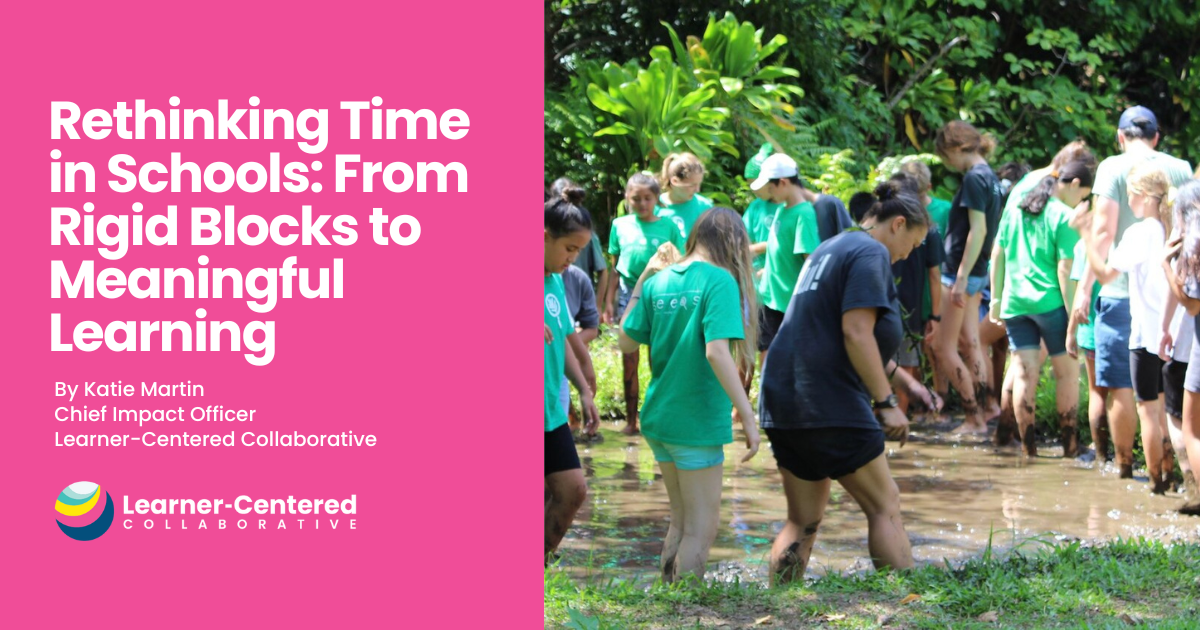
Contrast this with a school that intentionally designs its schedule to foster connection, real-world learning, and personalized support. At the School for Examining Essential Questions of Sustainability (SEEQS), in Honolulu, time is a tool to cultivate meaningful experiences that inspire learners to thrive.
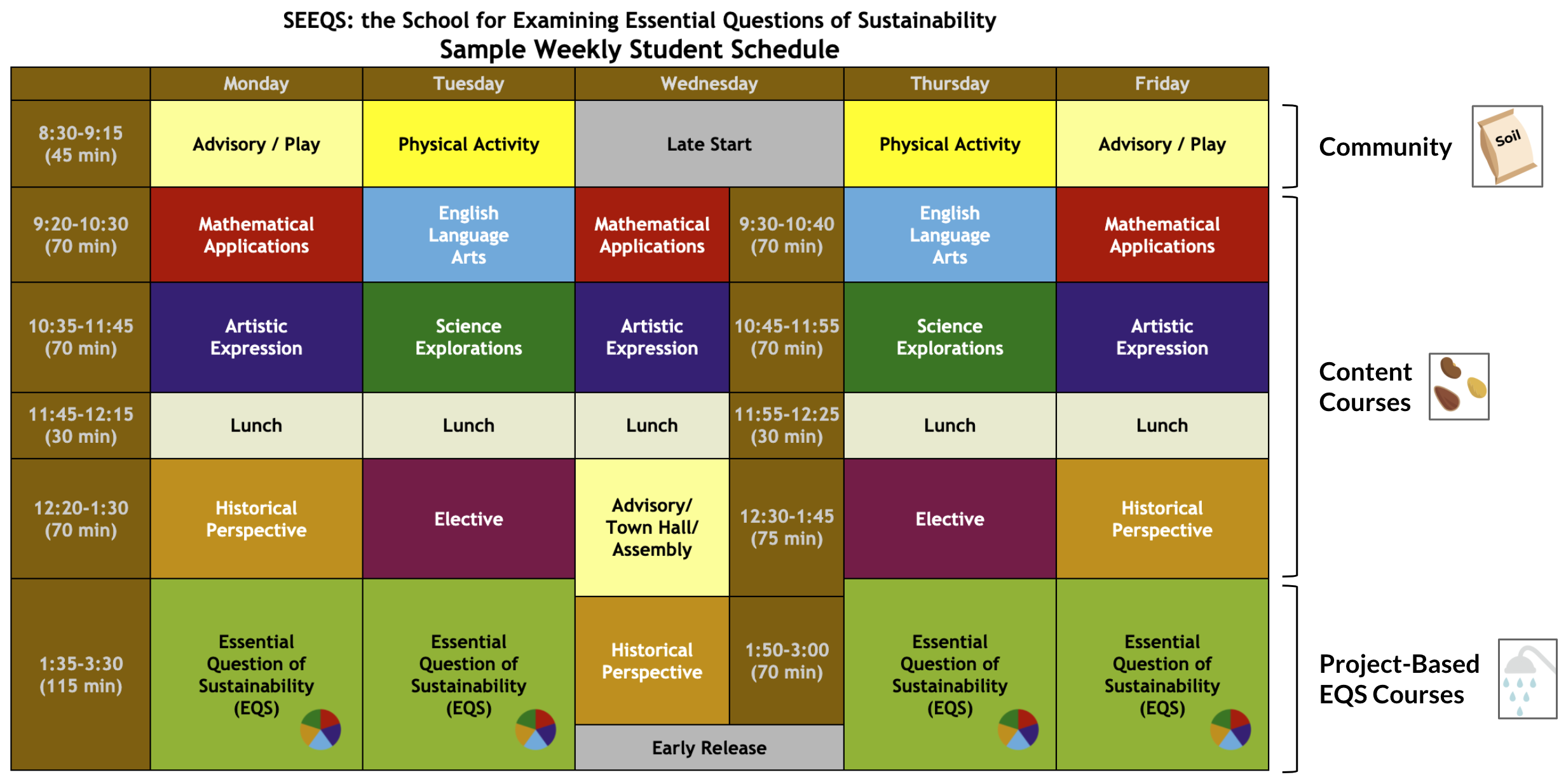
SEEQS’ schedule is intentionally designed to make time and space for learners to come together in community, tackle real-world challenges, build essential skills and competencies, and get personalized support.
Their approach begins with creating opportunities for students to build a sense of belonging. Morning meetings, advisory periods, or unstructured collaboration time allow learners to connect with peers and educators, establishing a foundation of trust and community.
The heart of the day centers around authentic, interdisciplinary projects. Students work on real-world challenges that integrate critical skills like reading, writing, and communication. For example, a group of middle school students recently designed a community garden proposal, which involved conducting research, drafting persuasive letters to local officials, and presenting their findings at a city council meeting. This project didn’t just teach academic standards—it embedded them into meaningful, purpose-driven work that empowered students to see themselves as problem-solvers and change-makers.
Compare this to a school where students move from one rigidly-timed class to the next, often without opportunities to connect deeply with peers or engage in work that feels relevant to their lives. In this model, the focus is frequently on remediation: reteaching isolated skills rather than helping students apply those skills in meaningful contexts. Students may spend time completing worksheets or answering multiple-choice questions, with little opportunity to demonstrate their learning in authentic ways.
While the goal may be to ensure progress, the lack of flexibility and focus on rote tasks can disengage learners and leave them feeling like passive participants in their education.
Read More: 6 School Design Elements That Will Bring Your Learner-Centered Vision to Life
Why Rethinking Time Matters
The difference between these two approaches to time highlights the power of intentionally designing school schedules to prioritize what matters most. By prioritizing connection in small learning communities, real-world application of learning, and personalization, schools can create environments where students are engaged and empowered to lead their own learning journeys.
As we rethink how we spend our time in schools, let’s ask ourselves: Are we using time to foster compliance or curiosity? Are we building systems that prioritize task completion, or are we creating space for students to thrive as independent, competent learners? The answers to these questions will shape the future of education and the opportunities we create for every student to succeed.
Interested in partnering with us to redesign your school schedule or do an entire school redesign? Connect with us at collaborate@learnercentered.org