
Blog
Why Community Schools and Secondary Redesign Belong Together
California has made an unprecedented investment in community schools, which often include four evidence-informed programmatic features that are aligned and integrated into high-quality, rigorous teaching and learning practices and environments: Integrated support services; Family and community engagement; Collaborative leadership and practices for educators and administrators; and Extended learning time and opportunities. Since 2021, the…
Blog
Ambidextrous Leadership: Running the Present While Building the Future
I swing a bat left-handed. I throw right-handed. When I bowl, I try each hand a couple of times and go with whatever feels good that day, which is usually a sign that neither hand is particularly good at bowling. But when I eat, my fork only goes in my left hand. If I…
Blog
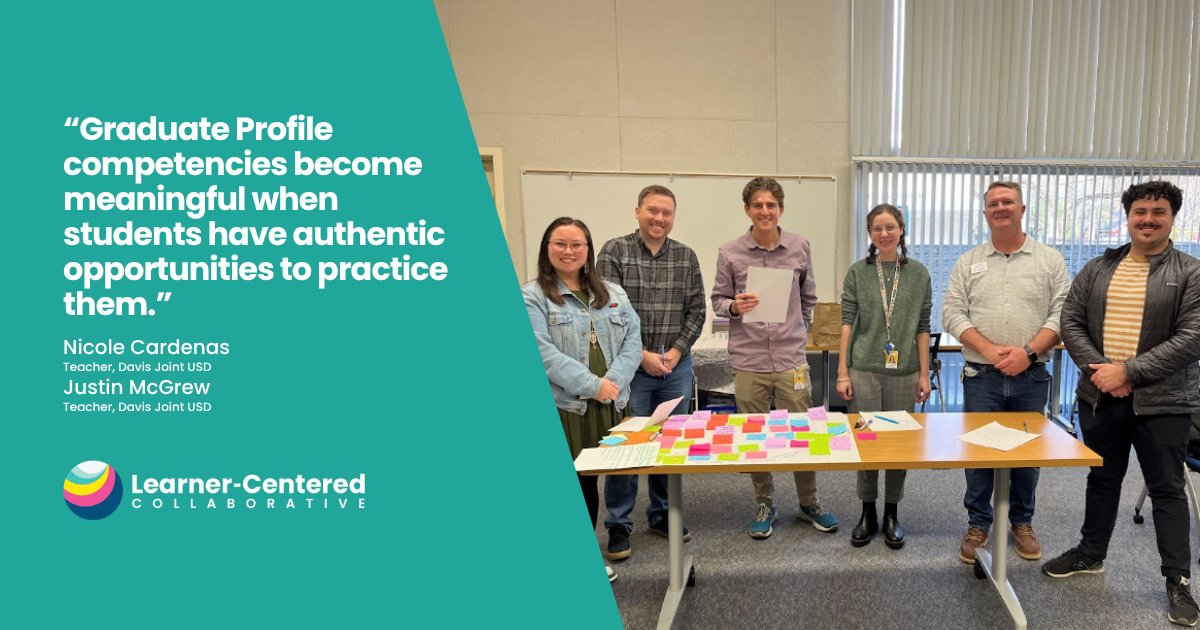
How Teachers at One California District are Bringing Their Portrait of a Learner to Life
Co-authored by Nicole Cardenas and Justin McGrew (Teachers at Davis Joint Unified School District) What does resilience look like when you’re a 6th grader? It might mean persisting when something feels difficult, navigating your first week away from home at science camp, or preparing for the uncertainty of starting middle school. These are experiences…
Blog
Knowing What to Measure and When During Your Redesign Journey
Nine marathons, an Adidas sponsorship, and torchbearer for the 2012 Summer Olympics. That’s Fauja Singh’s story, and none of it occurred before his 89th birthday. Five years earlier, at 84 years old, Singh was in deep grief, processing the losses of his wife and two of his children over the span of just a…
Blog
When Educators Build Together, Learners Lead the Way: Lessons from the Pittsburgh–San Diego Educator Exchange
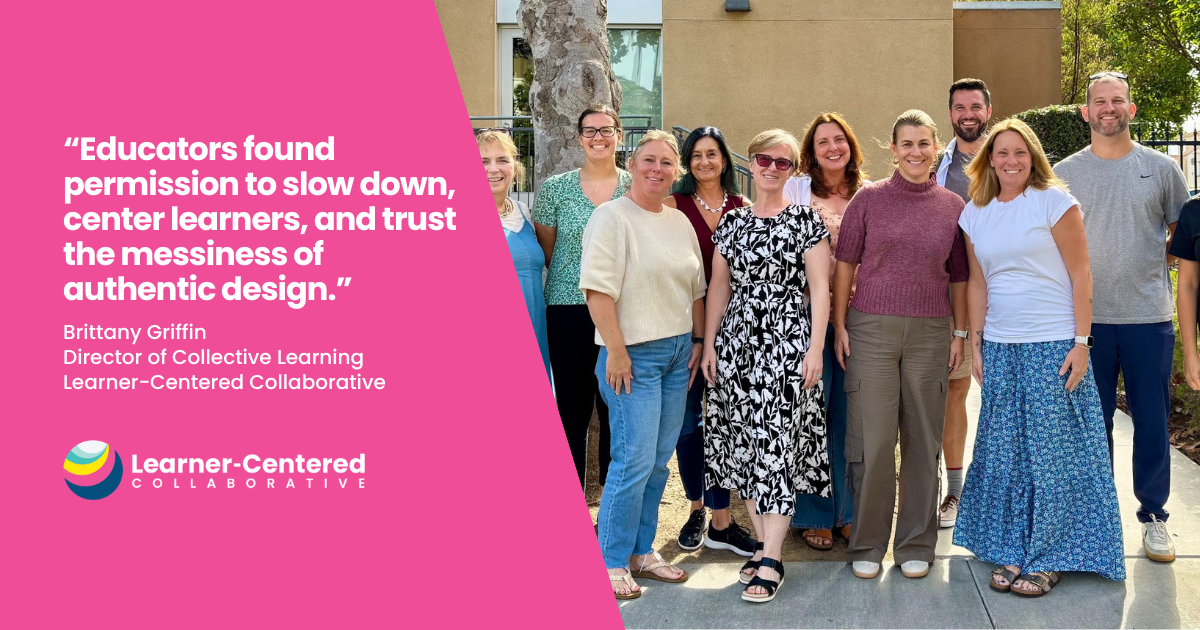
What happens when you ask educators from two different coasts to build something together, not from a curriculum guide, but from what learners actually want to know? This year, 10 middle school educators from Allegheny County, PA and San Diego, CA found out. Through the Pittsburgh–San Diego Educator Exchange, facilitated by Learner-Centered Collaborative, they…
Blog
A New Bill in California Could Expand Career Pathways for Thousands of Students. The Bigger Opportunity Is What It Invites Us to Rethink.
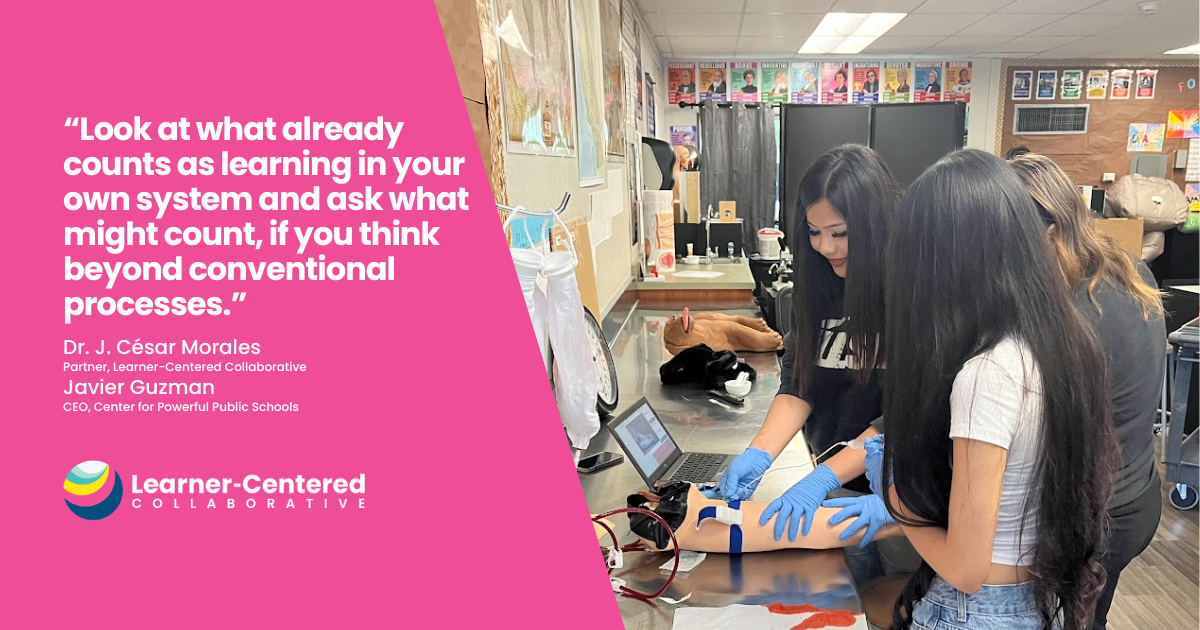
Co-authored by Dr. J. César Morales (Partner, Learner-Centered Collaborative) and Javier Guzman (CEO, Center for Powerful Public Schools) California’s AB 542 gives continuation high schools more scheduling room for workforce learning. The deeper question it raises is what we choose to count as learning in the first place. What actually counts as learning? Not…
Blog
Meaningful Learning Is Not a Race: Lessons From the Slow Food Movement
When fast food first arrived in Italy promising a burger in two minutes, a countermovement for “slow food” quickly grew. The movement’s founder, Carlo Petrini, believed food should be “good, clean and fair.” He believed good food takes the time it takes, and that making a meal faster doesn’t automatically make it better. The…
Blog
Our Mission: Redesign the Future of Public Education
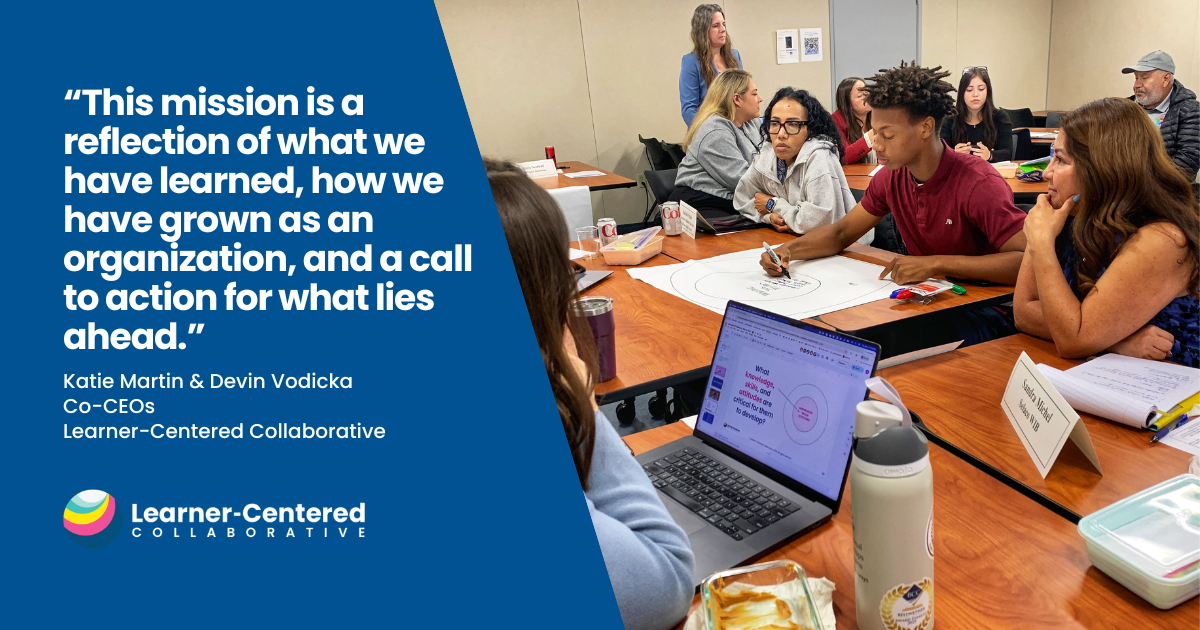
Five years ago, Learner-Centered Collaborative was founded on a simple but ambitious vision for all learners to know who they are, thrive in community, and actively engage in the world as their best selves. Today, that vision remains unchanged. However, to honor the moment we find ourselves in—where the world is being reshaped by…
Blog
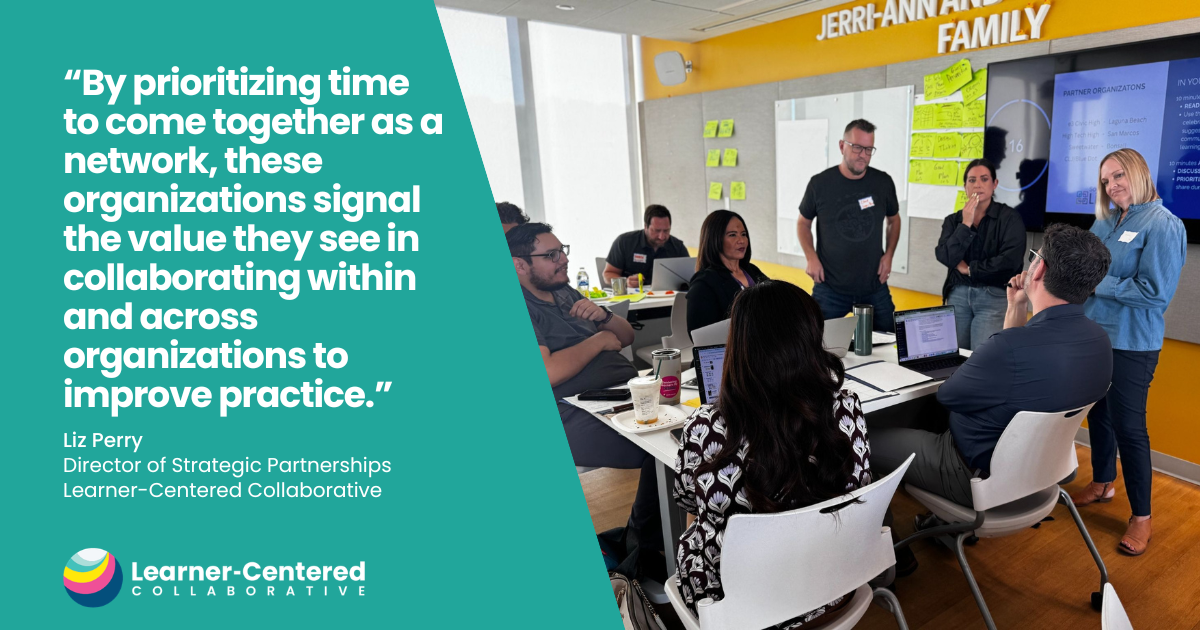
This Regional Network is Putting Learner-Centered Practice in Motion
This reflection emerges from a collaborative effort between Learner-Centered Collaborative and the University of California, San Diego Department of Education Studies. I am especially grateful to Dr. Dave Trautman, Dr. Mimi Lockton, and Dr. Alan J. Daly, whose incredible vision, design, and facilitation played a central role in bringing this work to life. What…
Blog
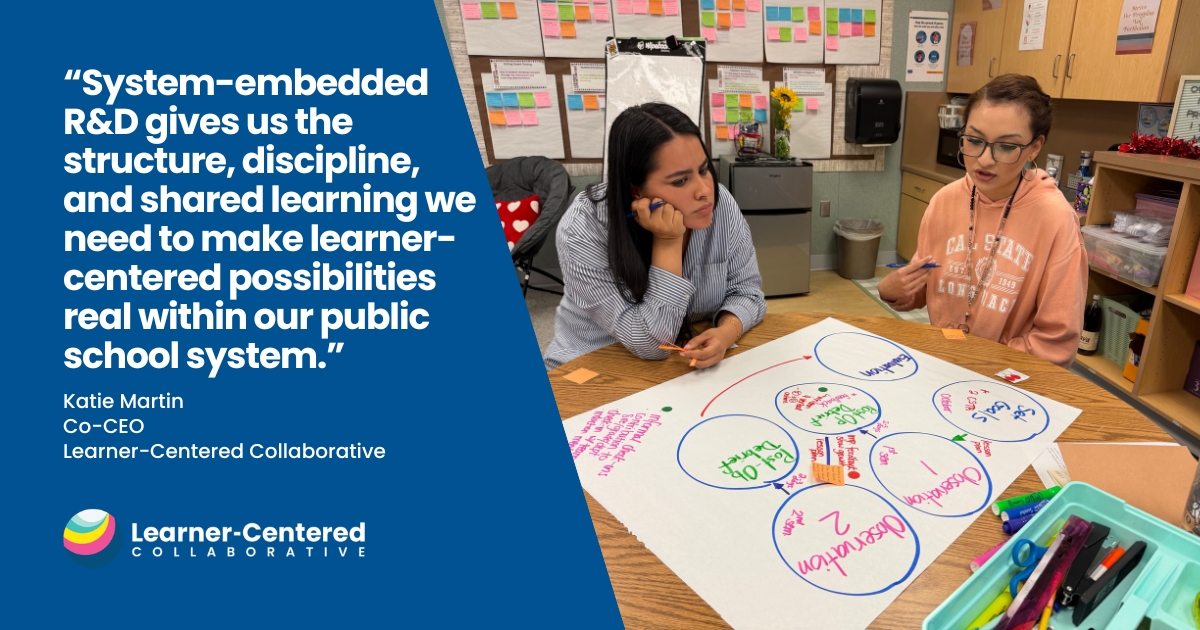
Why School Systems Need Embedded R&D to Evolve
Across the country, we’re confronting a reality we can no longer ignore: our current education system isn’t meeting the needs of today’s learners—or the expectations of their families, communities, or future employers. Disengagement is rising. Teachers feel increasingly constrained by mandates that don’t reflect the day-to-day realities of their classrooms. And despite unprecedented effort,…
Blog
Design the Learning First. The Structures Will Follow
Ask most educators what the basic unit of learning is at a high school, and they’ll most likely say a course, subject, or period. Forty-five minutes with one teacher, one group of students, one set of standards to cover. We’ve organized schools around this container for so long that it no longer feels like…
Blog
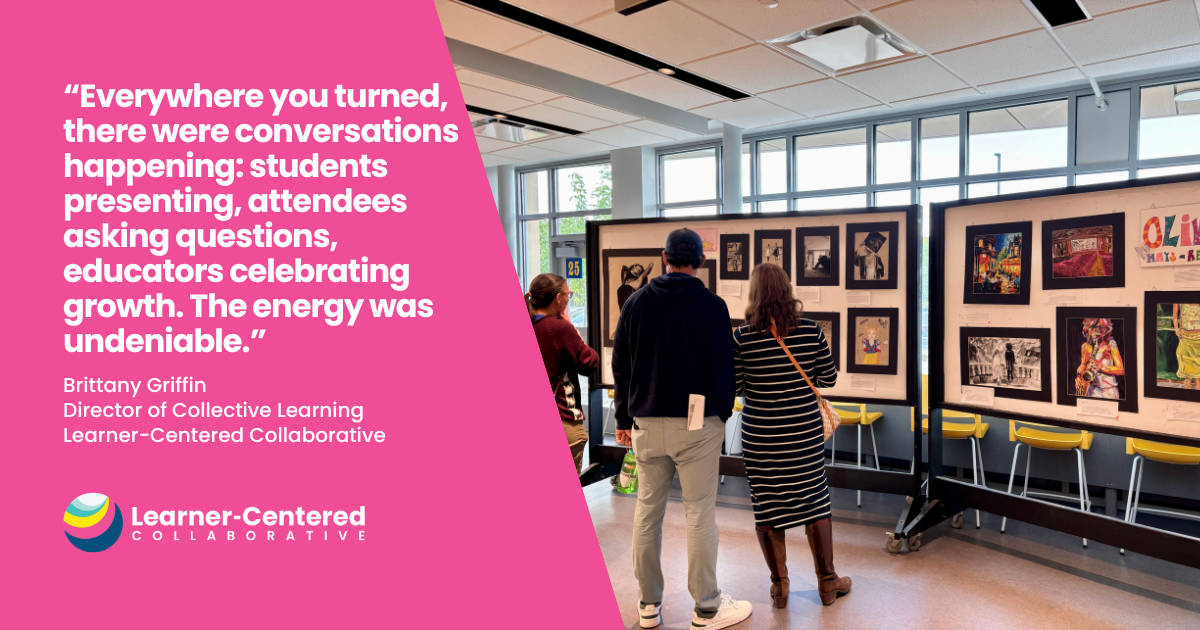
Portrait of a Learner in Practice: Why Every School Needs an Exhibition of Learning
As I sat in the parking lot of Hampton Township’s High School just outside of Pittsburgh, Pennsylvania, reflecting on my experience attending their Exhibition of Learning, I tearfully thought, “Oh, I hope this is the future of education!” On paper, the event sounds impressive enough: a voluntary evening showcase for students from 3rd through…
BlogWebinars
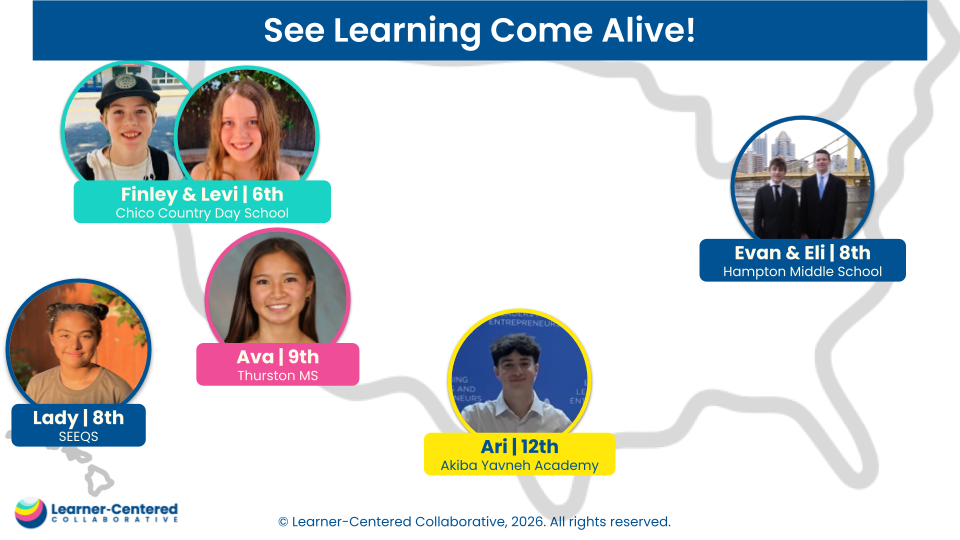
Webinar Recording: A National Student Exhibition Experience
In this one-of-a-kind webinar, learners from across the Learner-Centered Collaborative national partner network took center stage to share authentic exhibitions of learning—offering educators and leaders a rare, firsthand view of what purposeful, learner-centered education can look and feel like in practice. Rather than hearing about student exhibitions in theory, participants experienced them directly: engaging…
Blog
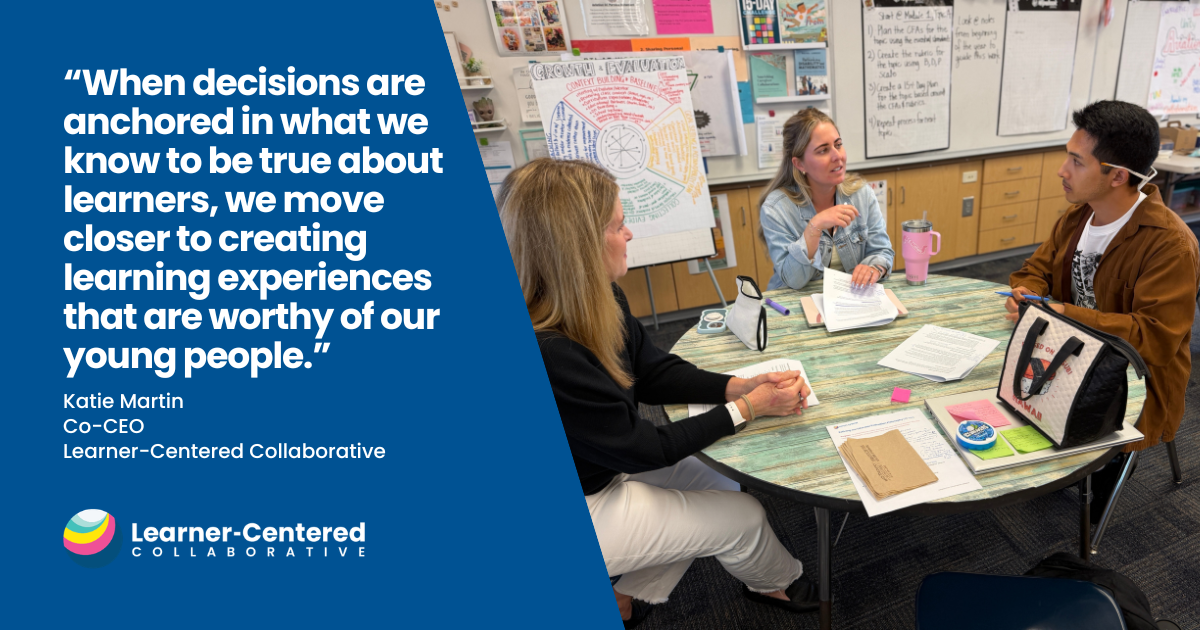
Now is the Time for Systemic Coherence: Reflections on the 25-26 Academic Year
I’ve been going through this year’s Bright Spots, and I keep coming back to the same line of thought. As educators, we know what works. We know what we want our classrooms and schools to be like. We know what purposeful learning feels like. And, I am so grateful to the brave communities who…
Blog
Connecting Research, Development, and Evaluation in District Systems
Some of the core structures of conventional schooling have rather surprising (and old) origins, and they act as a clarion call for research, development, and evaluation to work as one within district environments. Let’s take a quick look at just three of these historical examples to ground ourselves in the “why.” Why do…
Blog
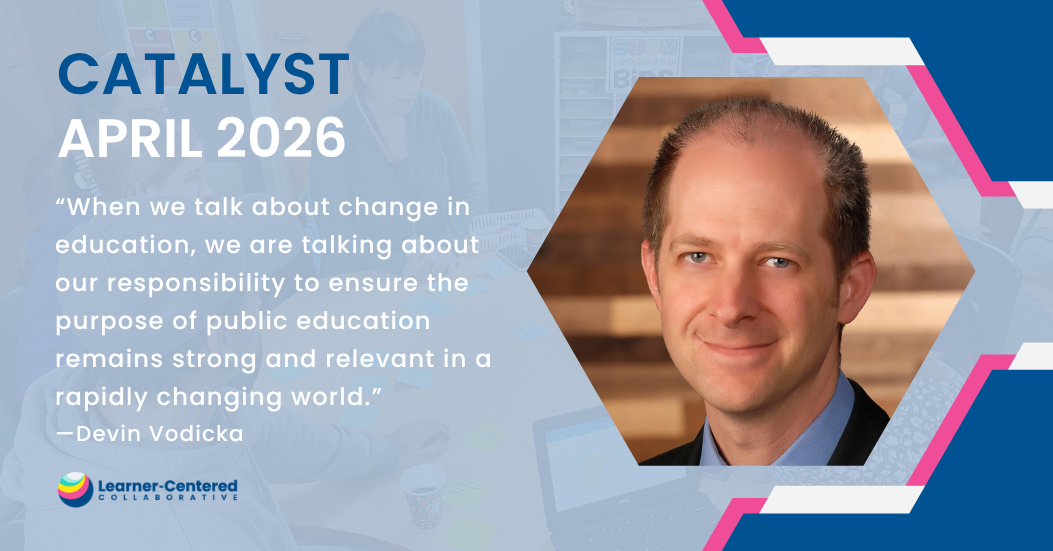
Building a Public Education System That Learns, Adapts, and Endures
In 1972, Kodak Research Labs began experimenting with digital photography. By 1975, they had their first battery-powered digital camera prototype. Four years later, a Kodak employee predicted digital photography would be ubiquitous by 2010. Kodak filed for bankruptcy in 2012. What happened and what can education leaders learn from Kodak’s unexpected collapse? Kodak…
Blog
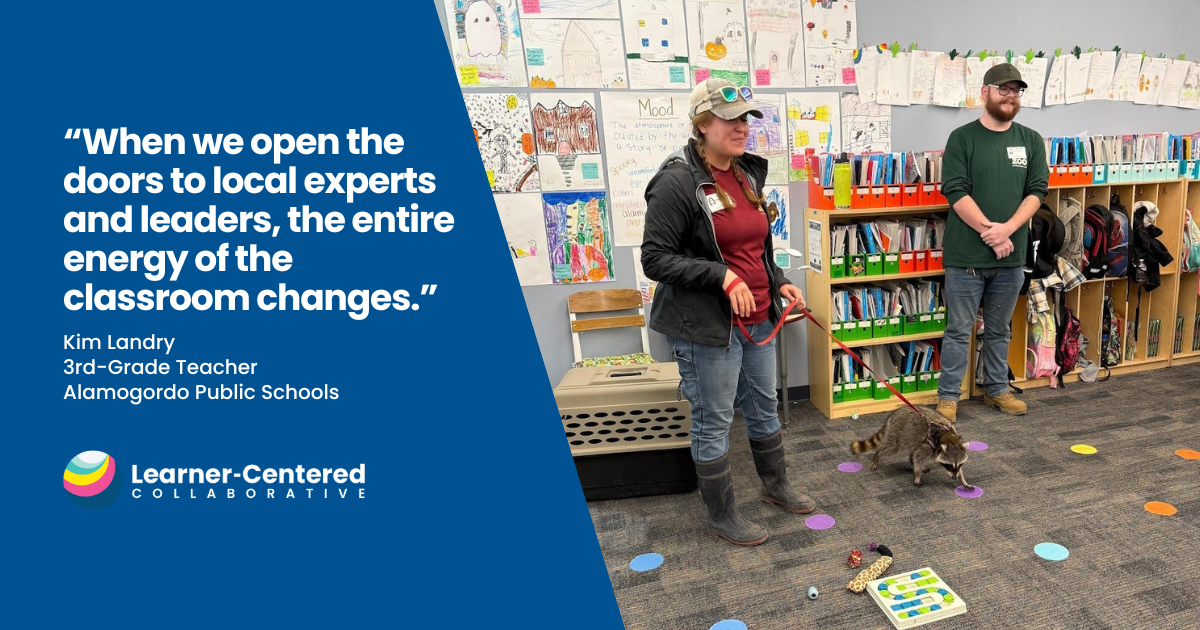
Making Learning Feel Real With Community Engagement in the Classroom
Written by Kim Landry, 3rd-Grade Teacher, Alamogordo Public Schools We’ve all been there: you’re deep into a unit, the students are engaged, but there’s a lingering sense of “so what?” You want your students to see that what they learn at their desks actually breathes and moves in the real world. One of the…
Blog
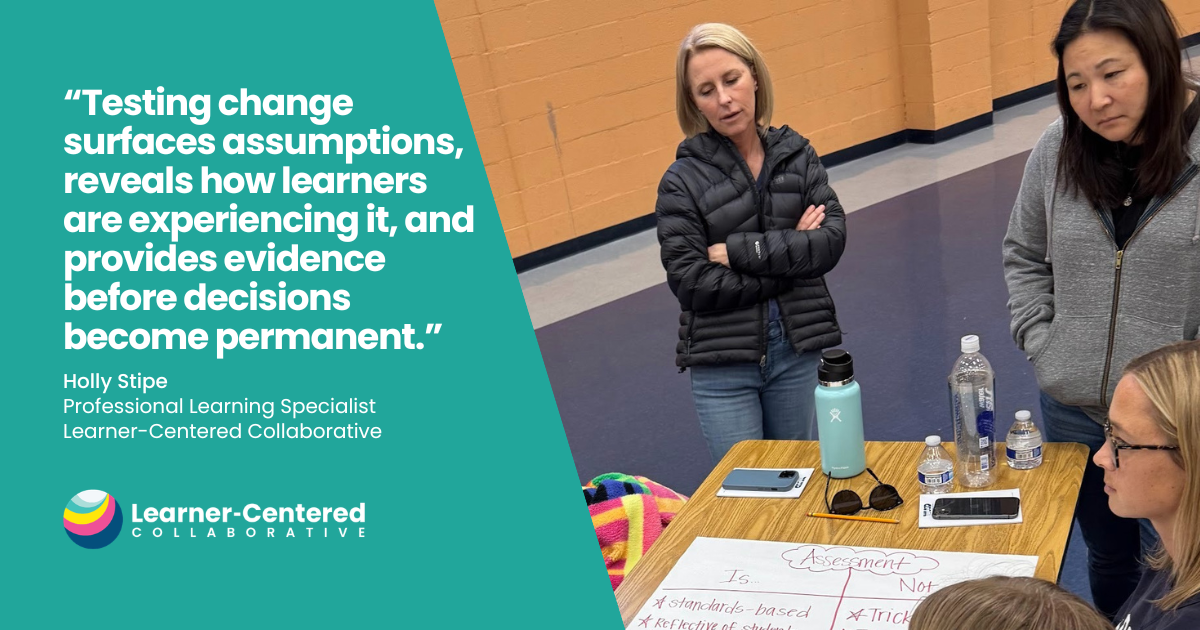
Testing Change Helps Educators Learn Their Way Forward
There’s a paradox at the heart of meaningful change in education: educators need shared direction while maintaining individual ownership within their schools and classrooms. They need coherence across a system and professional learning that honors and grows the ability to adopt new practices for their unique learners and contexts. Testing change honors this…