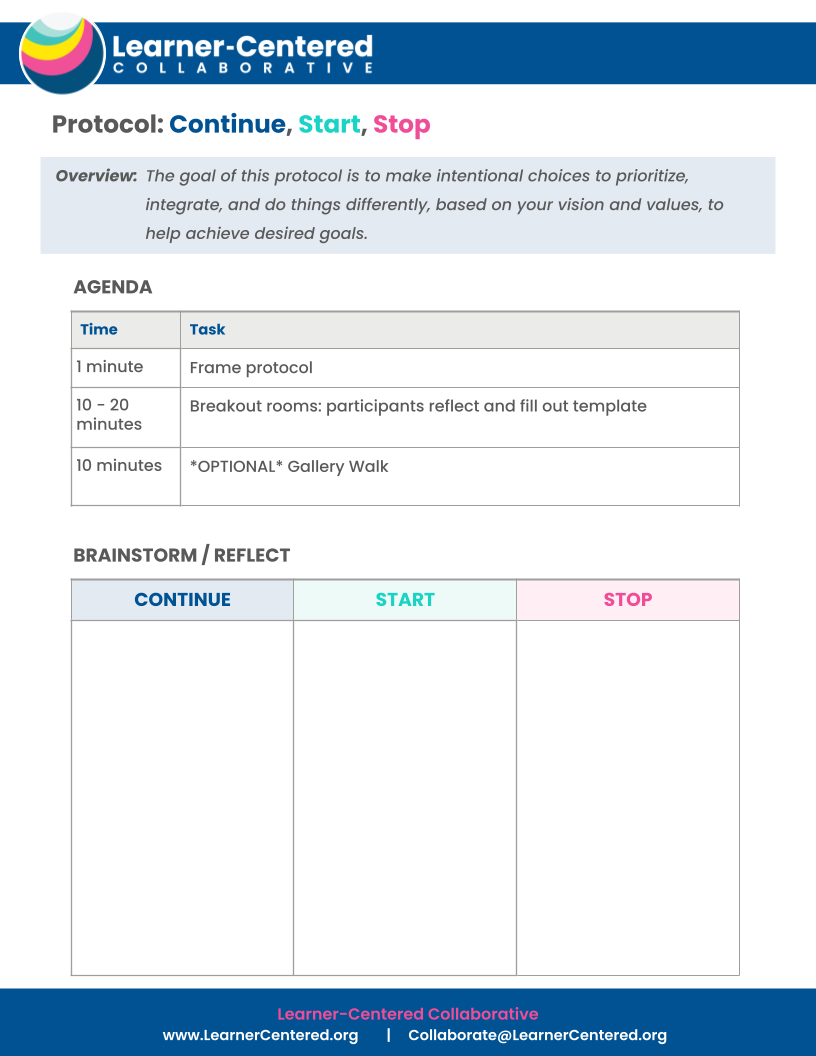
Continue, Start, Stop Protocol


This protocol offers leadership and teaching teams a process for reflecting on current practices, aligned to vision, values, and goals with an eye toward making intentional choices that prioritize, integrate, and adapt current practices in order to achieve desired outcomes. It can be used in small or large groups and typically takes about 20 minutes. For in-person teams we recommend chart paper and/or sticky notes for capturing your thinking. Virtual teams can put the chart into a shared document and add to it collaboratively.

Complete the form below to download this protocol.
 

It’s Your Journey

Explore More Topics

Press
Learner-Centered Collaborative Launches Southern California Microschool Network with Support from Silicon Schools Fund
FOR IMMEDIATE RELEASE February 9, 2026 Contact: Devin Vodicka & Katie Martin, Co-CEOs Learner-Centered Collaborative press@learnercentered.org Learner-Centered Collaborative Launches Southern California Microschool Network with Support from Silicon Schools Fund SAN DIEGO, CA — Learner-Centered Collaborative, a national nonprofit organization, is leading the launch of the Southern California Microschool Network, a groundbreaking regional initiative supporting…
Blog
Public Microschools as an On-Ramp to Systemic School Redesign
The idea of microschools is generating growing interest across the education landscape. They’re showing up more frequently in philanthropic conversations, conference sessions, and learner-centered education spaces as leaders look for new ways to respond to longstanding challenges and emerging opportunities. For school and district leaders, this rising interest can feel irrelevant to their local…
Blog
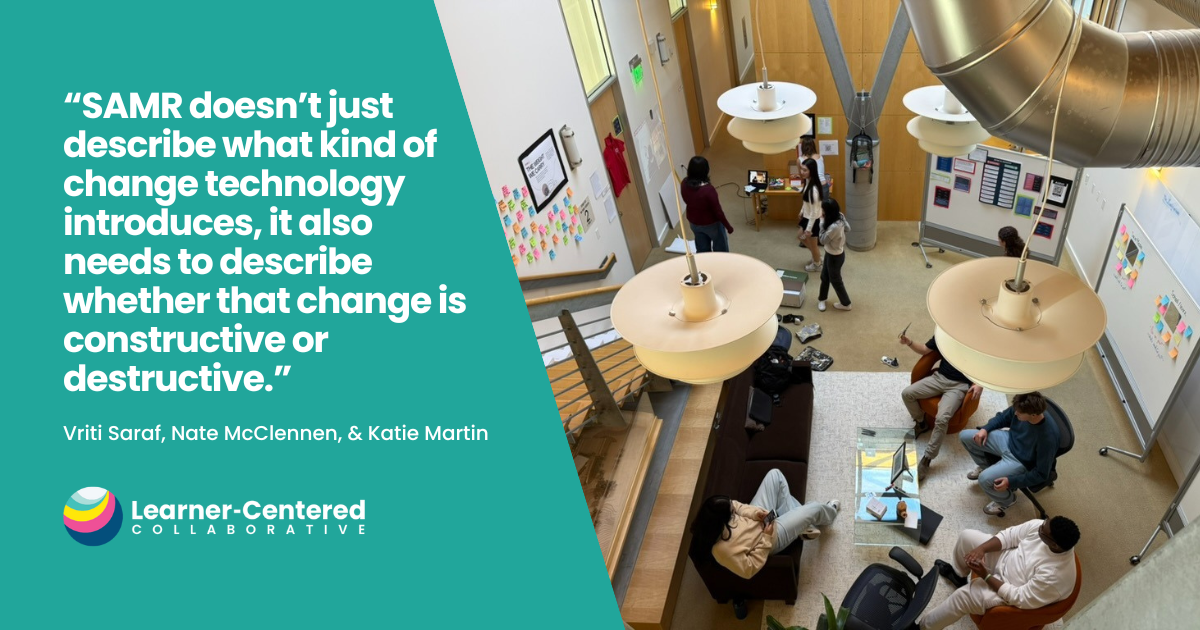
Rethinking SAMR in the Age of AI: Why the Model Needs a Second Axis
This article originally appeared on Getting Smart and has been republished with their permission. Written by Vriti Saraf, Nate McClennen, & Katie Martin Key Points The SAMR model needs a second axis (positive vs. negative impact) to better evaluate AI’s effect on teaching and learning. AI’s role in education is nuanced—its success depends on…