Family Engagement Strategy
Overview
Families are an integral part of a successful learner-centered ecosystem; partnering with educators to ensure positive outcomes for their child/dren. In today’s modern world, family engagement goes beyond asking for room parents, volunteers on a field trip, or the number of responses on a family survey. Although those are important metrics, engagement looks like participating in regular school and district activities, being involved in decision making and systems seeing families as a partner in their child’s educational experience.
Designing a comprehensive strategy for family engagement means outlining key success metrics of what family engagement really means in your system and then aligning key programs and initiatives that will support increased participation. No matter what portion of the school year you are in, you can begin this important work by inviting families through focus groups, forums and surveys to share their needs and ideas for how they would like to further engage with the school or district. These touchpoints can help you identify celebrations in your current structures as well as barriers to engagement and how those might be addressed.
Bright Spots
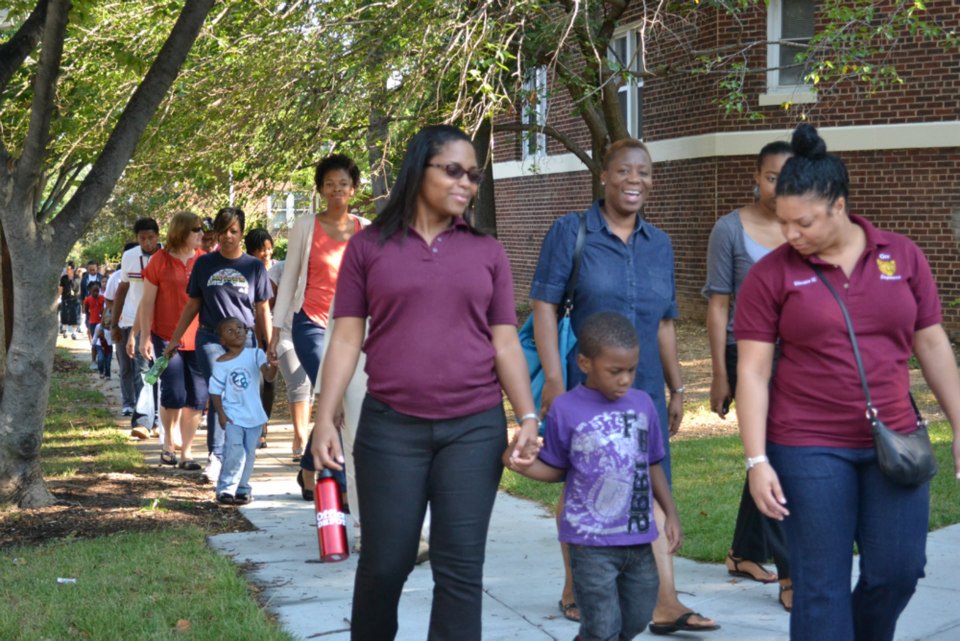
Community Walks
Source: Teaching for Change
Educators, students and families at Orr Elementary School in DCPS participated in a community walk together as part of the Teaching for Change Tellin’ Stories project to kick off their school year. They went to different landmarks and community businesses in the neighborhood, which gave students a chance to meet new teachers, see familiar faces and show their teachers parts of the community that are important to them.
Teamwork Nights
By loading this video, you agree to the privacy policy of Vimeo.
At Carlin Springs, families join educators for learning experiences to help families better understand what is happening in the classroom and how they could support their children with their learning.
Strategic Planning
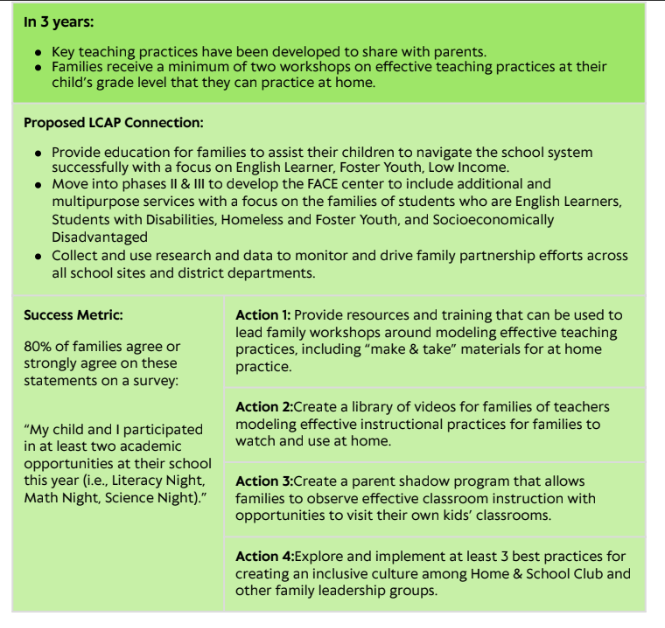
Morgan Hill created a comprehensive Family Engagement Plan that included goals and strategies for deeply engaging with families around key outcomes: building relationships, sharing information, modeling best practices, listening to families, incorporating family culture into school and aligning family engagement strategies with other key initiatives.
Family Guides
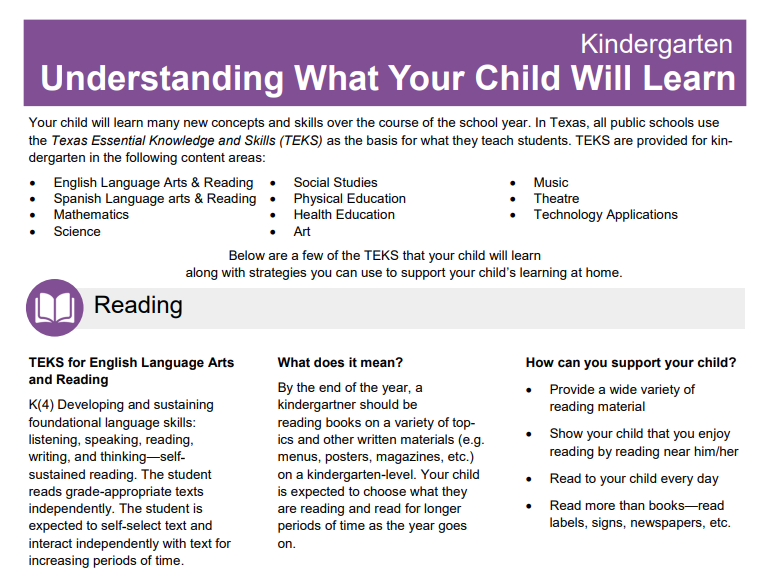
Source: TEA
In addition to activities, family engagement strategies can include the creation and sharing of meaningful resources for families such as this one from the Texas Education Agency that shares with families what their child will learn about in Kindergarten.
- How can you begin this work by listening to your community of families? How do they want to engage and what do they need?
- What are current barriers to family engagement (such as language, time, or childcare) and how can the strategy and programs you create remove or address those barriers?
- What are ways families and educators can collaborate towards something together?
- How can you bring families in strategically to be a part of regular decision making at the school or district level?
- What do you want families to better understand or know about what is happening at school and how can you bring them in so they are better versed in the day-to-day?