A Spotlight on the UCSD + LCC Research Convening: New Measures of Success
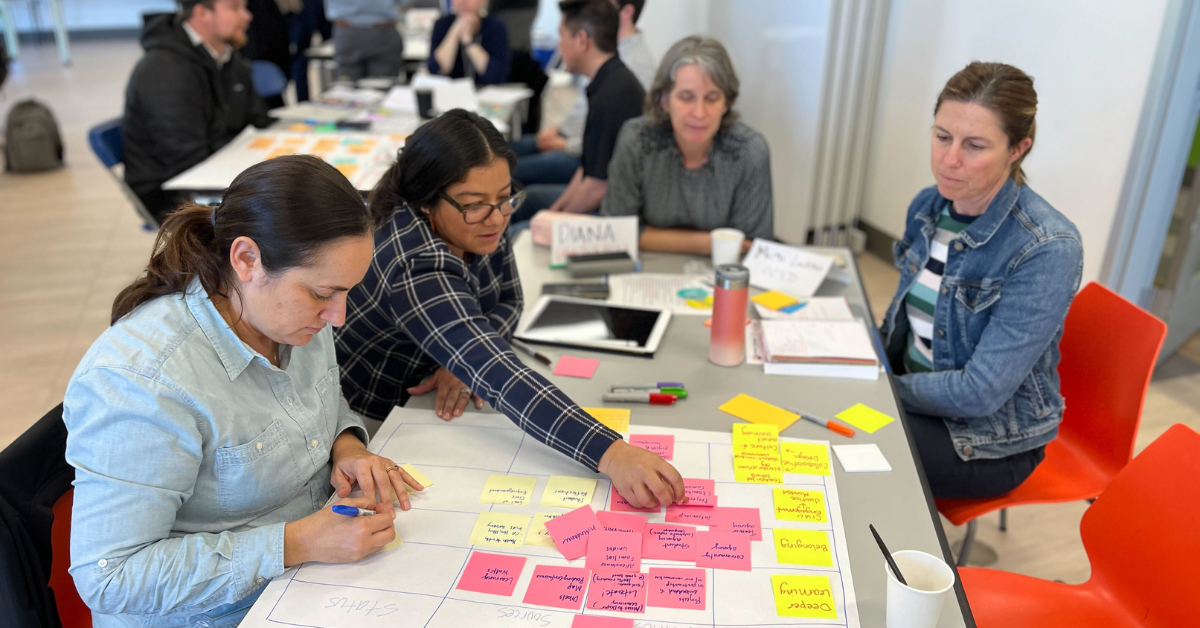
In July of 2023, the University of California, San Diego (UCSD) and the Learner-Centered Collaborative (LCC) announced a groundbreaking strategic partnership that would unite researchers, practitioners from LCC, and regional districts in advancing learner-centered practices. Among the key objectives of this partnership is to share knowledge and resources and disseminate findings to ensure broader impact of the research initiative. In the spirit of sharing and keeping the larger learner-centered community informed, Joanna Libby shares insights and reflections from the third research and practice team convening.
Q: Why is the UCSD-LCC partnership significant in advancing learner-centered practices?
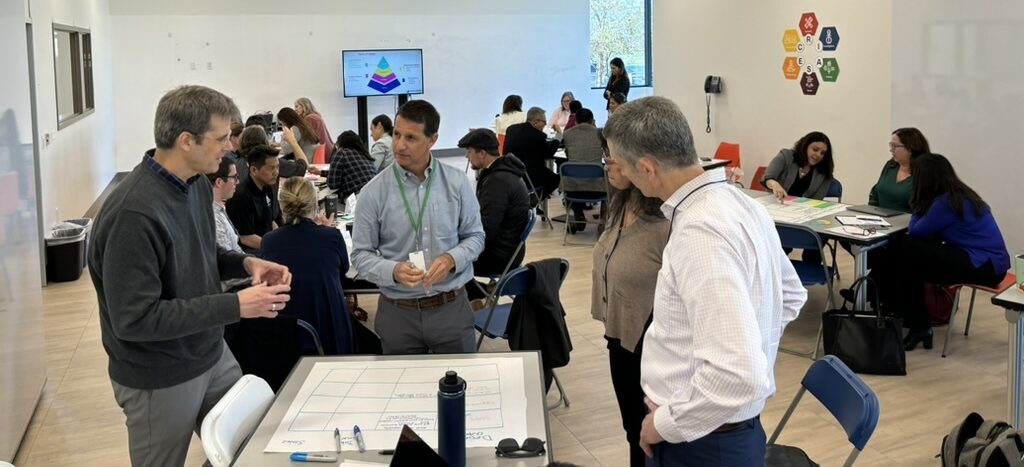
Joanna: The UCSD-LCC partnership is a groundbreaking collaboration that brings together diverse stakeholders to advance learner-centered education. On March 8th, the partnership held its third research and practice team convening, bringing together eight regional districts and a group from the San Diego County Office of Education. This convening highlighted the growing momentum in San Diego County toward learner-centered education and emphasized the importance of bringing researchers and practitioners into the same space to answer pressing questions and generate evidence-based solutions.
Q: What key insights emerged from the New Measures of Success convening?
Joanna: The convening featured several thought-provoking discussions and activities. To frame our conversation around new measures of success, we were fortunate to have Dr. Amanda Datnow of UCSD share insights from a September 2022 report titled “Transforming Education for Holistic Student Development: Learning From Education System (Re)Building Around the World.” The report highlighted different approaches and systems journeys from national initiatives in Singapore and Chile to local initiatives like Iowa BIG in Cedar Rapids, Iowa. Despite the varying contexts, common themes emerged, such as distributive leadership and fostering student and teacher agency. Perhaps the most applicable learning from the report was that partnerships are critical to global system transformation.
It was a celebration to have so many different people from the San Diego area coming together to transform educational systems. While everyone in the room agreed that an expanded view of success requires new and different metrics and accountability models, the research partners at UCSD reminded us that “what gets measured gets done… for better or for worse.” Mimi Lockton shared research about a call center striving to measure customer satisfaction. They focused on customer wait times, which resulted in employees rushing people off the phone to shorten wait times but not actually solve the customer’s problems. This example underscores the importance of setting the right metrics and attending to the impact of implementation.
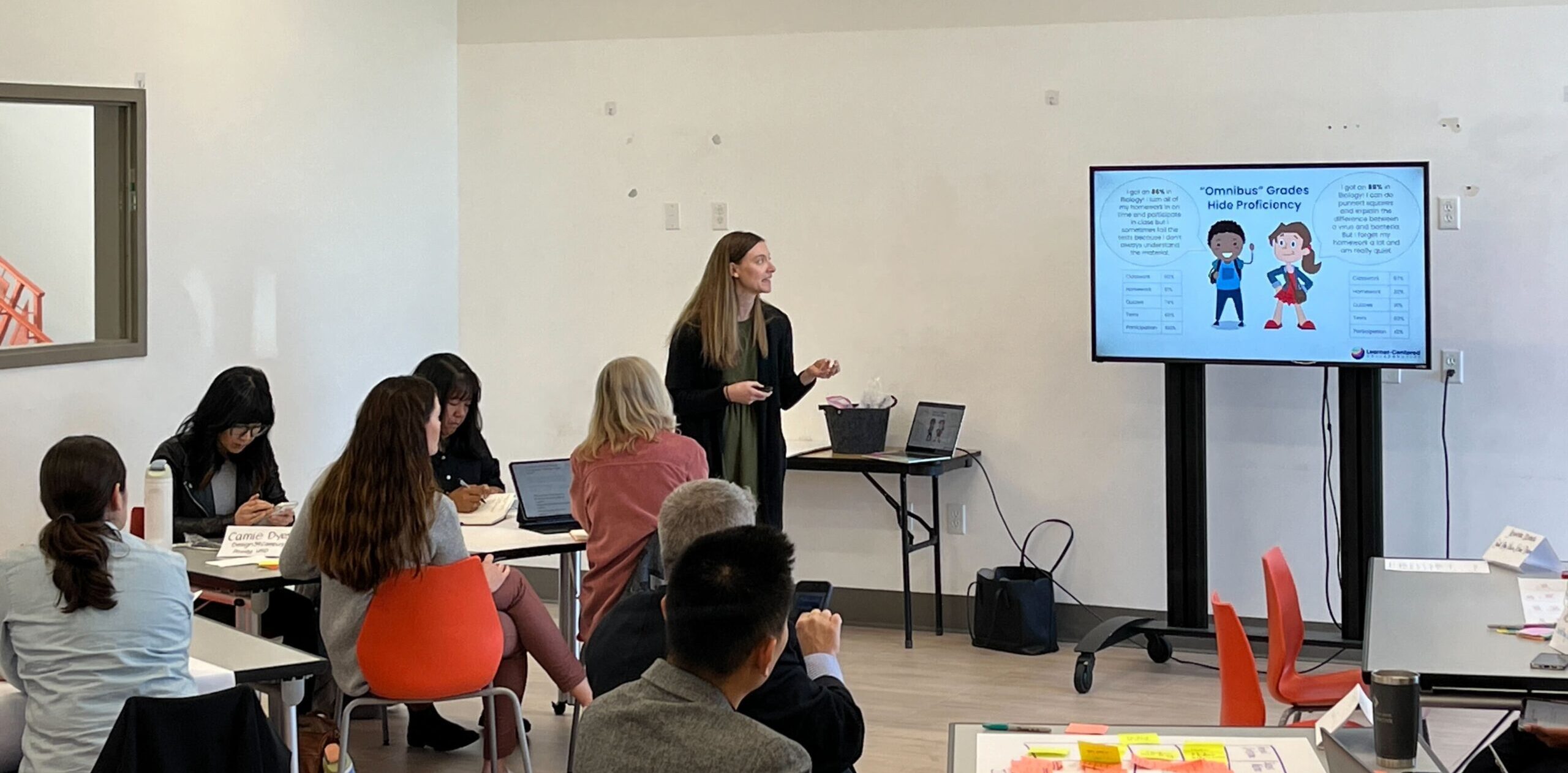
Bryanna Hanson from LCC then walked through her work on the Competency-Based Reporting Playbook, exploring how to move from industrial-era grading practices to a more learner-centered paradigm. She highlighted the issues with “omnibus” grades hiding proficiency and the myth of objectivity in grading, leaving participants wondering, “What’s the alternative?” Bryanna has been interviewing systems across the nation to publish a playbook showcasing 15+ examples of reporting structures and practices to support schools in shifting away from traditional grading practices.
Dive into our resources on competency-based reporting by accessing our Competency-Based Reporting Playbook and watching our webinar on The Future of Assessment and Reporting: Examples of Competency-Based Approaches.
Q: How can the district scorecard activity contribute to redefining success in education?
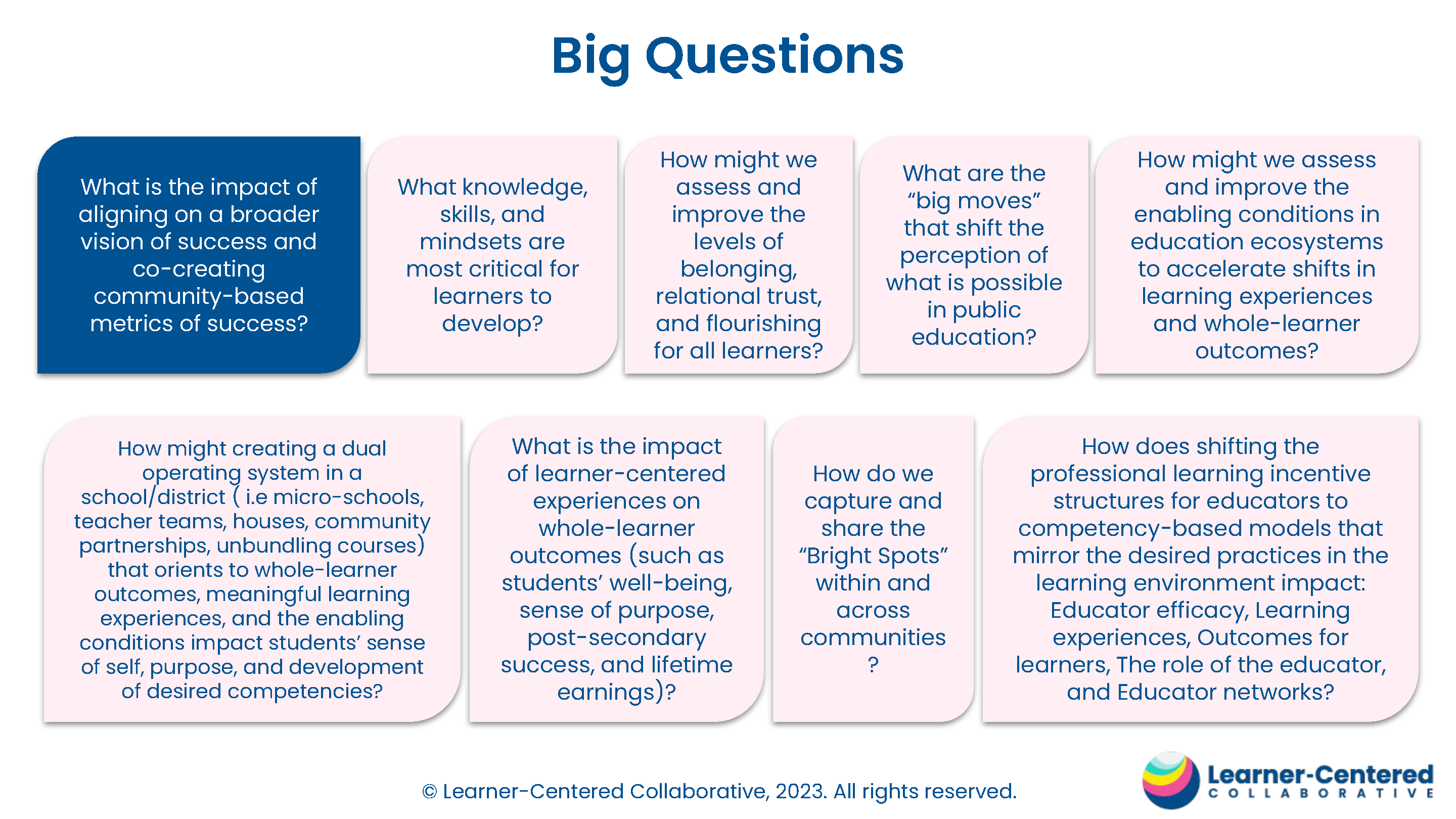
Joanna: We explored the concept of ‘Collective Illusions,’ revealing a discrepancy between personal definitions of success and perceived societal definitions. This resonates in education, where success is often measured by narrow metrics like test scores and GPA, despite a widespread understanding that success extends far beyond these measures. This led Dr. Katie Martin’s design session for district teams to draft a district scorecard, aiming to measure success more broadly and focus initiatives, effort, and measurement on what matters most. Several key insights emerged from this activity:
- The importance of community input and context in defining success metrics
- The need for multiple dimensions and various metrics to measure success comprehensively
- The potential for scorecards to focus initiatives and efforts on what matters most
These insights contribute to the overall goal of redefining success in education and aligning measures with learner-centered values.
Q: What role do partnerships play in transforming educational systems?
Joanna: The UCSD-LCC partnership convening showcased the unique opportunity for regional leaders and thought partners to work towards a shared vision of learner-centered education. By bringing together diverse stakeholders, the partnership aims to generate evidence-based solutions and drive systemic change. Future convenings will include even more regional leaders and thought partners, expanding the network and the possibilities this unique partnership presents.
As the work continues, the UCSD-LCC partnership invites interested individuals to stay informed, get involved, and join future convenings by contacting collaborate@learnercentered.org or by filling out this form. Collaboration and partnerships are essential in transforming educational systems and advancing learner-centered practices.
“By bringing together diverse stakeholders, the partnership aims to generate evidence-based solutions and drive systemic change.”