Big Moves at West Pk-8: The Power of Distributed Leadership in the School Redesign Process
Colorado Springs is changing fast. Like many communities across the country, it is being shaped by new demographics, emerging opportunities, and the need for creativity and critical thinking like never before. District 11 knew that West PK–8 Campus, one of its oldest schools, couldn’t simply layer new programs on top of old structures to meet the needs of the moment. What they needed was a new story.
So, they turned to Principal Michael Anderson and a design team to lead the way — not by tightening control, but by opening it up. Together, they are reimagining West as a learner-centered community where students, families, educators, and local partners share leadership and co-create opportunities for every child to thrive.
Redesign in Action
What makes West Campus’ redesign stand out is not just its vision, but how that vision is being pursued. Too often, redesign efforts live in binders crafted behind closed doors. At West, leadership is being deliberately distributed. The design team is inviting students, families, staff, and community partners to step in as co-authors of the school’s future, turning redesign from a plan on paper into a movement owned by the whole community.
This is distributed leadership in action. And while it can feel risky to loosen the grip of traditional control, especially during times of change, West is showing how powerful it can be when everyone owns the process of redesign.
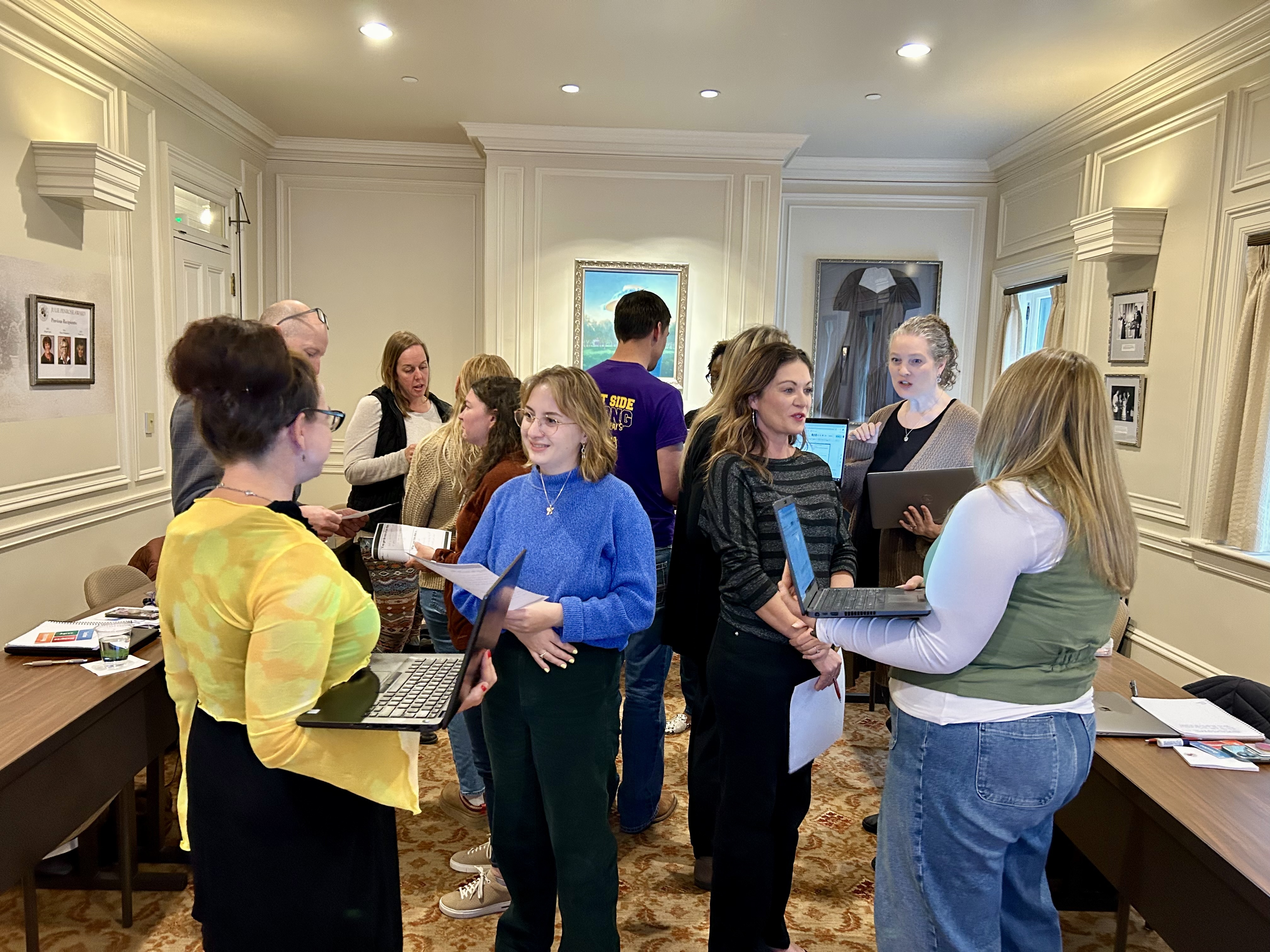
West’s design team working to identify their Big Moves
It’s natural for leaders to want to steer change themselves. After all, it’s their responsibility, their reputation, and their well-founded belief in their ability to deliver results. Letting go can feel like stepping onto uncertain ground.
But at West, the design team has leaned into that uncertainty. They’ve created space for students to dream out loud, families to shape priorities, and community partners to help reimagine what school could be. As Anderson describes the impetus behind widening the circle of influence and decision-making, he states: “When people are fully present, 100% in, that’s when the best ideas emerge. That’s when people really take ownership.”
By inviting others into the design process, literally and figuratively, West is distributing ownership — and that ownership is where real transformation begins.
Take a deep dive into distributed leadership and cultivating shared responsibility across teams with our Distributed Leadership for Learner-Centered Change Learning Series.
Sharing Leadership in the Redesign Process
At West, others aren’t just “consulted” along the way. Leadership is genuinely shared. We see this in:
- A design team made up of staff and teachers, guided by student input, that drives the vision forward.
- Parents and grandparents, many of whom once walked these same hallways, who now have a voice in telling a new story about West.
- Local businesses and nonprofits that aren’t just donors or guest speakers — they’re co-creators of real-world learning opportunities.
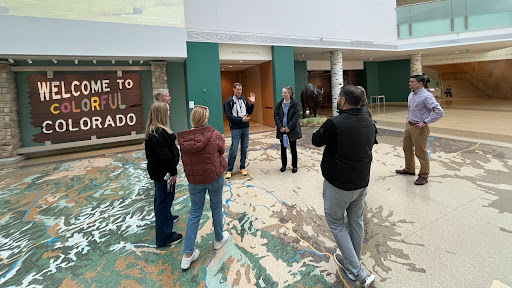
Members of West’s Design Team on an inspiration visit with La Luz School in Denver
Multi-Age Advisory Groups
Beyond the design team, West is distributing leadership within its halls and classrooms with newly formed multi-age advisory groups. By pairing younger and older learners, West is proving that students can hold leadership roles, modeling positive behaviors, guiding younger peers, and building a culture of care across the campus.
Community Partnerships
Integrating the community doesn’t stop at the school doors. Located blocks from a historic commercial center, West has reached out to local business and non-profit leaders, inviting them to partner in West’s new future. Almost immediately, a local climbing company donated and installed a 30-foot climbing wall, and the neighborhood Subaru dealership provided supplies to support learning.
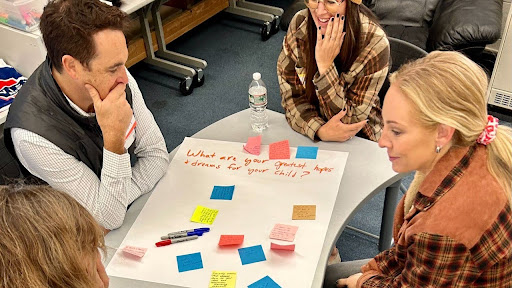
Educators conducting parent and community empathy interviews
“Success for me means kids going home and telling their families, ‘West is different. I had a real-world experience today.’ That’s the story we want to spread.”
– Michael Anderson, Principal, West PK-8
These aren’t symbolic gestures. They are tangible examples of how distributed leadership stretches outward, turning nearby businesses into partners in student growth.
The next phase of these partnerships will see students teaming up with the Space Foundation Discovery Center Space Cadet program, using human-centered design strategies to tackle challenges and opportunities presented to them by Old Colorado City businesses.
A Community-Owned Narrative
Perhaps the clearest evidence of a shared responsibility for change is the way West is rewriting its story. For years, the school carried a challenging reputation in the neighborhood. Changing that narrative couldn’t come from a press release or a single leader’s speech. It had to come from the community itself.
That’s why the design team embraced the hashtag #OneWest — a rallying cry that belongs to everyone. On social media, at community events, and in everyday conversations, #OneWest allows students, families, and partners to share their own stories of belonging, pride, and possibility.
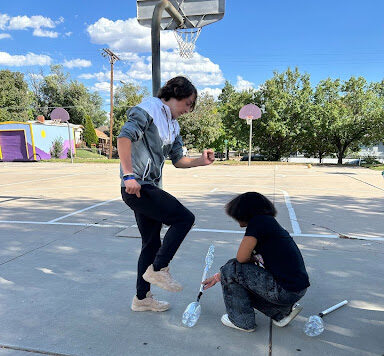
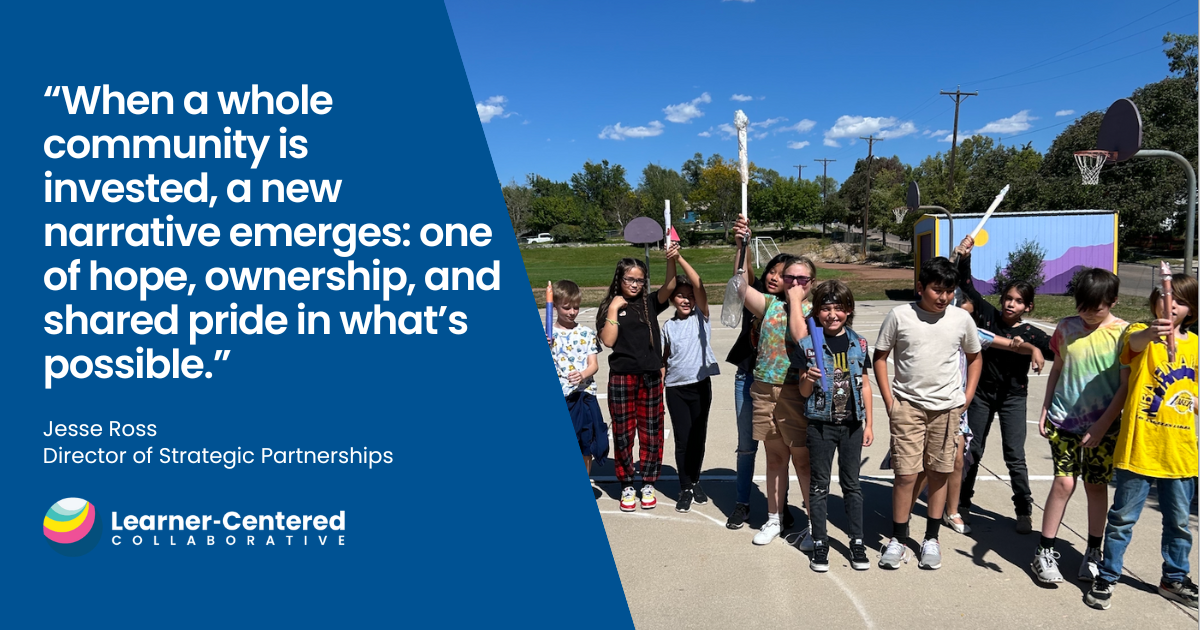
Learners putting design thinking skills to use in a stomp rocket challenge
As Anderson explains, “Success for me means kids going home and telling their families, ‘West is different. I had a real-world experience today.’ That’s the story we want to spread.”
When the narrative is owned by the many, not the few, it becomes both more authentic and more durable.
Why Shared Responsibility in School Redesign Matters
Distributed leadership is not the easiest path. It asks leaders to step back, trust others, and accept that the best ideas might not be their own. But West is proving that this is exactly how lasting change takes root.
By empowering everyone around them, they are ensuring that West’s redesign is not a project managed by a small group — it’s a movement carried by an entire community. And when a whole community is invested, a new narrative emerges: one of hope, ownership, and shared pride in what’s possible.
West PK–8 is showing us that school redesign doesn’t have to mean doing more to people. It can mean doing more with them. And in that shift, a community finds its voice, its agency, and its future, together, as #OneWest.
Through its ongoing partnership with Learner-Centered Collaborative, West is rethinking learning through empathy-based research, collaborative design, and prototypes that build distributed leadership and real-world experiences.
Redesign is possible at your school too. Let’s make it happen together!