The Listening Leader: Striking the Balance Between Receptive and Expressive Communication

There is power in sharing your transformational story as your school or district’s learner-centered journey unfolds, and I will always emphasize the importance of communication in fostering a learner-centered culture. However, it’s common to solely equate communication with expression—the outward sharing of messages and information. This limited view can create unexpected resistance as we move our work forward. If we really want to harness the power of communication, we must see and utilize the other side of the communication coin—listening.
My professional experiences and research in relational trust have shown me that receptive communication, or our ability to listen and receive information, is equally, if not more, critical than the outward sharing of our work and progress.
When I began my superintendency at Vista Unified School District, I brought 16 years of learner-centered education experience with me. That experience made one of my first priorities an obvious one—I needed to hear from students what learning was like in Vista.
During my first year, I met with over 1,000 students through more than 60 group forums. The insights from these forums were eye-opening. Students expressed a desire to actively participate in their learning, rather than being passive recipients of information. One student poignantly remarked, “I don’t want school to happen to me. I want to drive my learning.” This statement became a guiding principle in how I viewed the purpose of our work as a district.
Leveraging this input, we initiated a comprehensive strategic process that I called the “Framework for the Future.” Throughout the process, we integrated family, student, teacher, and administrative voices—from drafting our vision and mission statements to defining roles and responsibilities to creating our version of a strategic plan that we called the Blueprint for Educational Excellence and Innovation.
This approach was not about imposing preconceived plans but about co-creating the educational framework with those it aimed to serve. Our plans included personal learning systems that resonated deeply with the students’ desire for relevance and ownership in their educational experiences.
However, creating systems for receptive communication was just the beginning. The expressive side of communication—how we share what we learn and how we act on it—completes the cycle. It’s crucial not just to gather insights but to make them visible and actionable. This means not only responding to feedback but also ensuring that those who provide it see the tangible changes resulting from their input.
For example, our initial implementation blueprint was a dense 150-page document. It was comprehensive but incomprehensible to anyone other than its main authors. When we took the Blueprint on a “road show” out in the community, nobody could make heads or tails of it (and rightfully so). We needed a better way.
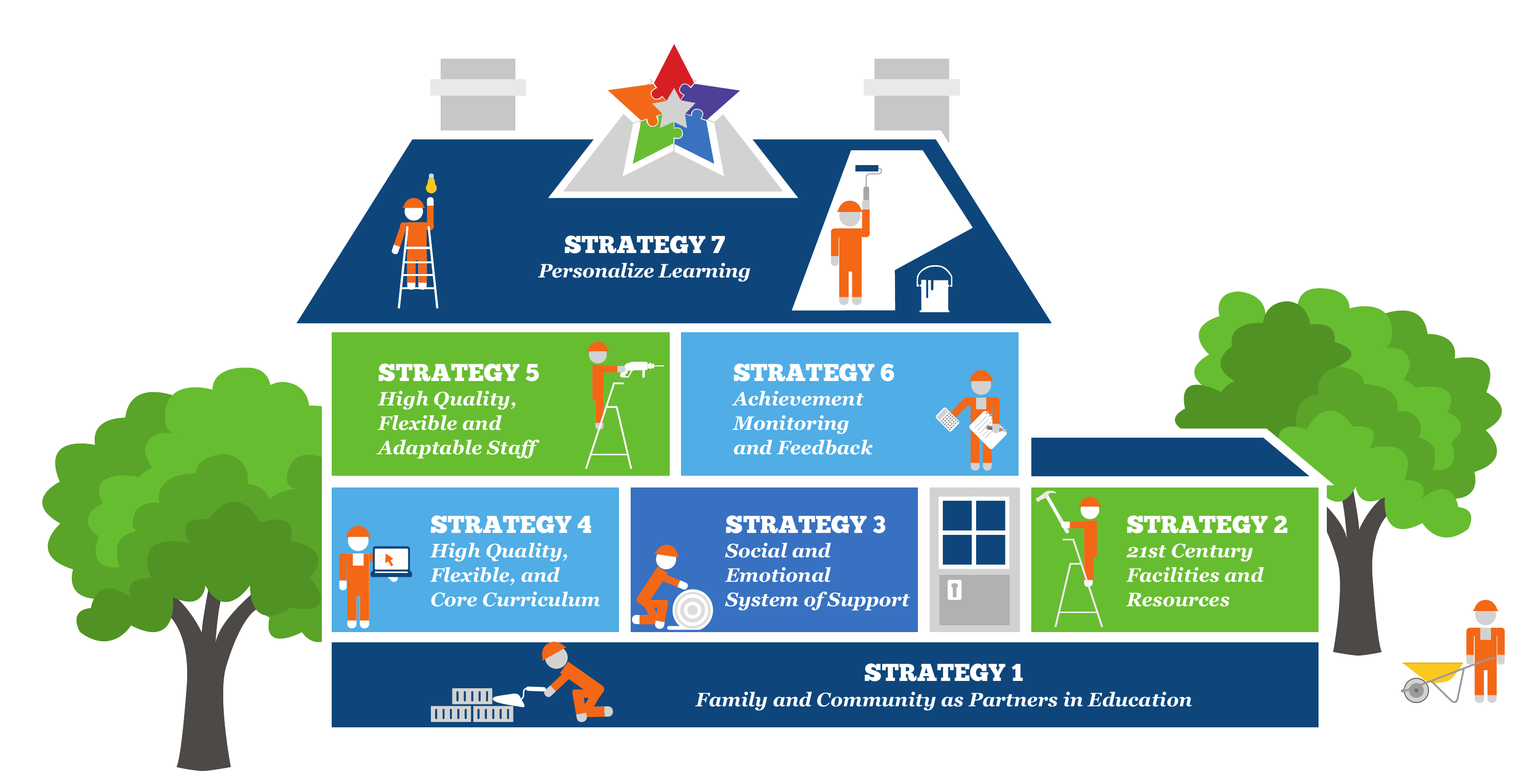
That’s when we came up with the “House of Learning” visual. We assigned each of our strategies one room or structural feature of the house. You’ll notice below how we put our Family and Community as Partners in Education as the foundation. This helped us effectively communicate the purpose each strategy played to create a truly learner-centered district. This visual metaphor not only made our plans accessible but also demonstrated a responsive system that evolves based on community feedback.
This process of listening, adapting, and sharing has taught me that educational leadership is as much about creating spaces for voices to be heard as it is about delegating tasks. It’s about building trust through transparency and responsiveness. Our vision at Vista to be a model of educational excellence and innovation was deeply tied to this continuous cycle of receptive and expressive communication.
The journey of transforming education demands that we not only envision a future of educational excellence but also actively engage with those who live that future every day: our students, teachers, and families. I encourage every educational leader and community member to cultivate a culture where listening is as valued as instructing.
Let us commit to creating forums, surveys, and open dialogues that elevate these essential voices. By doing so, we not only enhance our educational strategies but also strengthen the very fabric of our communities through inclusivity and respect. This commitment to active listening and responsive action is essential for the transformative growth we strive to achieve in our learning environments.