Redesign Educator Growth Plans & Evaluations
Once a system has clarity and coherence on leader and educator roles in service of their learner-centered vision, other structures require rethinking. Evaluation models in a school-centered paradigm focus on compliance and accountability. As we shift our focus to empowering learners, we must also empower educators and leaders by focusing on feedback and development.
This shift requires moving away from traditional educator evaluations and observations of classrooms and evolving toward cycles of learning, offering voice and choice, implementing collegial coaching and building trust. When a culture of learning and growth is established, structures like Learning Walks can become a regular practice, creating opportunities for collaborative reflection and continuous improvement. These personalized structures support seeing each other in action, providing feedback and reflecting a regular part of every educator and leaders’ practice thereby increasing capacity and ensuring individual growth and development.
Bright Spots
Growth & Development Philosophy
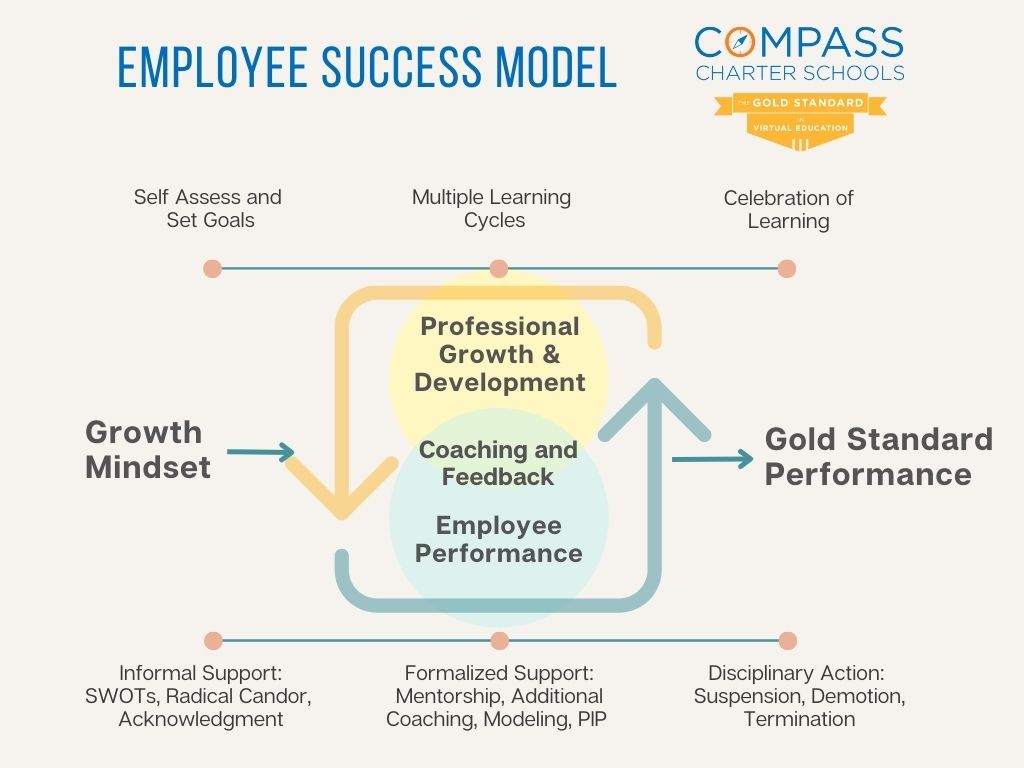
At Compass Charter Schools, a new growth and development philosophy was developed after the creation of their Framework for the Future. It was anchored on 4 guiding principles of clarity, autonomy, accountability and growth. They defined accountability as collectively working towards shared goals and making progress. Educators and leaders engage in self-assessment, goal setting, multiple learning cycles, and a yearly celebration of learning supported by resources including professional learning experiences, mentorship/coaching, feedback and reflection opportunities.
Collegial Coaching & Feedback
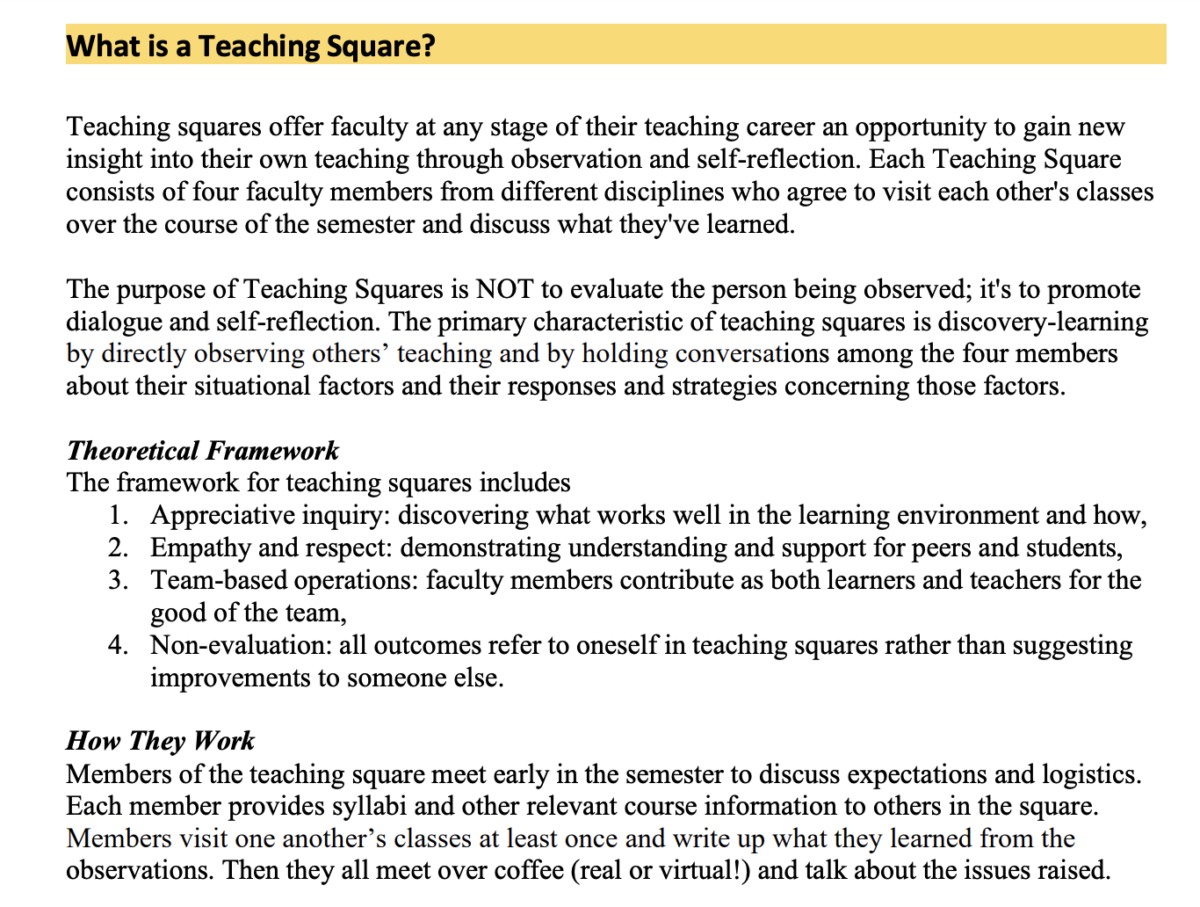
At University of Central Florida, instructors take part in Teaching Squares, groups of 4 faculty members that observe each others’ practice, self-reflect and discuss feedback and learnings with each other.
Embed Self-Reflection and Goal Setting
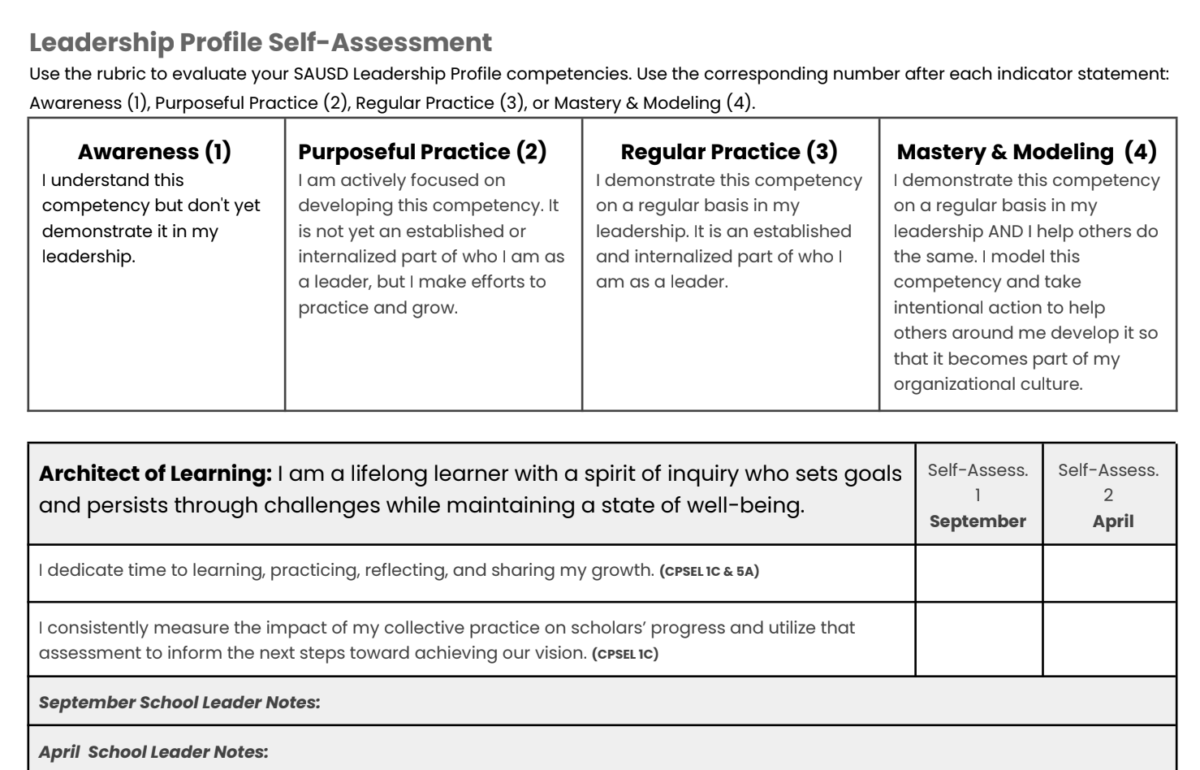
Educators and leaders at Santa Ana Unified School District self-reflect on competencies aligned to the Graduate Profile and then set goals based on their self-reflection.
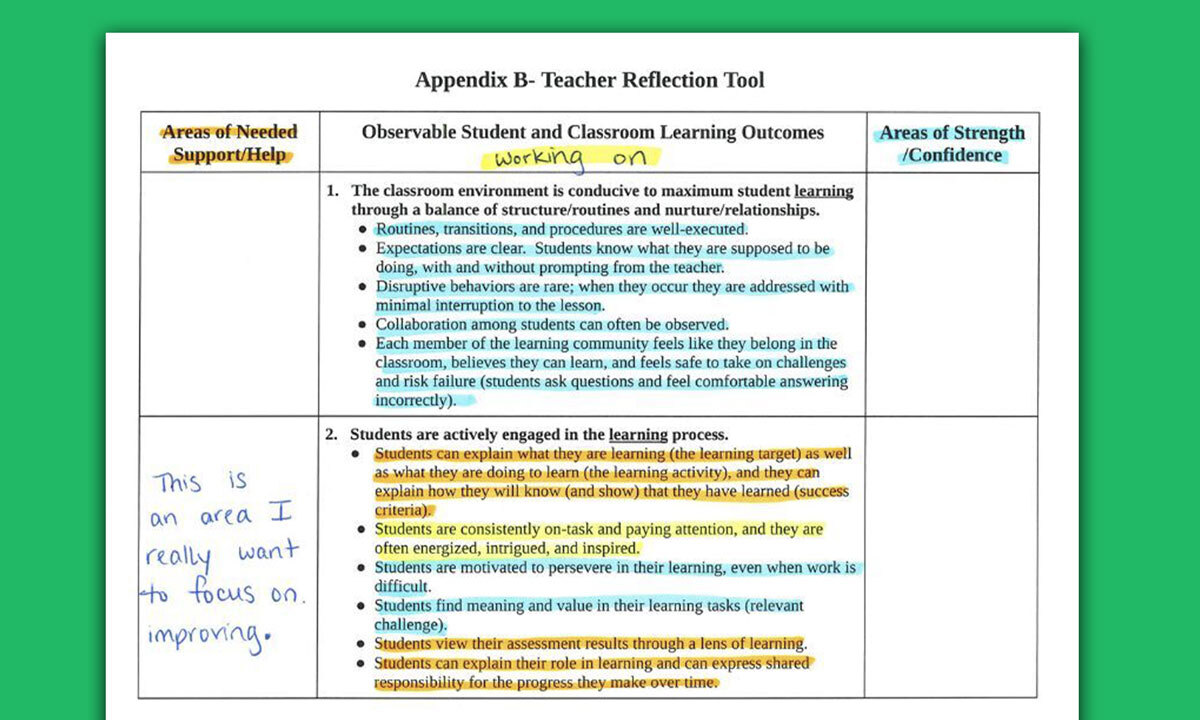
Learning Walk Cards
Having cards like these that detail what things you might be looking for helps educators and leaders have shared language of what they might be observing. Rather than using these cards as a checklist or evaluative, they are meant to be a reflection tool for those conducting the learning walk and a conversation starter.
- Do you have clarity on educator roles and responsibilities? If not, review this resource.
- What structures for observation, evaluation and reflection do you currently have in your system for educators and leaders? What do you want to continue, stop and/or start? How can you adapt some of your current structures to shift from compliance and accountability to feedback and growth?
- How might you align your growth plans and evaluations to a shared framework of what teaching and learning should look like in your system?
- What will it look like for educators and leaders to go through growth plan and evaluation cycles? Who will evaluate them? How will they be involved in the process through conversation and self-reflection? How will peer observation and support be leveraged? How often will cycles of learning take place? When?
- How can you create a culture of observation and feedback throughout the system?
- How can your professional learning plan be connected to these growth plans and evaluations? How can you incorporate competency-based professional learning structures?