Design Competency-Based Professional Learning Structures
Overview
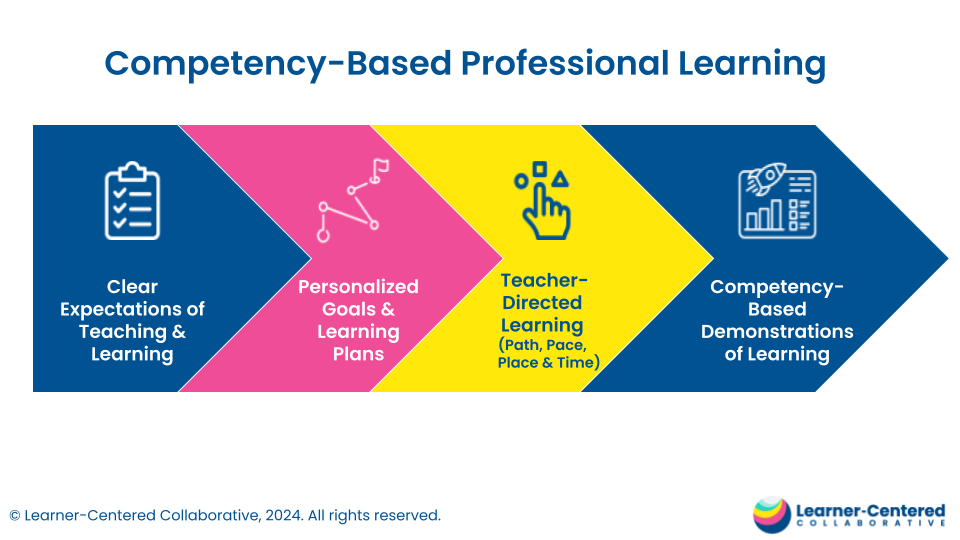
To create learning experiences that meet the needs of all learners in the modern world, it’s essential to establish clear expectations for learning and teaching based on a shared vision. This involves creating educator competencies that determine what teachers need to know and do to create desired learning experiences.
Teachers should be supported in self-assessing their strengths and goals to develop personalized learning plans. Providing clear learning goals while allowing for teacher-directed learning in terms of path, time, place, and pace empowers teachers to build on their strengths and preferences.
Shifting the focus to competency-based demonstrations of learning prioritizes the application of knowledge over mere attendance in professional development.
A system fostering personalized professional learning and robust support is necessary to integrate new learning into classrooms. This ecosystem should offer:
- safe practice opportunities
- model observations
- time for reflection and revision
- collaborative capacity building.
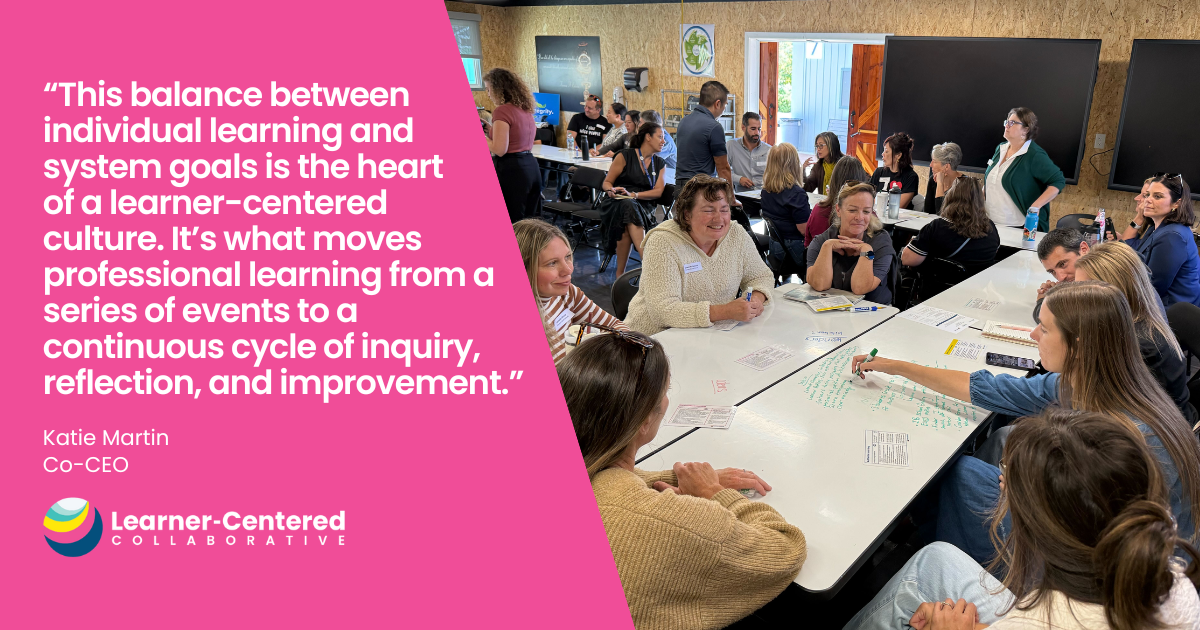
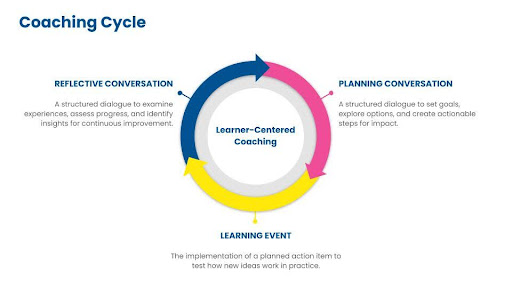
The power of professional learning lies in this continuous cycle, promoting sustained new learning and innovation based on the needs and interests of the learners.
Bright Spots
Micro-Credentials
Bethany worked on a micro-credential to learn about learner variability and strategies to support learners. She reflects and shares how she earned a micro-credential through learning cycles and evidence of impact on learners
By loading this video, you agree to the privacy policy of Youtube.
Personalized Learning Pathways & Competency-Based Demonstration of Learning
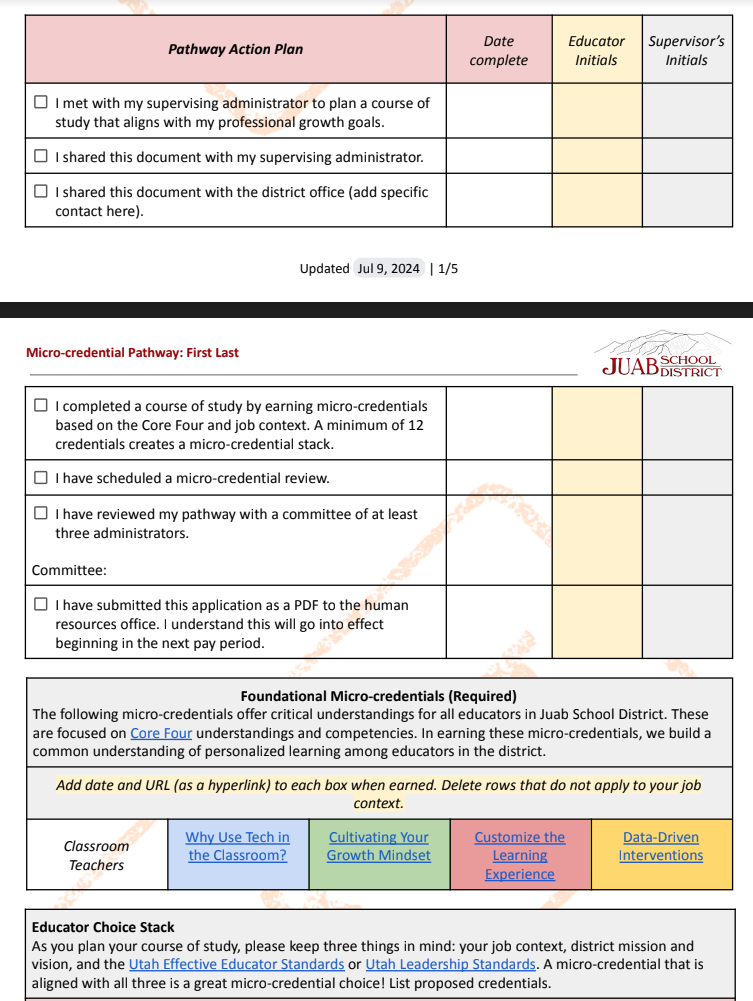
Juab School District Teacher Leadership Pathway provides 4 foundational micro-credentials and allows choice in the other 4 to develop skills based on their needs and goals. They choose from a library of micro-credentials on the Digital Promise portal and then submit evidence to show their application of a competency. This process supports educators in applying to be teacher leaders and provides opportunities for teachers to earn stipends based on their micro-credential earnings.
Develop Educator Competencies
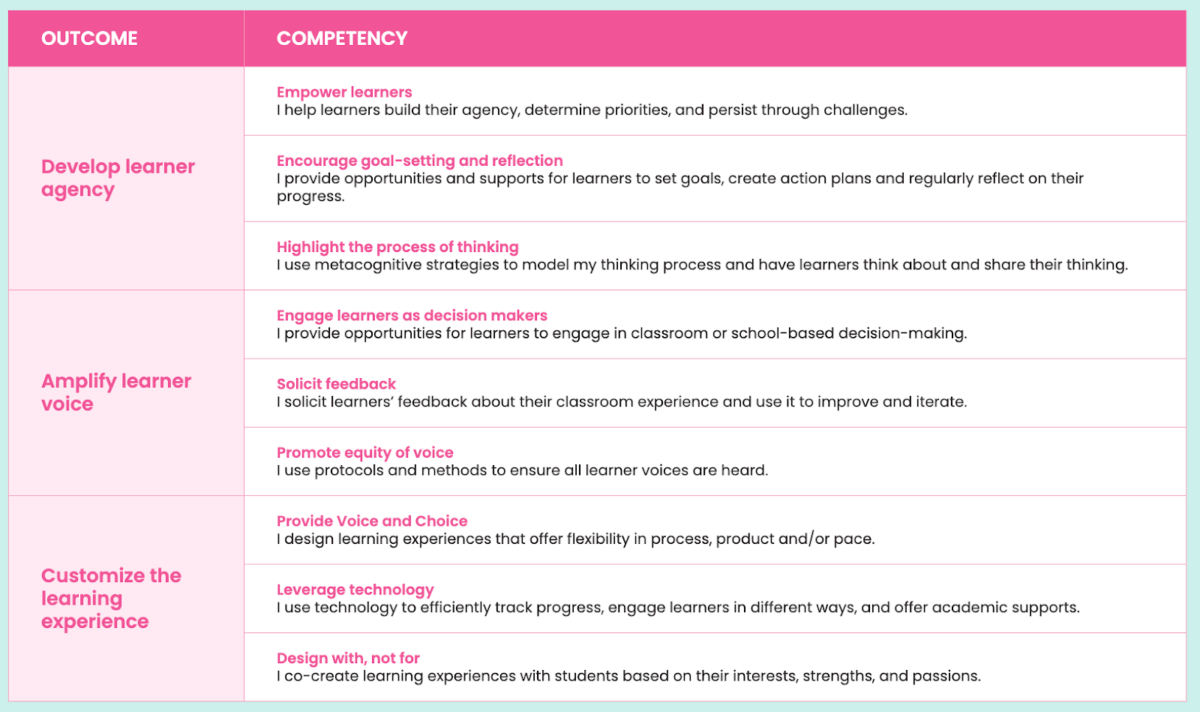
At Learner-Centered Collaborative we have developed a series of educator competencies that define learner-centered teaching and learning that is personalized, competency-based, authentic, equitable and inclusive. These competencies can then form the foundation for self-reflection, personalized learning (through exploring strategies or taking courses) observation, feedback and coaching and ultimately demonstrating competency through micro-credentials.
RESOURCES:
Inspired to explore more? Check out the research and guides below to consider how you might create a competency-based professional learning system.
📖 Read Moving Toward Competency-Based Professional Learning
📖 Read Competency-Based Professional Learning Infographic
📖 Read Building Confidence and Competence through Personalized Professional Learning
📖 Read Could This Tool Make Teacher PD More Relevant?
📖 Read When Micro Goes Macro: A Nationwide Review of States’ Educator Micro-Credential Policies
Questions to Consider:
- Have you clearly defined a learning model that includes educator competencies in your system to achieve your desired goals?
- How might you use professional learning plans and systems that already exist to shift to competency-based professional learning?
- How might you use micro-credentials to develop educator and leadership skills?
- How might you incentivize educators to pursue personalized professional learning by acknowledging their work and growth?