If No One Was Telling Us What To Do, What Would We Build?
For decades, K-12 educational leaders have worked within a system and structure of someone else’s design. We’ve generally been operating with an “outside-in” policy model where Federal rules, funding, accountability systems, and compliance requirements have shaped what we do and how we think about what is possible. State Departments and local education agencies have incorporated those regulations and added to them, creating a multi-layered set of influences on what happens with learners.
First, though, it’s important to understand how our assumptions around success have been shaped. Federal accountability related to academic outcomes began in the 1980s, heavily influenced by the publication of “A Nation at Risk.” This publication set the stage for decades of federally mandated standardization, most notably with the passing and implementation of the No Child Left Behind Act (NCLB).
NCLB required specific measurements, reports, and documentation that were translated into habits and practices that were either never legally required in the first place or have since been pulled back.
Yes, there are creative ways to work within these boundaries and develop learner-centered experiences all the same, but the constraints can feel limiting, and the energy required to create dual-operating systems and other solutions can feel unsustainable. That’s nothing to say of the shifting nature of the boundaries themselves.
Now, there’s a growing question around the viability of the Department of Education. If the department is shuttered or broken into pieces that are redistributed, what will happen to Federal Accountability? Title programs and funding? What will happen to the Office for Civil Rights? How about IDEA enforcement? What data do or don’t we need to be collecting moving forward?
All of these questions are valid, but I think there is a different one we should be asking that might unlock a very different line of thought:
If no one was telling us what to do, what would we choose to build?
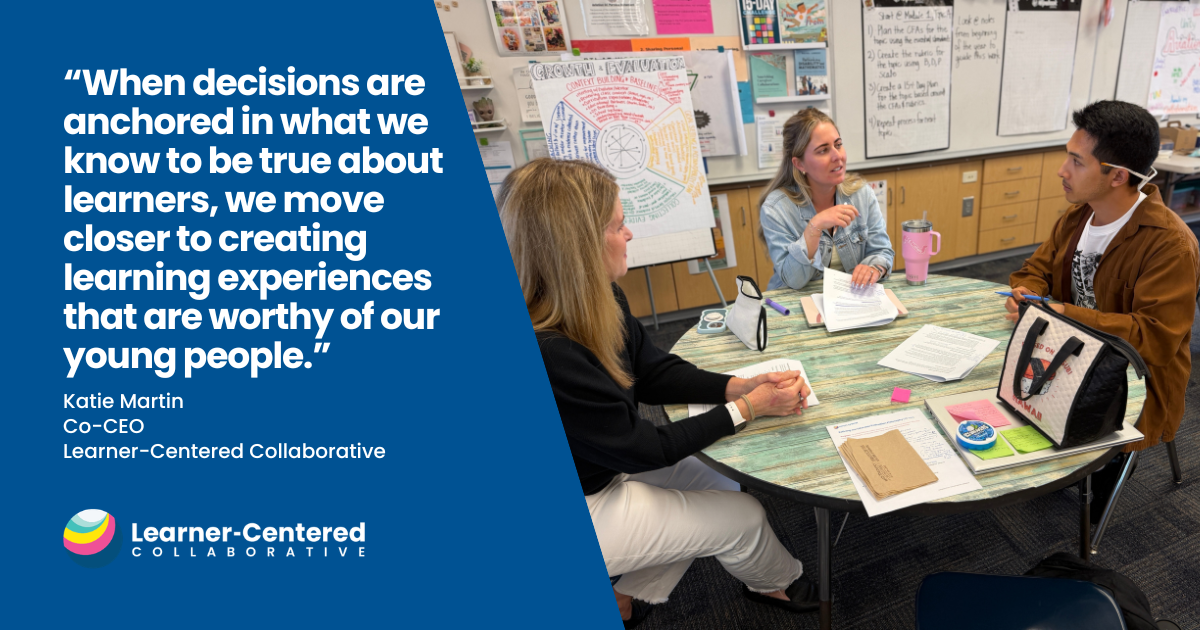
This question is evergreen. Regardless of the institutional infrastructure in place, it is our responsibility to explore whether or not we’re ready to shift into a different mode of thinking, one that centers learners and learning by design.
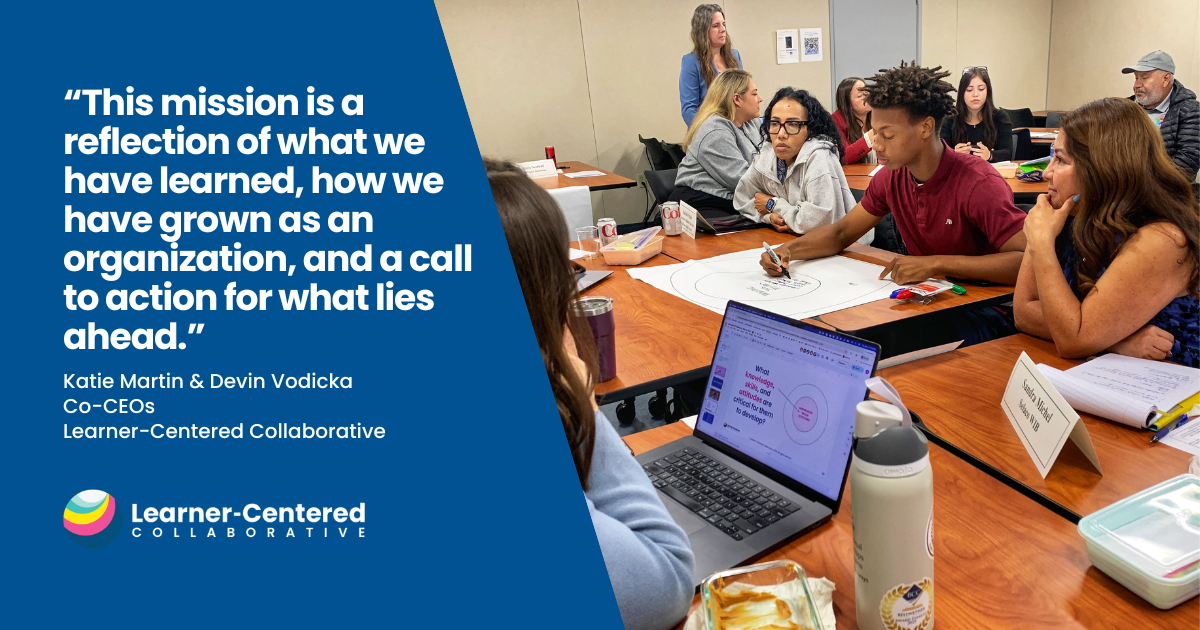
Learner-Centered Collaborative’s Ecosystem Framework is a great place to begin your exploration. From defining whole-learner outcomes to establishing your school or district’s enabling conditions and culture, this Framework molds to your community’s context, not the other way around. In fact, it requires an ongoing, collaborative conversation with the community—what we call a Guiding Coalition—that centers the voices of learners; particularly, how they describe who they want to become, what will help them thrive in community, and what will help them actively engage in the world as their best selves.
Redefining Success When Old Measures No Longer Serve Us
As soon as those community conversations begin, it is incumbent upon us to explore what success means in this new system we are building.
This is one of the great things about Guiding Coalitions. Participants like parents, young learners, and community members enable us to think beyond our familiar habits as educators and explore what new possibilities we might create together: What if learning happened out in the community? What if working through adversity (e.g., failing and trying again) was a metric of success? What if a learner could get lost in a topic they love and create something we could have never planned for?
“What if” is where possibility is born. Again, if no one was telling us what to do, what would we choose to build?
Staying Focused on Purpose in a Time of Uncertainty
Uncertainty around the role the federal government will (or won’t) play in setting and enforcing educational rules and regulations can divert our attention away from the real opportunity that is present and available to us already. We must remain focused on our purpose. Why are we in education?
As long as our purpose remains clear and our communities work toward it together, we will continue taking the steps needed to ensure every learner knows who they are, thrives in community, and engages in the world as their best selves.
If you’re community is ready to explore the “what if” of education and learning in your community, let’s connect!