Ladder and Knot Outcomes

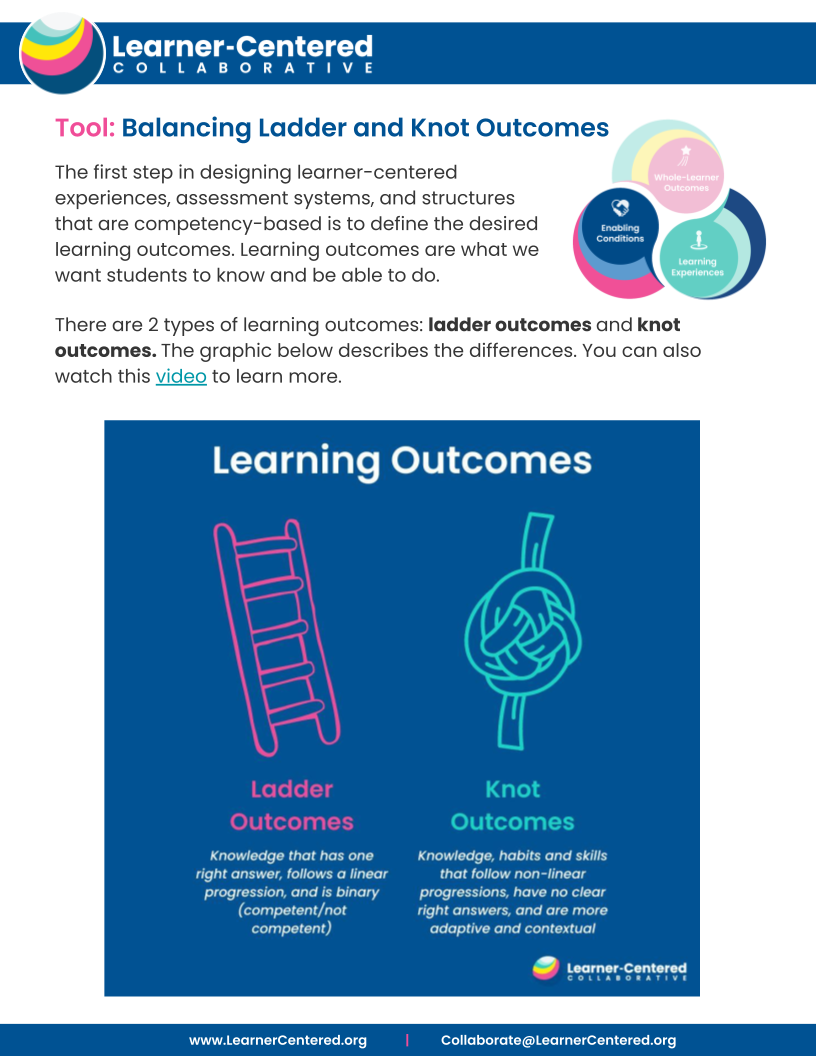
Ladder & Knot Tool cover

The first step in designing learner-centered experiences, assessment systems, and structures that are competency-based is to define the desired learning outcomes—what we want students to know and be able to do. 

There are two types of learning outcomes and, ideally, we are tending to both. We often think of them as Ladder and Knot outcomes. This tool provides an overview of each type of outcome and will guide you to identify and reflect on the outcomes in your current practices. 

Please complete the form below to access the resource.
 

It’s Your Journey

Explore More Topics

Blog
Rethinking SAMR in the Age of AI: Why the Model Needs a Second Axis
This article originally appeared on Getting Smart and has been republished with their permission. Written by Vriti Saraf, Nate McClennen, & Katie Martin Key Points The SAMR model needs a second axis (positive vs. negative impact) to better evaluate AI’s effect on teaching and learning. AI’s role in education is nuanced—its success depends on…
Blog
What an 8th-Grade Defense Taught Me About Competency-Based Learning
Written by Maysa Dadmun Have you ever watched a student light up when they get to learn about something they truly love? That spark is what shaped my entire 8th-grade defense project, and now, as a freshman in high school, it’s shaping the way I approach learning every day.  I attended Sussex School, a…
Blog
If No One Was Telling Us What To Do, What Would We Build?
For decades, K-12 educational leaders have worked within a system and structure of someone else’s design. We’ve generally been operating with an “outside-in” policy model where Federal rules, funding, accountability systems, and compliance requirements have shaped what we do and how we think about what is possible. State Departments and local education agencies have…