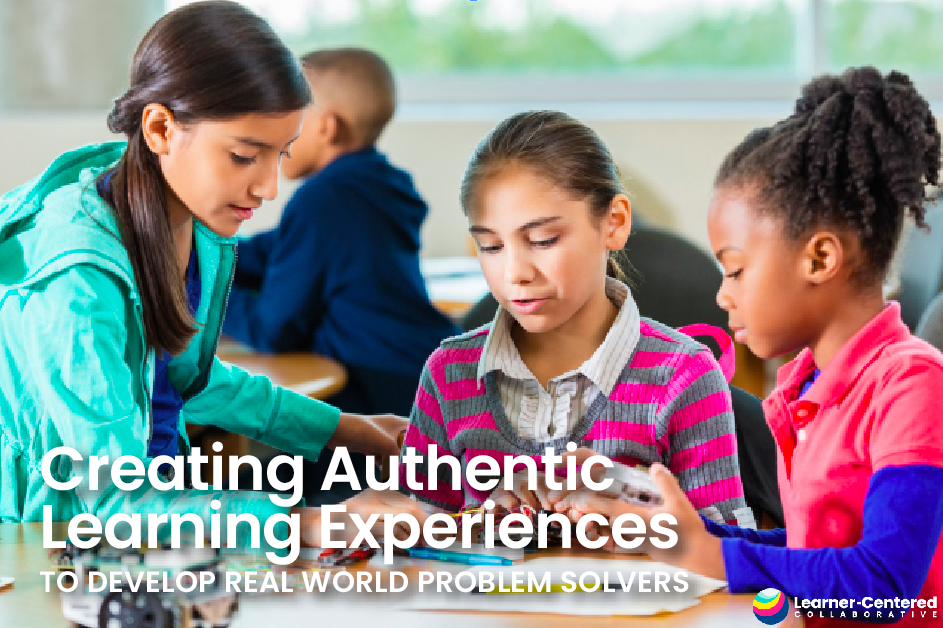
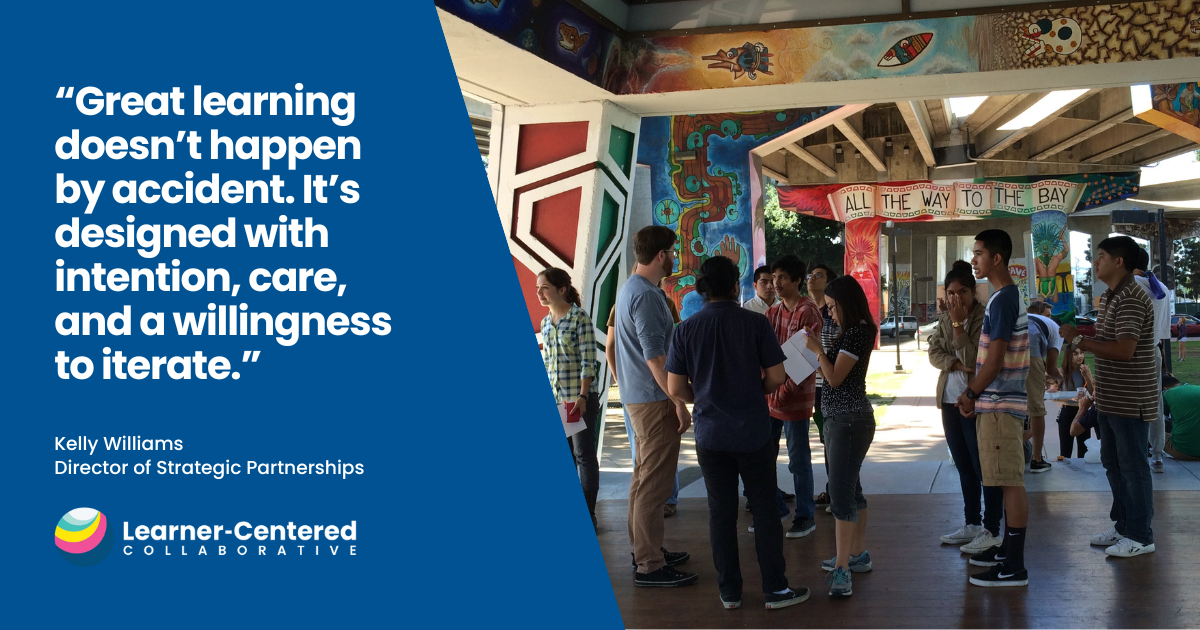
As an English teacher co-leading an interdisciplinary project with a science teacher, I had the privilege of working alongside high school seniors as they explored what it truly means to survive. We called it the Science of Survival. Over the course of the project, learners read stories of survival in fiction and nonfiction, interviewed…
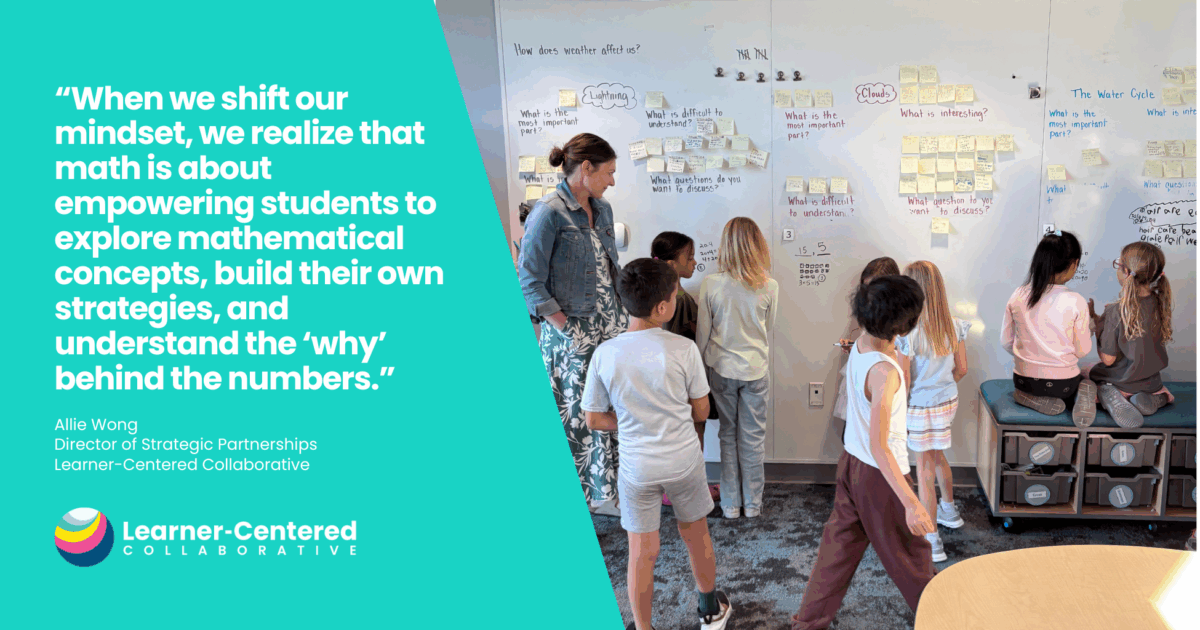
In a learner-centered classroom, math is about more than numbers and formulas—it’s about curiosity, exploration, and making sense of the world. Picture this: It’s 10:00am in Ms. Kim’s 3rd grade classroom and students are gathered on the rug around a chart. Two students have just finished sharing their strategies with the whole class on…
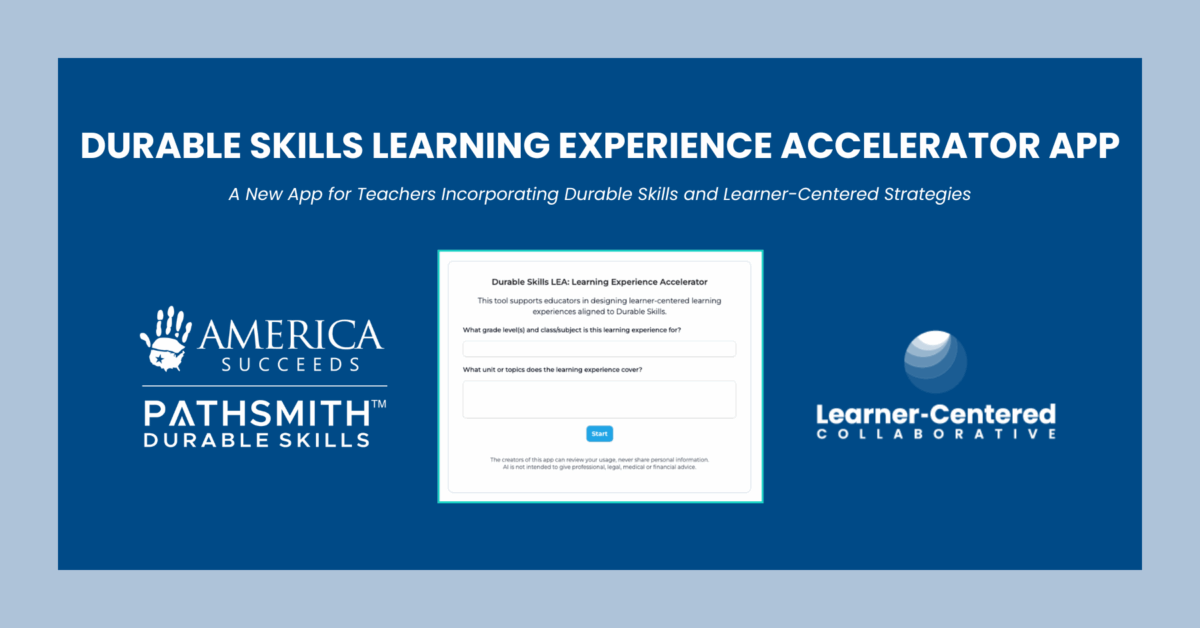
Welcome to the Durable Skills Learning Experience Accelerator (LEA) App! If you are an educator looking to embed Durable Skills into your learning experiences, lessons, units, and projects you’ve come to the right place. Trained with the Pathsmith™ Durable Skills Framework from America Succeeds and learner-centered strategies from Learner-Centered Collaborative, this powerful tool supports…
Overview With a shift to learner-centered learning and in the age of AI, the role of the educator is also shifting and so are school-centered structures of one teacher teaching a group of students all the same grade level. This means roles are shifting beyond traditional boundaries where educators are also leaders and work…
FOR IMMEDIATE RELEASE February 9, 2026 Contact: Devin Vodicka & Katie Martin, Co-CEOs Learner-Centered Collaborative press@learnercentered.org Learner-Centered Collaborative Launches Southern California Microschool Network with Support from Silicon Schools Fund SAN DIEGO, CA — Learner-Centered Collaborative, a national nonprofit organization, is leading the launch of the Southern California Microschool Network, a groundbreaking regional initiative supporting…
The idea of microschools is generating growing interest across the education landscape. They’re showing up more frequently in philanthropic conversations, conference sessions, and learner-centered education spaces as leaders look for new ways to respond to longstanding challenges and emerging opportunities. For school and district leaders, this rising interest can feel irrelevant to their local…
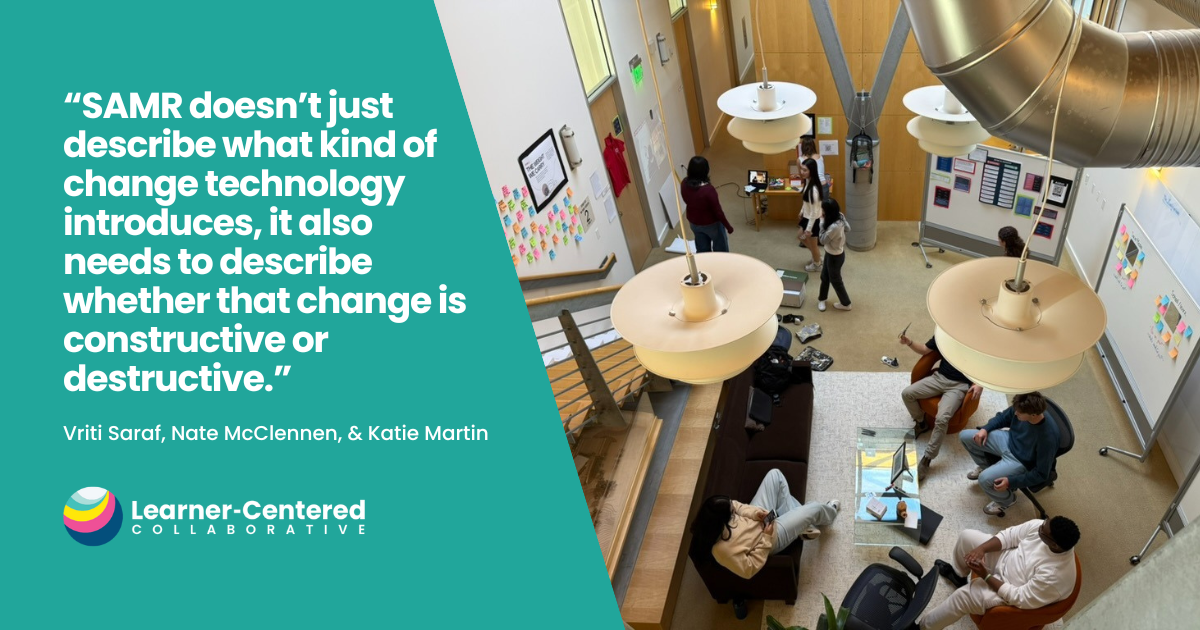
This article originally appeared on Getting Smart and has been republished with their permission. Written by Vriti Saraf, Nate McClennen, & Katie Martin Key Points The SAMR model needs a second axis (positive vs. negative impact) to better evaluate AI’s effect on teaching and learning. AI’s role in education is nuanced—its success depends on…
This website uses cookies to improve your experience. If you continue to use this site, you agree with it. Privacy Policy