This is Our Opportunity to Create A Learner-Centered Path for AI Integration in Education
In conversations across the country, I hear a growing mix of excitement and apprehension about the role of artificial intelligence in education. Many see the potential, yet most also sense a disconnect between what today’s AI tools produce and the kinds of learning experiences we want for young people. This tension is not incidental—it reflects a deeper issue in how AI currently “understands” teaching and learning.
Most generative AI tools carry a built-in bias toward traditional, teacher-directed instruction. A recent study examining 90 AI-generated lesson plans found that:
“…AI-generated content predominantly promotes teacher-centered classrooms with limited opportunities for student choice, goal-setting, and meaningful dialogue.”
In other words, these tools—often marketed as time-savers for teachers—are quietly reinforcing the industrial model of schooling we have been trying to evolve beyond for decades. Instead of opening new possibilities, they are automating old ones.
At a moment shaped by the rise of AI, shifting workforce demands, and declining enrollment, we cannot afford for our tools to pull us backward. This is precisely the time to lean into learner-centered approaches that cultivate agency, adaptability, and human flourishing.
AI is Trained on Traditional Assumptions. We Can Change That.
At Learner-Centered Collaborative, we see an urgent opportunity to influence the pedagogical DNA of AI systems. If the models we rely on are trained on traditional assumptions, their outputs will continue to reproduce traditional practices, no matter how innovative the interface may appear.
But what if the underlying knowledge structures guiding AI could reflect learner-centered principles?
What if AI could be primed to elevate learner voice, deepen inquiry, and promote authentic learning?
This is the vision behind generating a Learner-Centered Knowledge Graph—a structured way of embedding Learner-Centered Collaborative’s learning model, educator competencies, and strategy libraries into the underlying architecture of AI-powered tools.
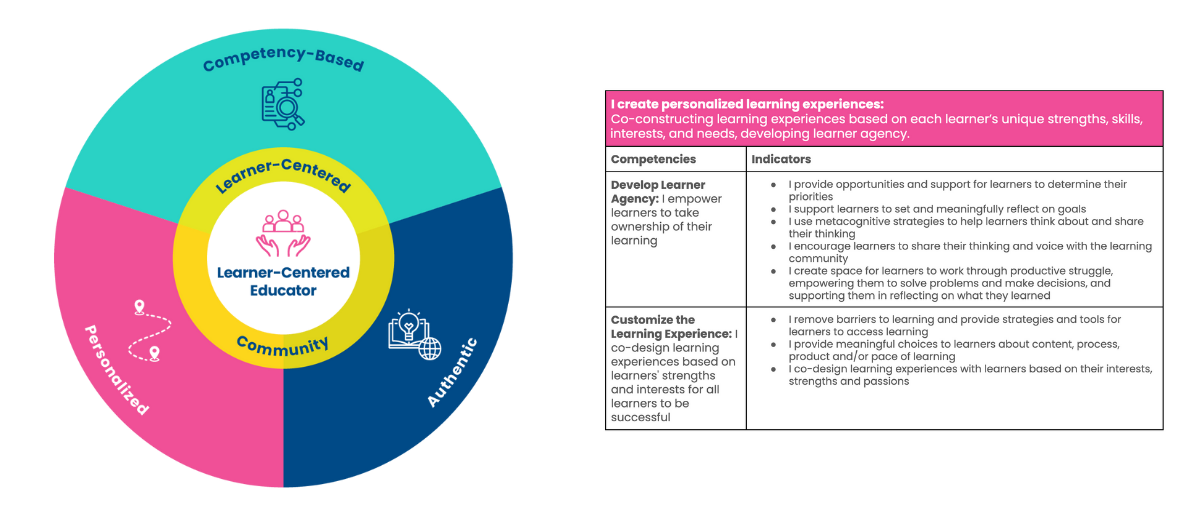
| Learner-Centered Collaborative’s Learning Model | Example of educator competencies for personalized learning experiences. |
What Happens When AI’s Base is Built on Learner-Centered Collaborative’s Framework?
In Playlab, we have begun testing what happens when learner-centered strategies are introduced directly into the context window, or short-term memory, of generative AI models. This allows us to limit what the AI model references when creating something like a lesson plan, so it doesn’t default on many decades’ worth of school-centered design principles and practices to inform its output. To test this idea, we ran an experiment with a 4th-grade fraction-comparison lesson from Illustrative Mathematics (IM).
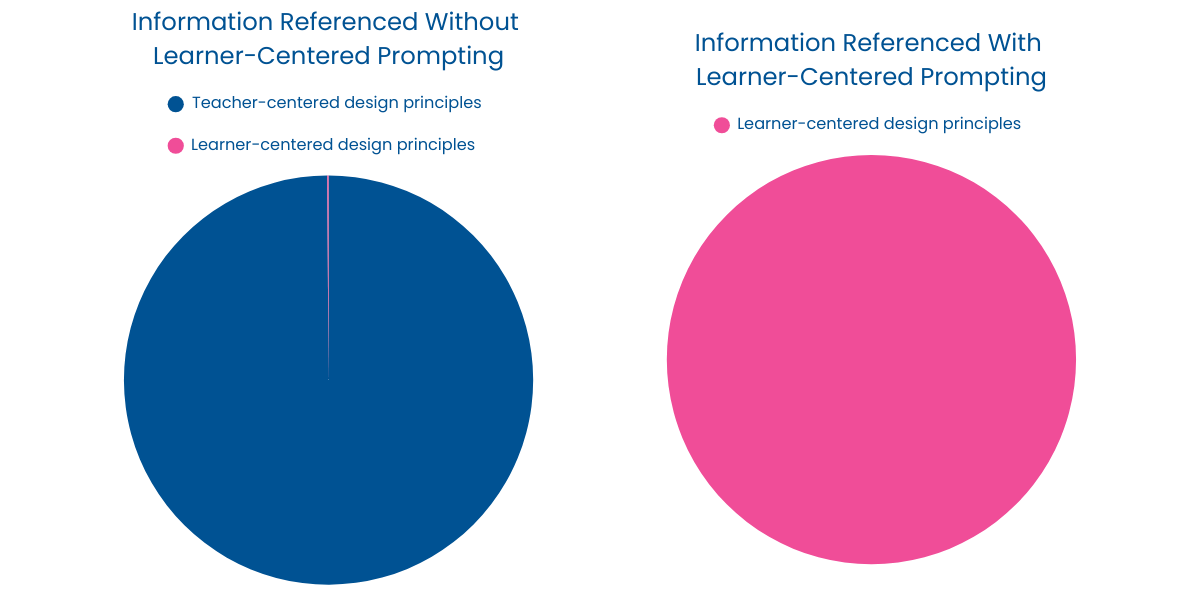
We prompted a generative model twice:
- Without any learner-centered guidance
- With the learning model and learner-centered strategies included in the prompt context
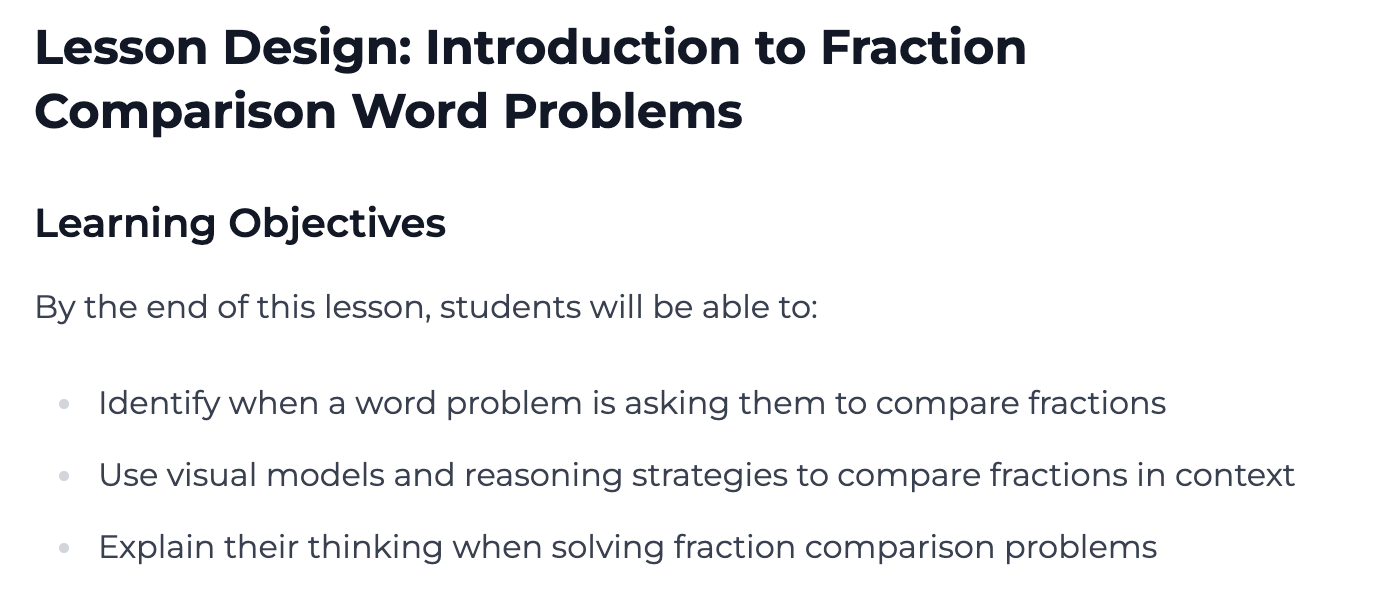
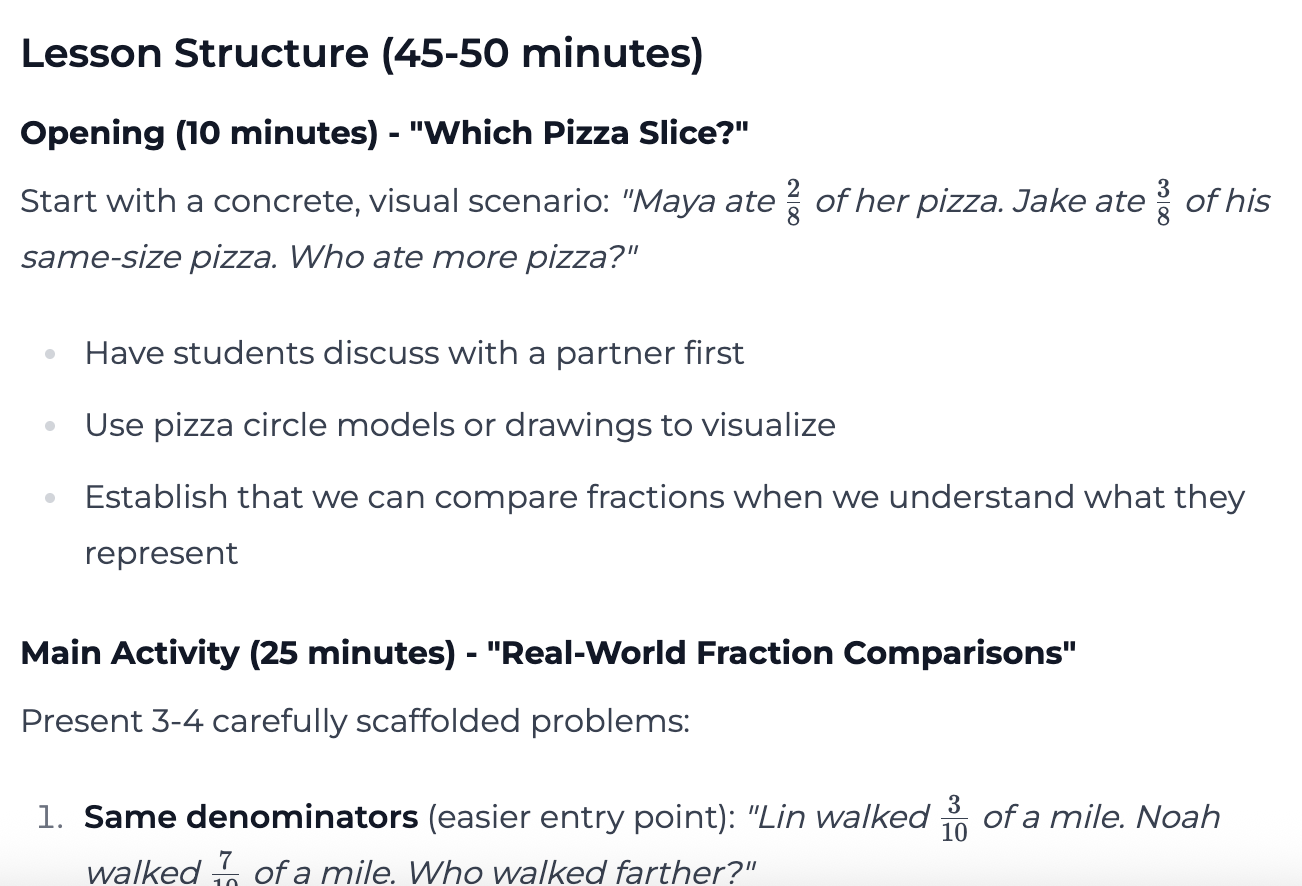
The results were striking. Check out the images below illustrating the clear difference.
In the first image set below, the lesson output mirrors the findings from the study mentioned earlier. The AI-generated plan defaults to:
- A direct instruction script
- Teacher-led demonstrations
- Procedural practice
- A multiple-choice quiz
- Little room for student dialogue or reasoning
With the learner-centered strategy page added, the second set of images reveals a fundamentally different approach. The model generated:
- A learner-led opening grounded in experience
- Collaborative sense-making activities
- Opportunities for learners to choose strategies that make sense to them
- Prompts that encourage metacognition and explanation
- A performance task rooted in real-world contexts
This is a measurable shift—from delivering content to supporting learning.
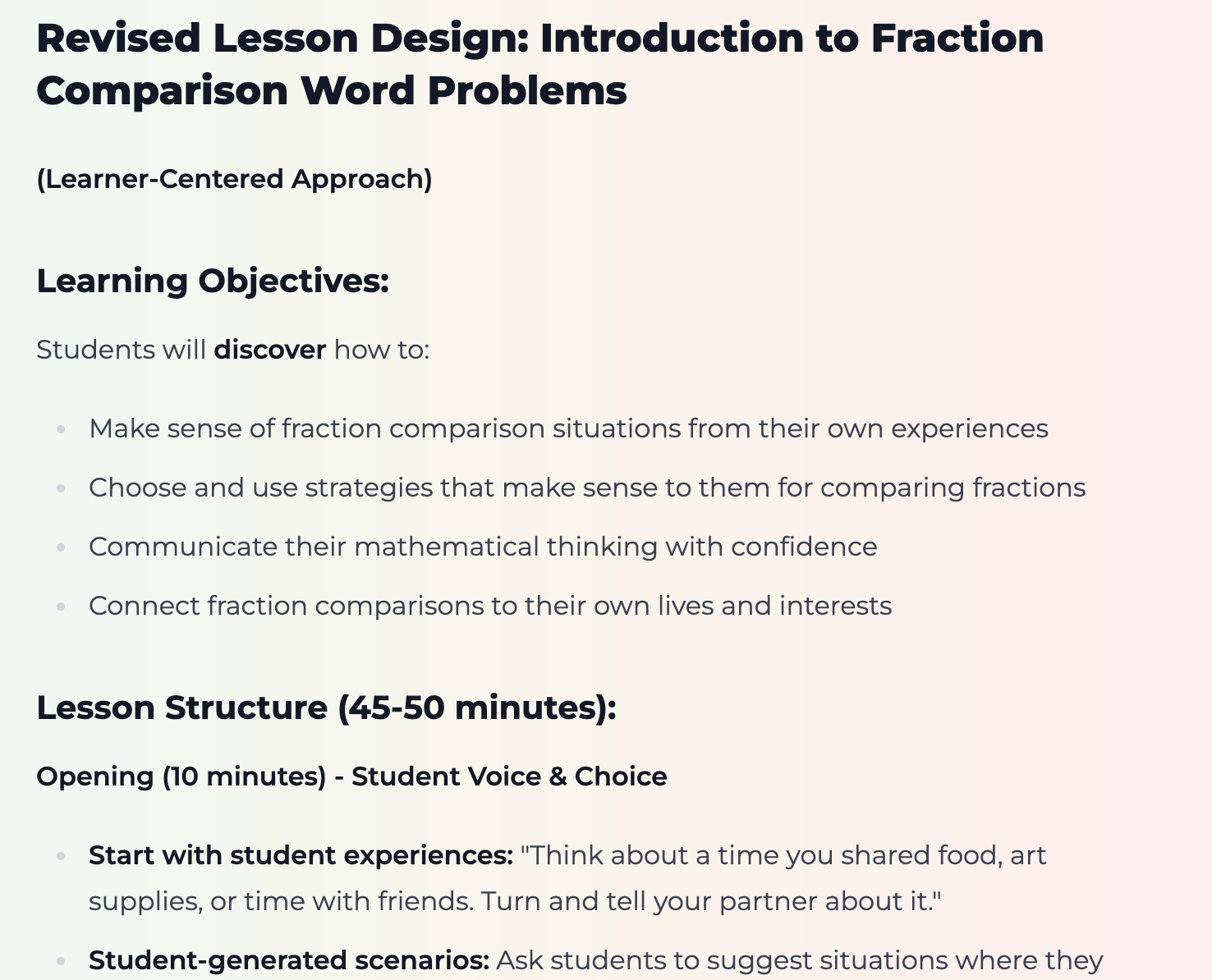
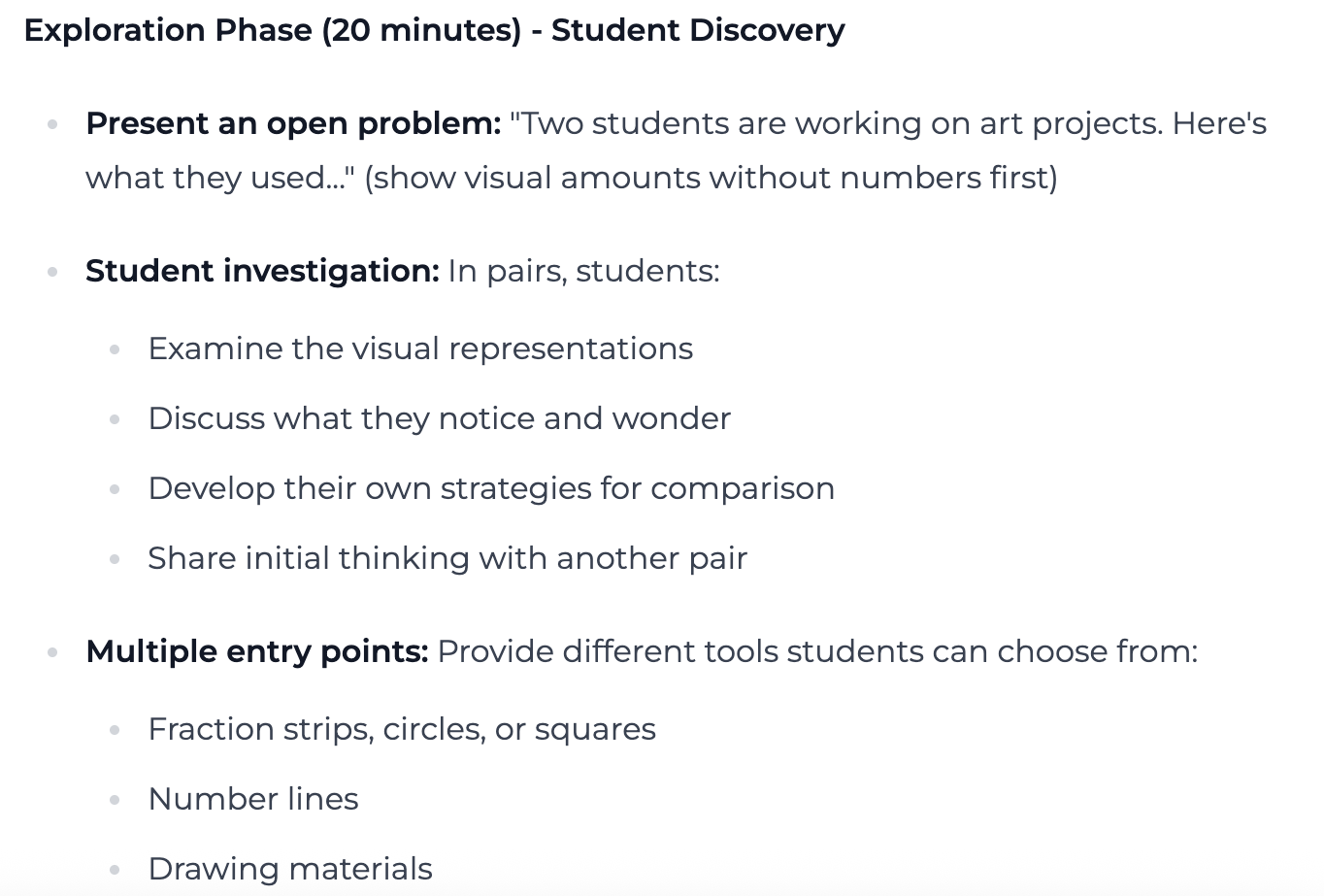
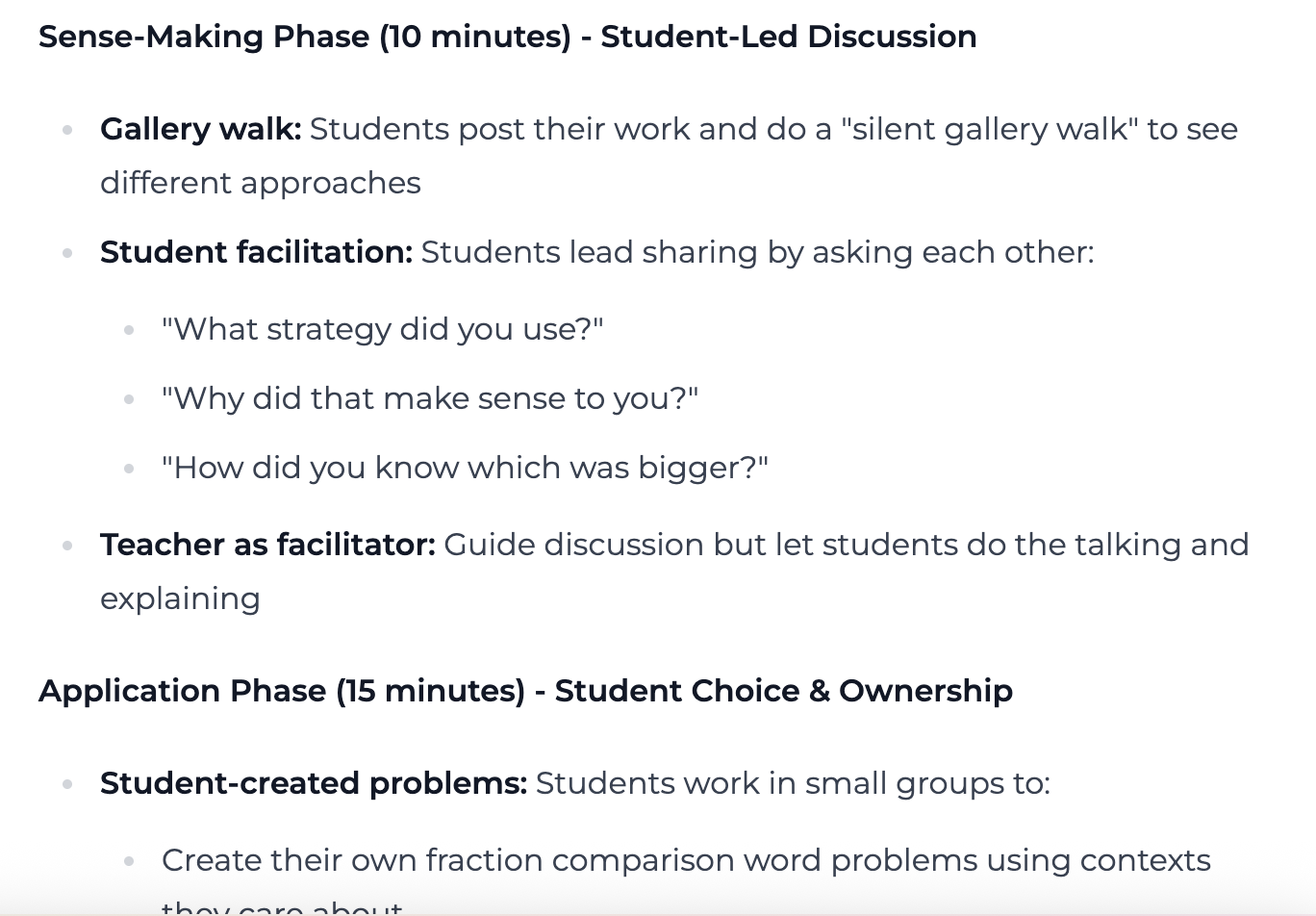
The contrast between the two lesson designs illustrates that when learner-centered guidance is present, AI behaves much more powerfully and is aligned to the type of learning experiences learners need today.
The Lesson? We Must Proactively Guide AI.
Public school districts are facing mounting pressures: rapidly changing workforce needs, the accelerating capabilities of AI, persistent barriers to access and support for all learners, and declining enrollment. These dynamics create an opportunity for bold, learner-centered evolution rather than efficiency upgrades to outdated systems.
But AI will not generate that future on its own.
We must design and input the pedagogical foundations that guide it.
As a field, we have a window of opportunity to shape the next generation of AI tools—tools that could democratize access to deeper learning, support teachers in powerful ways, and help students develop the competencies they need to thrive in a world profoundly reshaped by technology.
Learner-Centered Collaborative is helping lead that work, and we are looking for partners to continue its development.
Want to Design With Us?
The early signals from our Playlab experiments suggest that learner-centered tools can meaningfully shift AI outputs toward deeper learning, engagement, and personalization. But this is only the beginning.
We envision co-developing a robust Learner-Centered Knowledge Graph that can be integrated across platforms—powering lesson generators, coaching tools, tutoring systems, and curriculum supports that align with what we know young people truly need.
To build this infrastructure for the field, we are seeking partners interested in testing, refining, and scaling this vision. Contact us here if you are ready to jump in on this work.