Moving From the Why to the How of Learner-Centered Change
Over the last decade, a meaningful portion of the “school change” conversation has been dedicated to the potential value and creation of graduate portraits (at the district and state levels), and I have been encouraged by how much energy that work has generated.
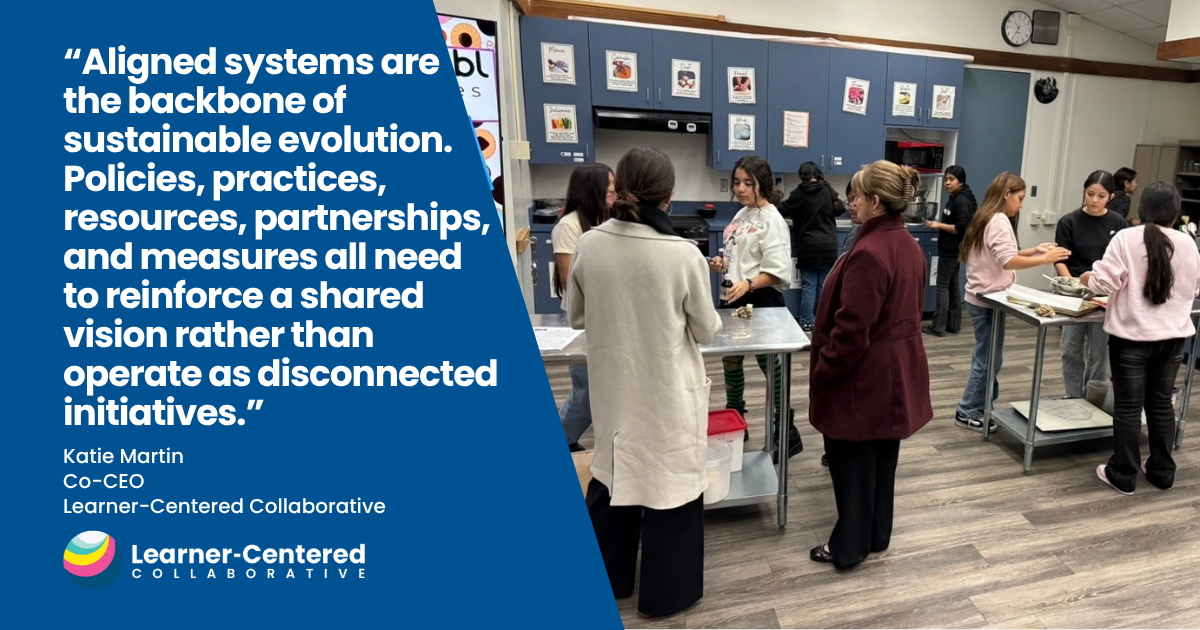
As Katie Martin has said previously, Learner-Centered Collaborative specifically uses the term Portrait of a Learner “because we believe the competencies we want to develop in young people should be modeled, practiced, and grown by the adults in the system as well.” In other words, we see an education community as a place where the adults are learners alongside the young people they serve.
As the conversation about portraits has evolved, it has helped normalize a belief that education is about more than a four-year degree. A four-year degree is a great goal for students to set their sights on, but if we limit the purpose of education to that singular academic goal, we miss a good part of what it means to holistically develop lifelong learners. I take this growing shared belief as a sign that the “why” of educational change is better understood today than ever before, which opens a more energized conversation around the “how.” How do we actually begin? What do we do first, and with whom?
As we navigate this question, Peter Block offers a word of caution in his book The Answer to How Is Yes. Block suggests that we can often get stuck repeatedly asking “how” without taking meaningful action. Instead, we wrestle with all the possibilities in front of us, falling into analysis paralysis, hoping we can know what will work before testing anything out. Searching for the “right” method can become a way of putting off a decision.
To avoid this type of indecision, we can shift from “will this work?” to “is this the right thing to do based on the information we have right now?” And, “once we implement a new idea, are we willing to learn and iterate as new information becomes available?”
A Self-Reflection That Moves the Work Forward
Moving from analysis to action does not require certainty, but it’s important for the team to have alignment on what the learning community is going to test out. Creating this alignment requires understanding where the system stands today and which conditions are already in place for new ideas to take hold.
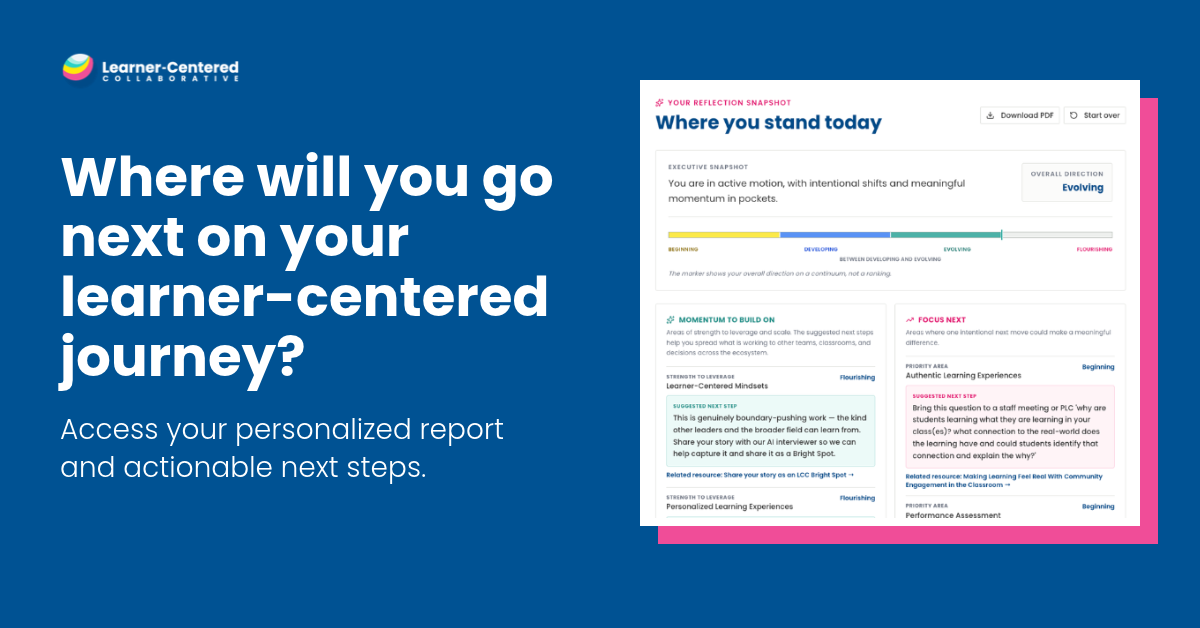
A structured reflection can give teams that starting picture, and our Learner-Centered Ecosystem Self-Reflection tool is designed for exactly that purpose. Because it is tied to our learner-centered ecosystem framework, it provides a clear look at where a district system stands today and offers tangible next steps for what a leadership team might pursue next. The tool provides an energizing space for teams to explore questions related to Whole-Learner Outcomes (often called durable skills), the district’s Learning Model, School Design, and Enabling Conditions & Culture.
Importantly, this tool is not about scoring or judging where your district is on its learner-centered journey. Its purpose is to create clarity and alignment.
Change management and change leadership are hard at any time, but when a team is clear on the why, aligned on where the district stands, and ready to say “yes” to “how,” sustaining momentum and taking the next best step with confidence is much easier. As always, our team is here to support you, so if you have any questions about your next step, reach out to us here to schedule a call.