Testing Change Helps Educators Learn Their Way Forward
There’s a paradox at the heart of meaningful change in education: educators need shared direction while maintaining individual ownership within their schools and classrooms. They need coherence across a system and professional learning that honors and grows the ability to adopt new practices for their unique learners and contexts.
Testing change honors this paradox. It provides a sense of shared purpose while creating space for educators to experiment, adapt, and build understanding together in low-stakes, intentional ways.
Rooted in principles of design thinking, testing happens early and iteratively as a disciplined way to gather evidence and refine practice.
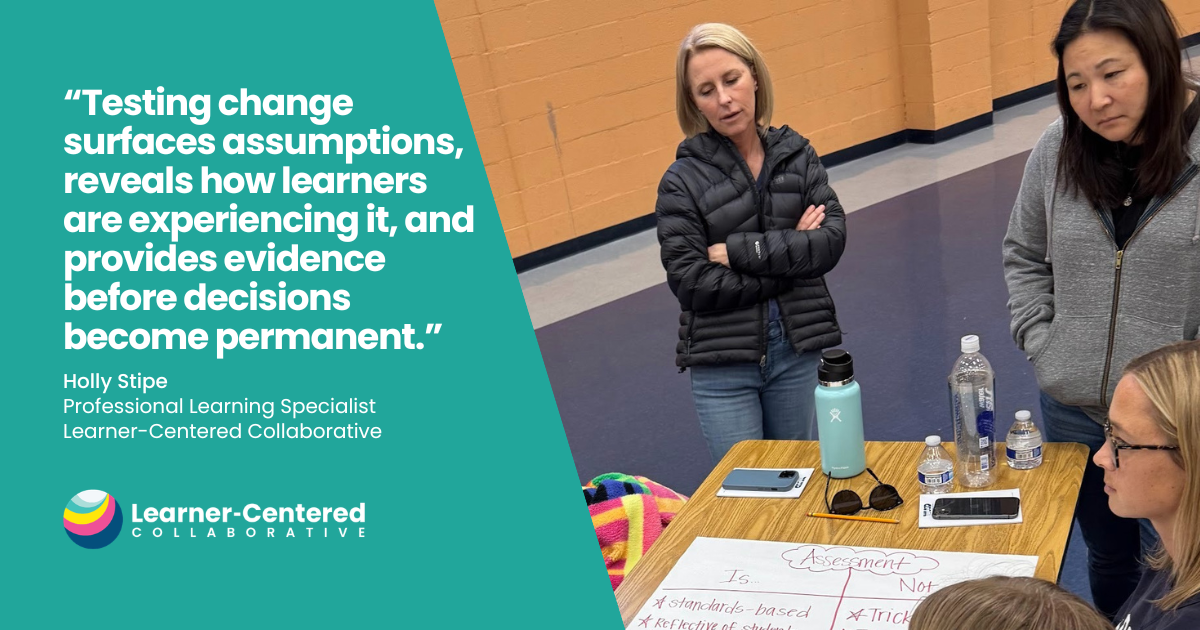
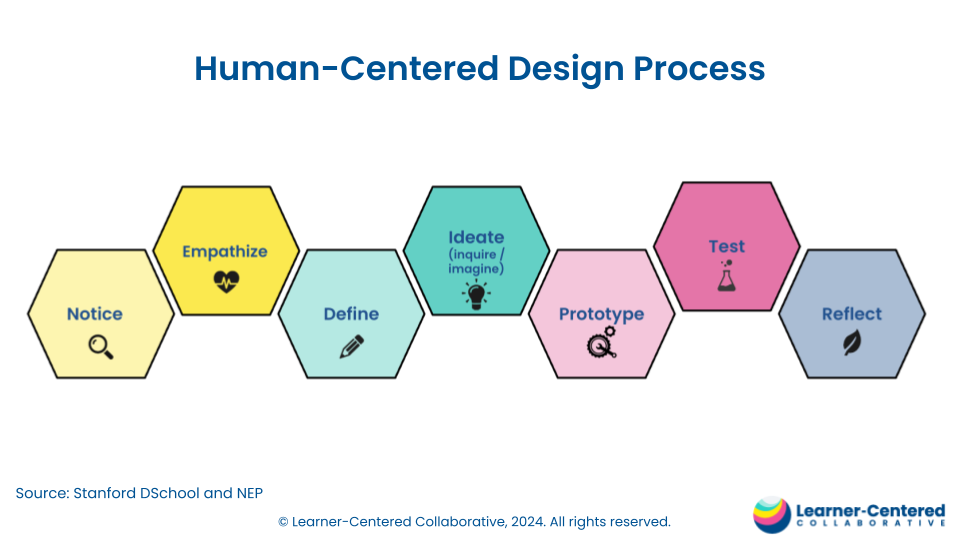 The goal isn’t to prove an idea is right; it’s to learn. Testing surfaces assumptions, reveals how learners are actually experiencing the change, and provides evidence before decisions become permanent. Instead of committing to full-scale implementation before there’s evidence, teams learn their way forward.
Sometimes testing takes the form of a formal pilot. Other times, it’s simpler: a team prototyping a new routine, trying a new instructional strategy, or revising how learning is made visible to students. Across contexts, the purpose is the same: learn before deciding.
Read More: The Learning Experience Design Cycle: A Compass for Designing Deeper Learning
Navigating the Emotional Response to Change
When change is on the horizon, some educators might show resistance, but it’s important not to misinterpret this response. It’s rarely about an unwillingness to change and is more often a fear-based response:
- Fear of getting it wrong
- Fear of unintended consequences
- Fear of added expectations without adequate support
Effective leaders anticipate these emotions and create space to surface them without judgment. They use testing structures to help teams examine concerns alongside evidence, rather than pushing past uncertainty.
Read More: How Learner-Centered Leaders Navigate Transitions
Testing lowers the emotional stakes of change. When people know something is being tried—not permanently adopted—they are more willing to take risks, raise concerns, and engage honestly.
It creates permission to say, “We’re still figuring this out.”

To make testing change both manageable and meaningful, it can be helpful to organize the work around five guiding questions. These questions reduce overwhelm, clarify next steps, and keep learning at the center:
- What already aligns?
- What shifts are we testing?
- What impact do we expect for learners?
- What will testing help us decide next?
- What support do educators need?
What already aligns?
When teams explore alignment, they surface both existing practices and the beliefs driving them. Looking for alignment reveals bright spots in practice and helps educators articulate what they already value about learners and learning.
As teams name what’s currently happening in classrooms, they begin to identify what’s underneath those choices—commitments to feedback, beliefs about student capability, or a shared desire for coherence and transparency. This makes alignment visible in two important ways:
- It shows where current routines already support the intended direction of change.
- It uncovers the beliefs that make those routines meaningful.
Together, practices and beliefs create a foundation for testing that’s rooted in shared values rather than compliance.
Read More: Why Mindset Matters in Cultivating Learner-Centered Change
Starting with alignment positions testing change as an extension of what educators already stand for, making future shifts feel purposeful, grounded, and possible.
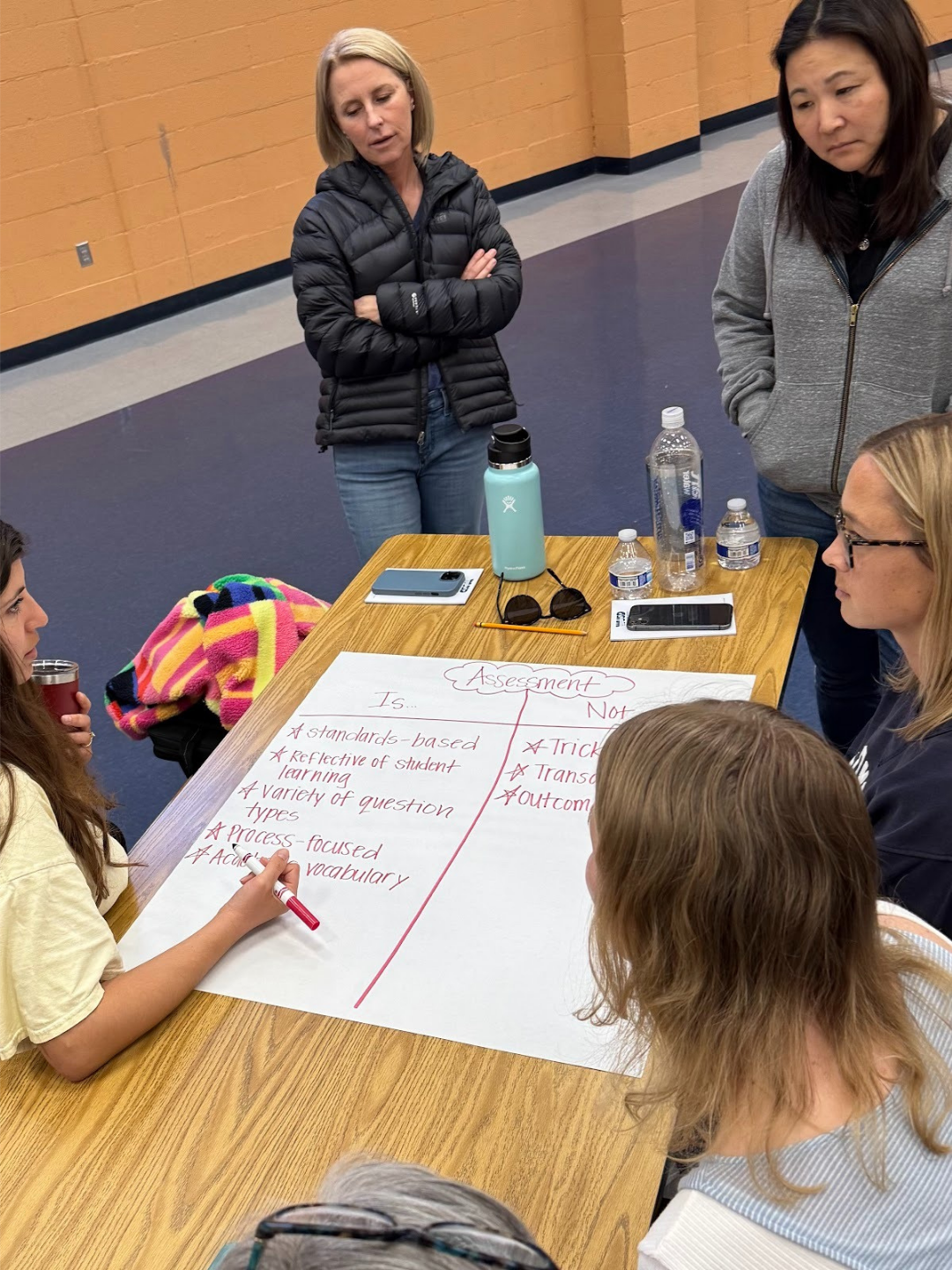 Educators at Wiseburn Unified School District gathered to explore intersections of practice and belief while working towards adopting a new assessment, grading, and reporting system.
What shifts are we testing?
This is where experimentation becomes specific and where ownership and coherence meet. Teams identify concrete shifts to test: new routines, tools, or approaches because they believe those shifts will impact some aspect of learners’ experience, such as clarity, feedback, or ownership. While the broader focus of the work is shared across the system, teams have agency in deciding which shifts to test based on their learners and context.
This balance matters. Coherence comes from shared purpose and learning goals; ownership comes from local decision-making.
For example, in a district working on a new assessment system, small groups might test how to:
- Make learning outcomes more visible to learners
- Design meaningful summative assessments aligned to outcomes
- Provide different types of ongoing feedback
Different teams may test different shifts, but they’re looking for similar kinds of evidence.
Because the work is framed as testing, educators aren’t being asked to commit forever or immediately let go of deeply held beliefs. They’re being asked to try, notice, and learn within a shared structure that allows the system to learn together. Coherence doesn’t come from uniform action; it comes from shared intent, shared learning questions, and shared reflection.
Download this Tool: Goal-Setting and Reflection Template
What impact do we expect for learners?
Testing change keeps learners at the center by defining evidence of success before implementation. Instead of asking, “Did we do the thing?” teams ask, “What will we look for to know this change is making a difference for learners?”
Rather than naming broad outcomes, educators identify specific indicators they’ll monitor during the test. This evidence might include:
- Students referencing their learning goals during reflection
- Learners using feedback to revise work
- Students explaining where they are in their learning without prompting
- Learners self-selecting strategies based on clarity about expectations
These indicators help teams see how learners are actually experiencing the change. As evidence emerges, teams use it to adjust and refine the test in real time.
Over time, this evidence does more than inform practice. It invites educators to examine and revise beliefs about what learners need and what’s possible when expectations are clear and feedback is used intentionally. By grounding impact in observable evidence, testing change keeps the focus where it belongs: on learners’ lived experience (not adult intention).
What will testing help us decide next?
Testing isn’t just about gathering feedback. It’s about making informed decisions. Before a test begins, teams should be clear about what decisions the learning will inform. Otherwise, feedback stays interesting but not actionable.
Testing can help organizations decide:
- Whether to expand, refine, or stop a shift
- Which practices or structures should remain stable, and which need adjustment
- Where to focus the next test
- Which beliefs may need to be examined or revisited
This question also sharpens focus around evidence:
- What evidence matters most?
- What signals will tell us we’re ready to scale or that we need another iteration?
- How will learning be shared with stakeholders so the insights strengthen the system as a whole?
When organizations treat testing as a decision-making cycle, momentum builds. Each round of learning reduces ambiguity and increases coherence because everyone moves based on shared evidence.
What support do educators need?
Testing change also makes visible something that’s often left unsaid: meaningful change requires conditions that allow educators to learn, reflect, and adjust. Support is not an add-on. It is the infrastructure that makes learning possible.
Across contexts, we have found educators consistently name the supports needed to test well:
- Dedicated time to plan and reflect on impact
- Opportunities to calibrate and examine evidence together
- Examples that make abstract ideas concrete
- Clarity around expectations and purpose
Naming supports shifts the conversation from individual effort to system responsibility. For leaders, this is also where belief work becomes visible. When systems provide time, clarity, and space for reflection, educators are more willing to engage honestly and more open to revising long-held assumptions.
The Cost of Skipping Testing
When systems move straight to implementation without learning, problems surface after time, energy, and credibility have already been spent. Leaders are forced to respond reactively rather than intentionally. Skipping testing doesn’t eliminate uncertainty. It simply postpones and often magnifies it.
Without structured opportunities to learn early, trust can erode. Educators may begin to question whether their experience and expertise are valued. Families may feel change is happening to them rather than with them. And systems often spend far more resources correcting, retraining, or reversing course than they would have invested in disciplined testing from the start.
When support is built into the testing structure, engagement deepens, and the work is far more likely to last.
As systems navigate change, these five questions offer a way to learn forward together. Leaders might ask: Which of these questions does our system need most right now? Starting there can turn uncertainty into shared learning and help change take root where it matters most: in the day-to-day experiences of the learners we serve.
Looking for support managing change in your school or district? Learn more about how Learner-Centered Collaborative partners with learning communities like yours to bring your learner-centered vision to life.