Defense of Learning
Overview
A school or district-wide defense of learning (sometimes called Presentation of Learning, Showcase of Learning, Demonstration of Learning or Celebration of Learning) is a way for students, at designated milestones or grade levels, to share a body of evidence of learning and reflect on how they grew towards their own and school/district goals, usually defined in a Portrait of a Learner. These events are designed for students to celebrate their strengths, identify their areas of growth, and next steps for learning. A committee of peers, teachers, family, experts, and/or community members provide feedback and determine if the student met learning outcomes, using a clear and agreed upon set of success criteria. In some cases, students must successfully defend in order to be promoted to the next grade or graduate, and re-defend, based on feedback and with support, if they’re not successful in their first attempt. In other cases, a defense of learning is simply an opportunity for learners to share their progress and receive feedback.
You can learn more about this in our course, Design Performance-Based Assessments.
See examples and videos from across the country in our NEW Exhibitions & Defenses of Learning Guide from our National Student Exhibition Webinar.
Bright Spots
Opportunities for Reflection & Sharing of Learning in Shelby County
At the end of 5th grade, students in Shelby County present a “Backpack Defense of Learning” where they share artifacts and examples of their growth and demonstrate their readiness to move to Middle School.
Support for Preparation at SEEQS

Clear Success Criteria in Logan County
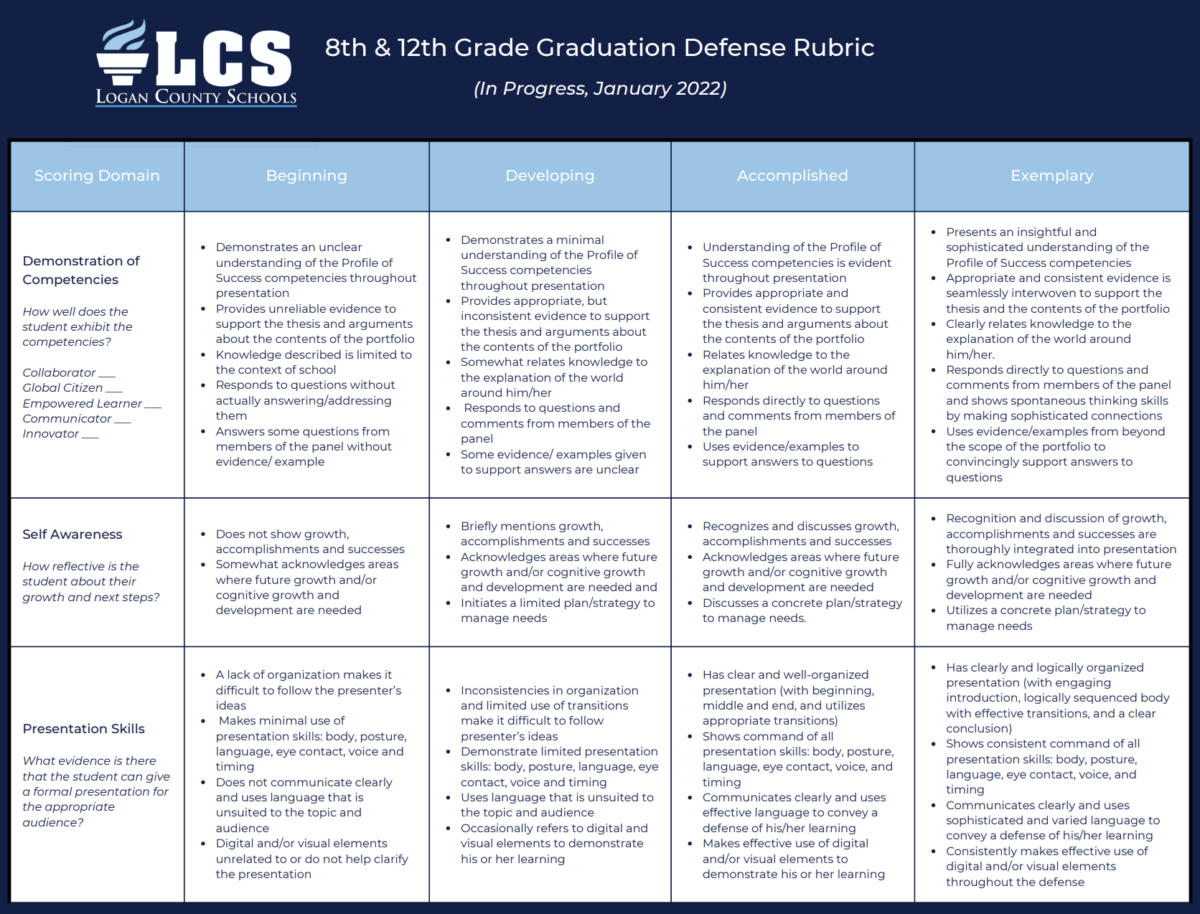
Students in 5th, 8th, 9th, 10th, 11th and 12th grades in Logan County defend their learning with the goal of demonstrating the competencies on the Learner Profile, showing self-awareness and building their presentation skills. This clear rubric for secondary students helps define the success criteria for the learners and the committee observing and reflecting on the defense of learning.
High School Presentations of Learning
By loading this video, you agree to the privacy policy of Youtube.
Students at High Tech High do a presentation of learning every year to reflect on their progress to a panel. Students at JCPS do this as well as part of a graduation requirement in 12th grade.
Evaluations for Progress

Panelists, including peers, families and mentors, at Highline Big Picture High School use this feedback guidance when reflecting on student progress and whether they are on track to level up. The school calls these Exhibitions of Learning and they follow these expectations.
Create Clarity Among Teachers About the Defense Process
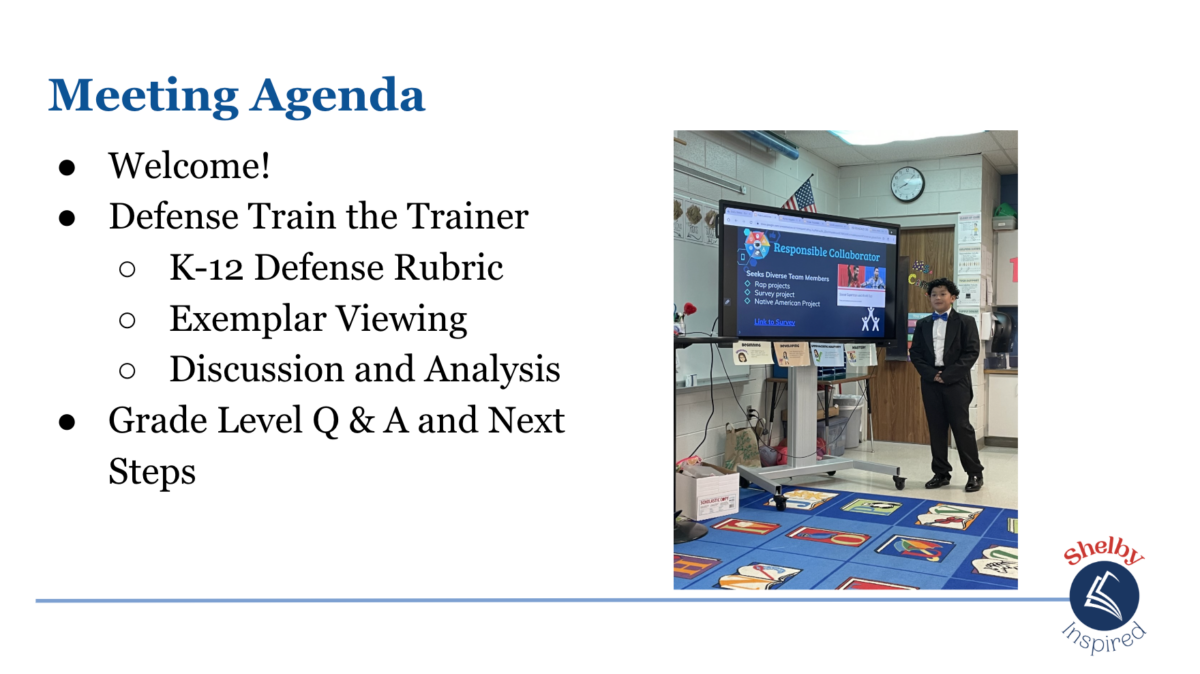
At Shelby County, teachers participate in a Defense of Learning calibration process to understand how to use the defense rubrics consistently and according to district expectations. The training creates clarity and consistency for students who are defending their learning associated with the Profile of a Graduate. One clear expectation is that scorers are to pay attention to the students demonstration of the Profile competencies, not presentation skills. This makes the defense process truly about students demonstrating competency on the Profile of a Graduate skills. See more about their process here.
Questions to Consider:
- What outcomes will the defense be aligned to, do you have a Portrait of a Learner or are there other knowledge, skills and dispositions to highlight?
- How can students curate and reflect upon evidence of the outcomes in preparation for the defense or presentation? Consider asking learners to build portfolios.
- When will learners prepare for their defense of learning? Could this happen in advisory, a specific blocked time or in other structures?
- How will the learner and the panel know when a defense or presentation is successful, what are the success criteria?
- Who will be part of the panel? Consider a variety of people including family members, peers, educators and community members.
- How might the defense of learning align with other programs such as portfolios, student-led conferences and exhibitions of learning?
- What type of support and feedback is associated? How might you incorporate models, practice, and feedback?