How Teachers at One California District are Bringing Their Portrait of a Learner to Life
Co-authored by Nicole Cardenas and Justin McGrew (Teachers at Davis Joint Unified School District)
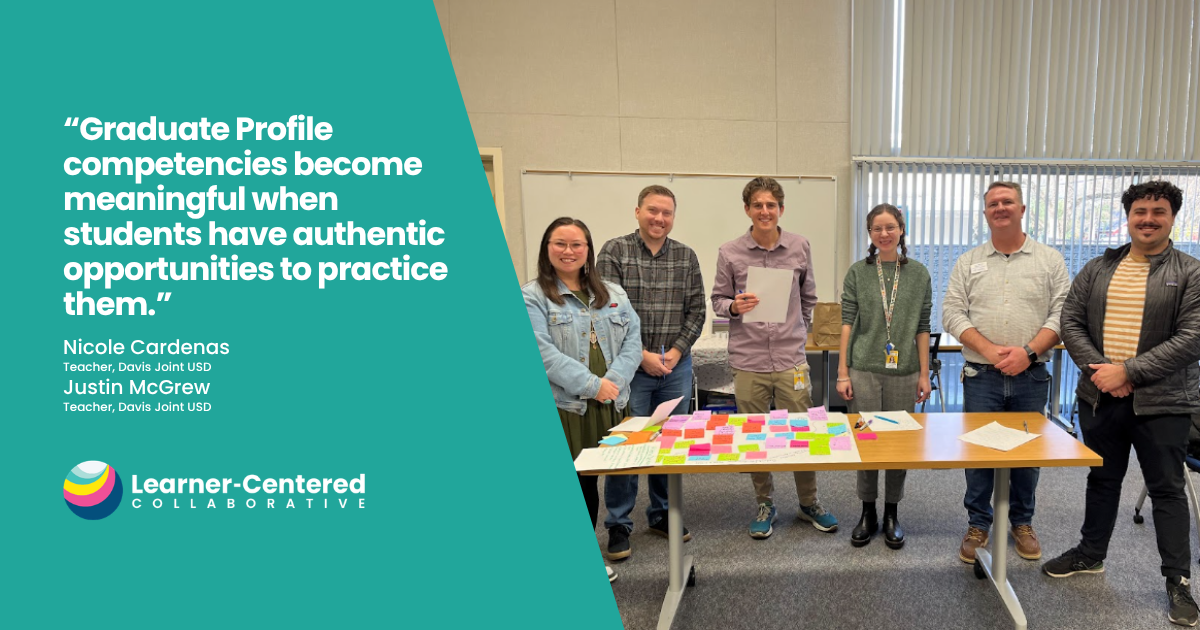
What does resilience look like when you’re a 6th grader? It might mean persisting when something feels difficult, navigating your first week away from home at science camp, or preparing for the uncertainty of starting middle school. These are experiences our students were already having. Our opportunity was to design learning experiences, wherever it was happening.
As 6th grade teachers, we weren’t simply being asked to use a new curriculum. We were invited to help build it, starting by making shared meaning around adaptability and resilience skills and then translating those skills into concrete experiences students could practice throughout the year.
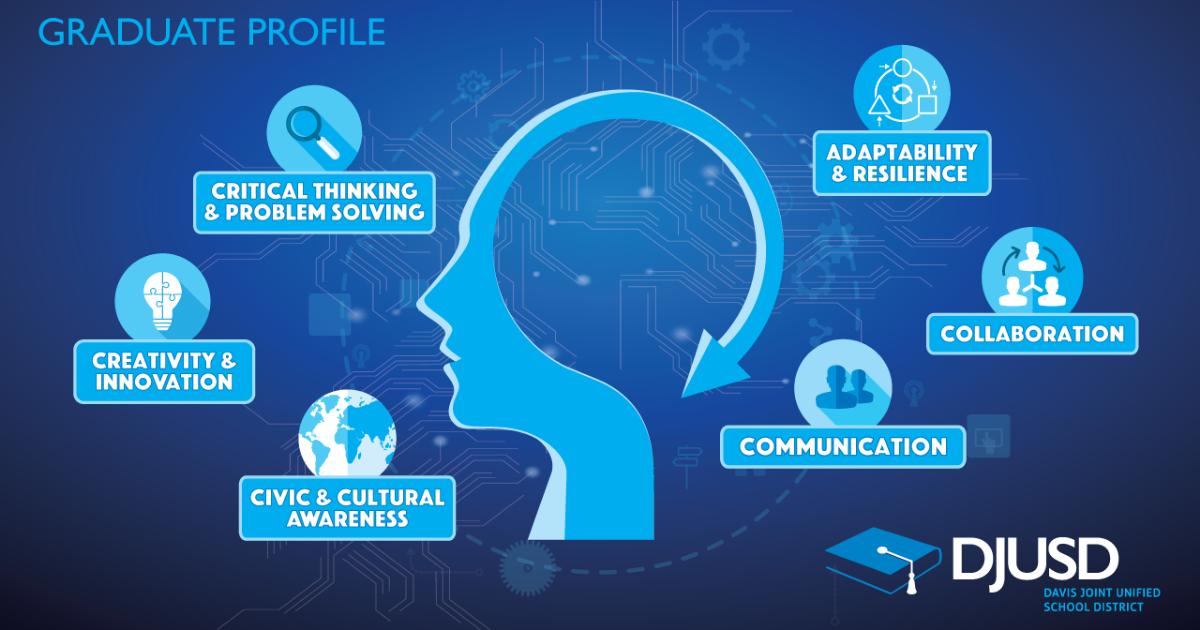
In Davis Joint Unified School District, our Graduate Profile identifies six outcomes we want students to develop throughout their time in our schools:
- Critical Thinking and Problem Solving
- Adaptability and Resilience
- Collaboration
- Creativity and Innovation
- Civic and Cultural Awareness
- Communication
Sixth grade is the final year of elementary school in our district, making adaptability and resilience especially relevant as students prepare for new expectations, responsibilities, relationships, and greater independence in middle school. But before we could design lessons around these skills, we needed to understand what they actually looked like for students at this age.
As a small group of 6th grade teachers, we began by unpacking the district’s definition of adaptability and resilience. We asked ourselves: What would we actually see and hear if a 6th grader were developing these skills?
Initially, we broke the competency into student-friendly objectives and considered how students might practice and demonstrate them through experiences that were already meaningful in their lives.
As we worked with Learner-Centered Collaborative and educators across grade levels, our thinking shifted. Rather than defining what each competency should look like at a specific grade level, we developed progressions that describe how these skills can deepen and become more sophisticated over time. The progressions helped us build shared meaning around the competencies while recognizing that students may be at different points in their development, regardless of grade level. This gave us a common language for recognizing growth while still allowing teachers to design experiences that are relevant to the learners in front of them.
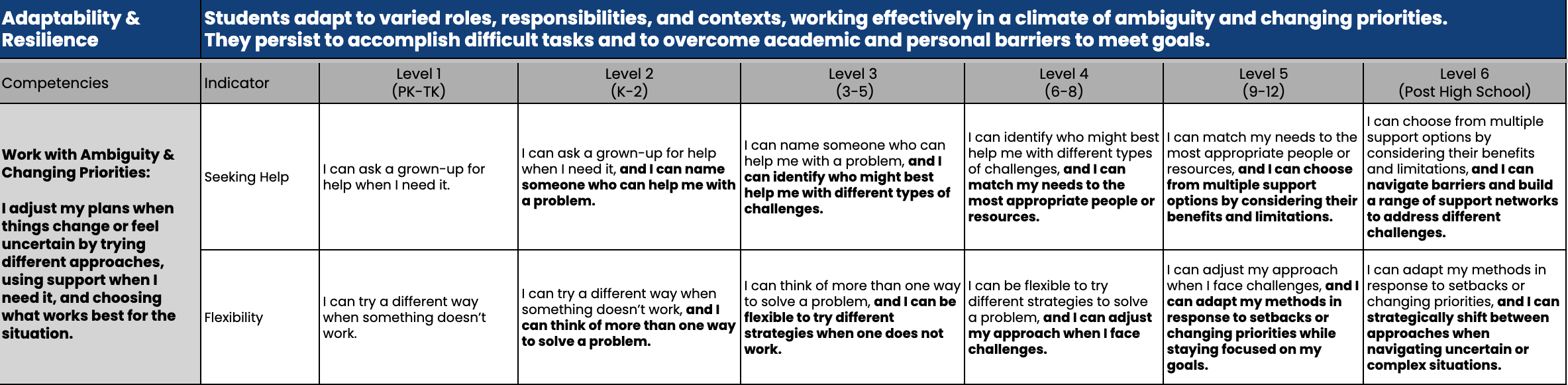
This developmental progression from DJUSD illustrates how adaptability and resilience can deepen over time, providing shared language for recognizing and supporting student growth.
Through this process, one idea became increasingly clear: Graduate Profile competencies become most powerful when teachers translate them into concrete, age-appropriate experiences students can practice in authentic contexts throughout the year.
With that goal in mind, we developed four learning experiences focused on these competencies: navigating roles and responsibilities, working through ambiguity and changing priorities, developing persistence, and setting and reflecting on goals. We wanted the lessons to be detailed enough that another teacher could use them with minimal preparation, while flexible enough to adapt to the students, curriculum, and routines already in their classroom.
What We Created
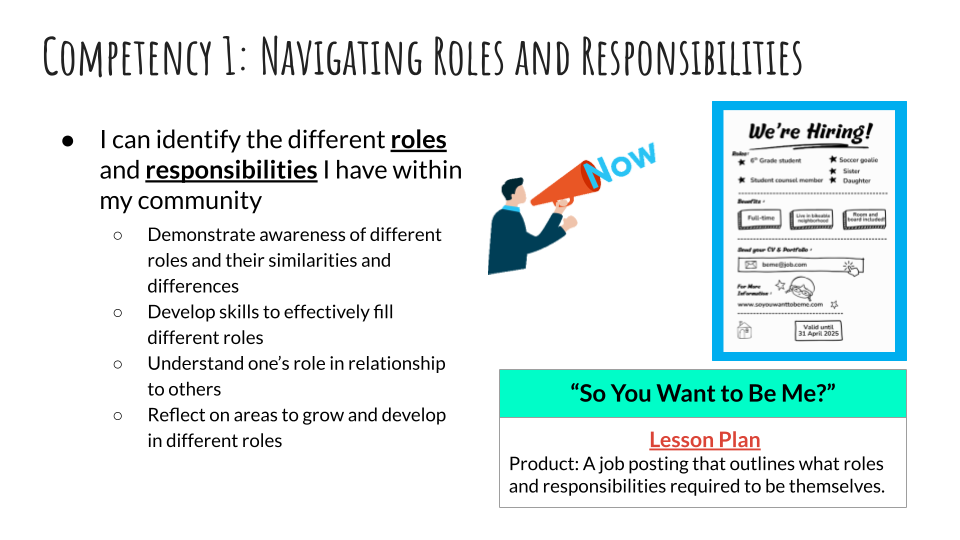
For the Navigating Roles and Responsibilities competency, the learning experience was called “So You Want to Be Me?” In this lesson, students identify the different roles they hold in their lives and the responsibilities connected to each one. A student who initially thinks, I’m just a kid, might recognize that being an older sibling comes with responsibilities like being a good role model and helping when needed.
By connecting roles and responsibilities to students’ actual lives, the lesson makes an abstract competency personal and developmentally relevant. As 6th graders, students begin thinking more deeply about their identities.
Teachers could adapt this activity by asking students to explore the roles they hold in their classroom, family, community, extracurricular activities, or other spaces that matter to them.
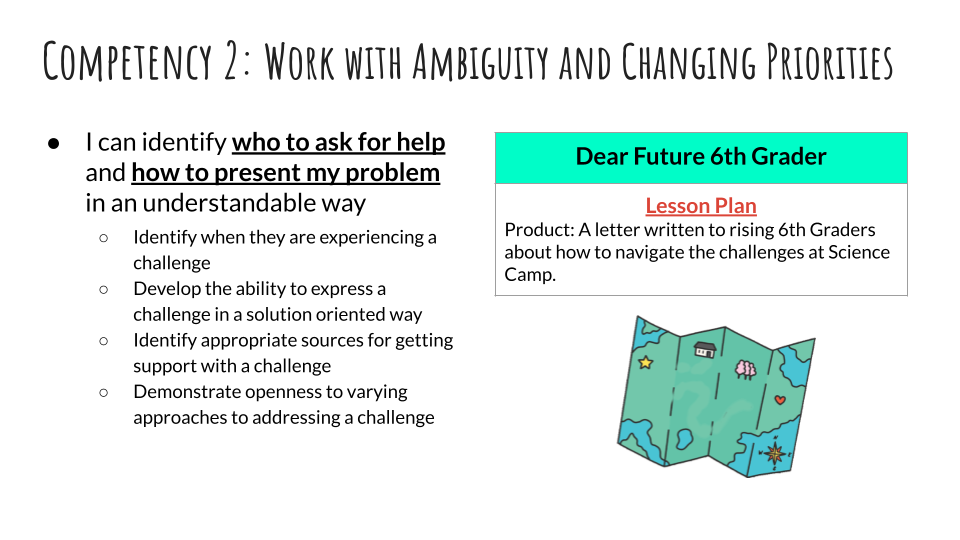
For the Working With Ambiguity and Changing Priorities competency, the learning experience was called “Dear Future 6th Grader.” All DJUSD 6th graders attend science camp, and for many, it is their first extended time away from home. Before the trip, students anticipate challenges they may encounter and identify strategies for navigating them, along with possible solutions to those challenges. After camp, they reflect on what actually happened and write letters offering advice to next year’s 6th graders.
This lesson gives students an authentic opportunity to practice adaptability in a situation that includes real uncertainty rather than learning about adaptability in isolation. Science camp happens to be that opportunity for our students, but teachers could apply the same approach to any experience that involves change or uncertainty like starting a new project, preparing for a performance, taking on a new responsibility, or transitioning to a new school.
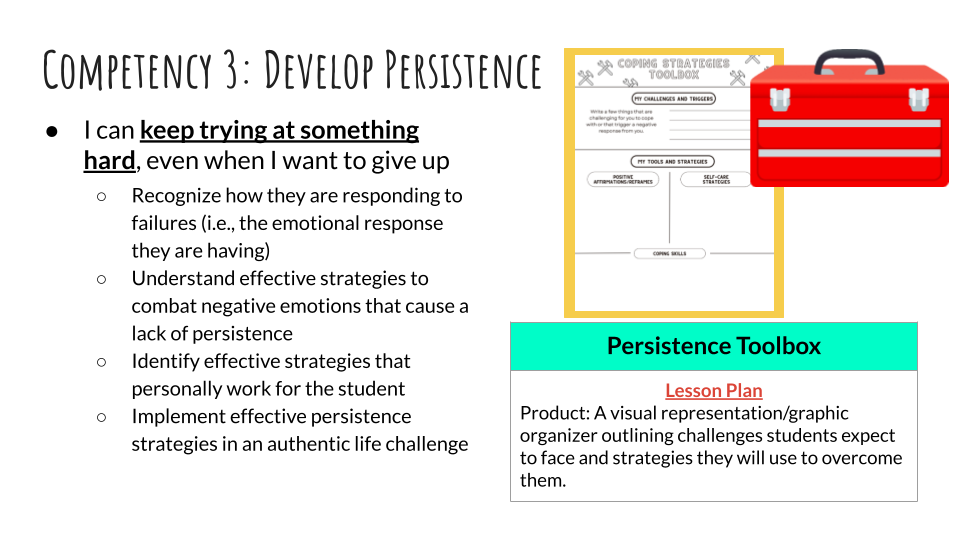
For the Develop Persistence competency, the learning experience was called “Persistence Toolbox.” Students reflect on situations that may challenge them as they transition to middle school, such as managing work across multiple classes or building new relationships. They develop social-emotional strategies that work for them and create a personalized “persistence toolkit,” a visual reminder they can keep somewhere accessible, like in a locker or planner.
Rather than telling students to simply “keep trying,” this lesson helps them identify specific strategies they can draw on when something feels difficult. Teachers could use the same idea before any experience that requires persistence, inviting students to build a toolbox of strategies they have practiced and know can help them move forward.
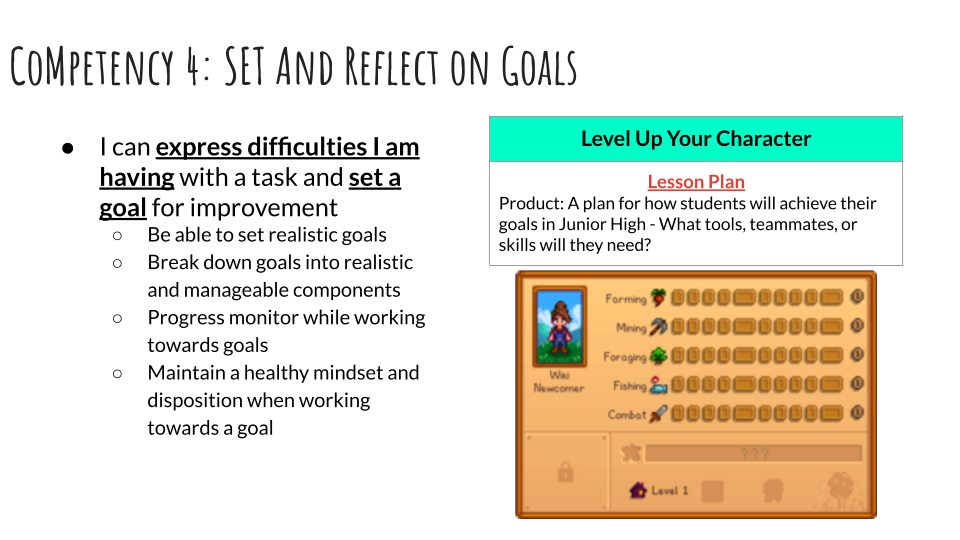
For the Setting and Reflecting on Goals competency, the learning experience was called “Level Up Your Character.” As students prepare for 7th grade, they create a video game-inspired “character sheet” identifying skills they want to strengthen, such as organization or communication. They then identify concrete actions that could help them “level up”. A student working on communication, for example, might set a goal of contributing to a class discussion.
The lesson makes goal-setting more concrete by connecting a larger goal to actions students can actually practice and track. The character-sheet format worked for our students, but the larger design principle can transfer to any classroom: start with a meaningful goal, help students identify specific actions within their control, and create opportunities to reflect on their growth.
We wanted these lessons to be ready for teachers to use with minimal preparation while remaining flexible enough to fit different students, routines, and curricula. More importantly, we wanted adaptability and resilience to be skills students practice through meaningful experiences, not simply concepts they learn about.
Impact on our Teaching
Developing and testing out these lessons throughout the school year changed how we approached adaptability and resilience in our classrooms. Having one Graduate Profile competency as our “north star” gave greater focus to practices we were already using, such as morning meetings and SEL lessons. It also gave a shared language, roles, responsibilities, persistence, coping strategies, and goal-setting that we could reinforce across different learning experiences.
The progressions also gave us a clearer way to recognize and reflect on the growth of our students. Rather than adaptability and resilience being abstract qualities we hoped students would develop, we could identify what growth might actually look like. Just as importantly, students could use that same language to set goals, reflect on their progress, and take greater ownership of their growth. The goal was to give students tools to recognize where they are, where they want to grow, and what they can do next.
We saw the potential of this approach during our pre-science camp reflection. Students identified what they thought would be challenging, shared their fears and excitement, and offered strategies to one another. At camp, we noticed that students seemed more prepared to navigate challenges and engage in the experience. This gave them an opportunity to anticipate, prepare for, and later reflect on an authentic challenge that helped make adaptability and resilience something they could actually practice.
What Others Can Learn
Our biggest takeaway is the Graduate Profile competencies become meaningful when students have authentic opportunities to practice them. The goal isn’t to add more to teachers’ plates, but to be more intentional about developing these skills through experiences students are already having.
For educators looking to do similar work, we recommend starting small:
- Choose one competency rather than trying to address everything.
- Unpack it into observable, student-friendly skills so teachers and students share an understanding of what growth looks like.
- Identify authentic moments when students already need and use these skills.
- Design opportunities to anticipate, practice, and reflect before, during, and after those experiences.
- Use common language across lessons and experiences so students can make connections.
- Collect evidence of growth and refine the learning experiences based on what you notice and what students share.
Most importantly, involve students in the process. When students understand the competencies, set their own goals, and reflect on their progress, they become active participants in their growth. That is what can move a Graduate Profile from an aspiration to something students experience and own every day.
Before Davis Joint USD could design these lessons, they needed a learner-centered vision, mission, and Portrait of a Learner as a foundation. Learner-Centered Collaborative supports both phases of this work and beyond. To learn more about how we might support your district do the same, reach out to our team here.