Making Learning Feel Real With Community Engagement in the Classroom
Written by Kim Landry, 3rd-Grade Teacher, Alamogordo Public Schools
We’ve all been there: you’re deep into a unit, the students are engaged, but there’s a lingering sense of “so what?” You want your students to see that what they learn at their desks actually breathes and moves in the real world.
One of the simplest ways to make learning feel real is by bringing the community into your classroom. While it might feel like “one more thing,” it’s actually a strategic way to maximize impact while minimizing logistical stress. Unlike off-campus experiences that require a dozen variables to align, inviting an expert in your classroom is a high-reward, low-complexity move. It instantly raises the stakes; when learners engage with real people doing real work, the “why” of the lesson becomes undeniable.
Real-World Impact: Two 3rd-Grade Stories
If you’ve been curious about what authentic learning actually looks like in practice, check out these 3rd-grade examples. They prove that when the community enters the classroom, the impact is real. From partnering with local leaders to teaming up with neighborhood organizations, these students aren’t just learning; they are becoming skilled communicators. In this blog, I will share two classroom examples and a few simple ways you can start connecting the community to your classroom.
Discover classroom examples of Authentic Learning strategies in action.
1. The Playground Architects
The Real World Challenge
One 3rd-grade class tackled a driving question about playgrounds: How can we design a playground that better serves our actual community? When these 3rd graders studied playground design, they didn’t just look at pictures; they became advocates. Every student took ownership by researching and writing formal proposals suggesting improvements for their local city park.
The Community Connection
To ground their ideas in reality, the Parks and Recreation Department visited the classroom. They shared the technical side of designing for a desert climate, like shade structures and heat-resistant materials, and gave feedback on the students’ initial concepts.
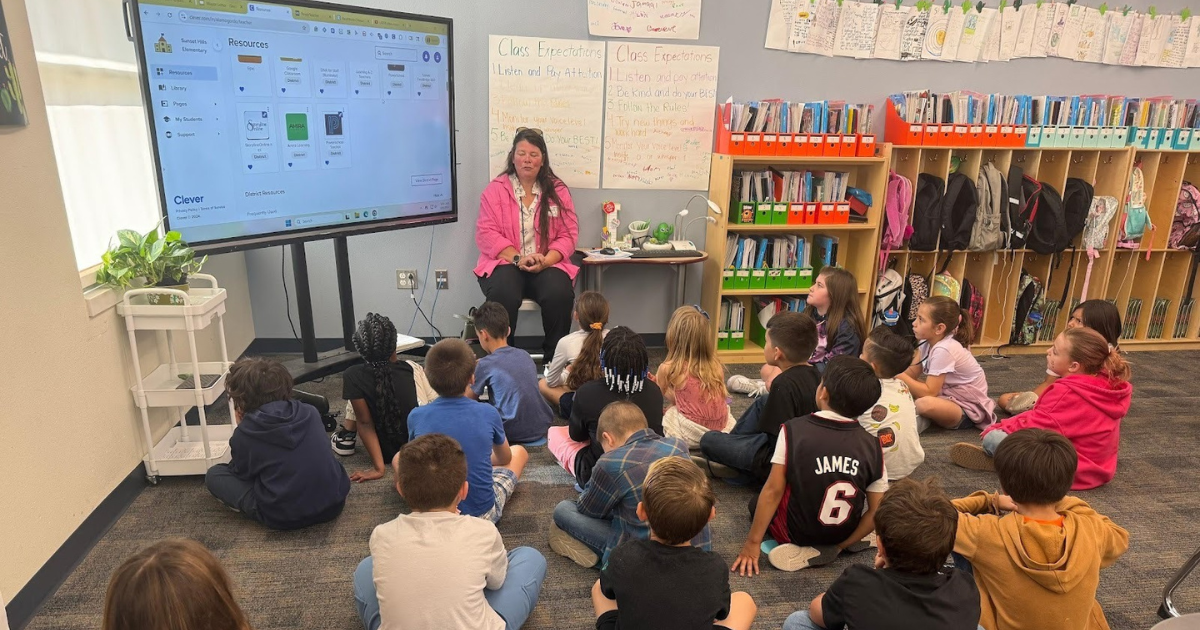
A staff member from the Parks and Recreation Department presents to Ms. Landry’s 3rd graders.
The Academic Learning
This wasn’t just an extracurricular; it was deep, core learning mapped to CCSS.ELA.Literacy.SL3.1.B. Students mastered this standard by following agreed-upon rules for discussion and building on the expert’s ideas. They acted as skilled communicators, learning how to adapt their message as they moved from brainstorming at classroom desks to presenting at a City Hall Podium.
The Impact
The result? Four students were invited by the Mayor to read their letters at a formal City Hall Commission Meeting. While students admitted to being nervous, they walked away feeling brave and realized their words have real power.
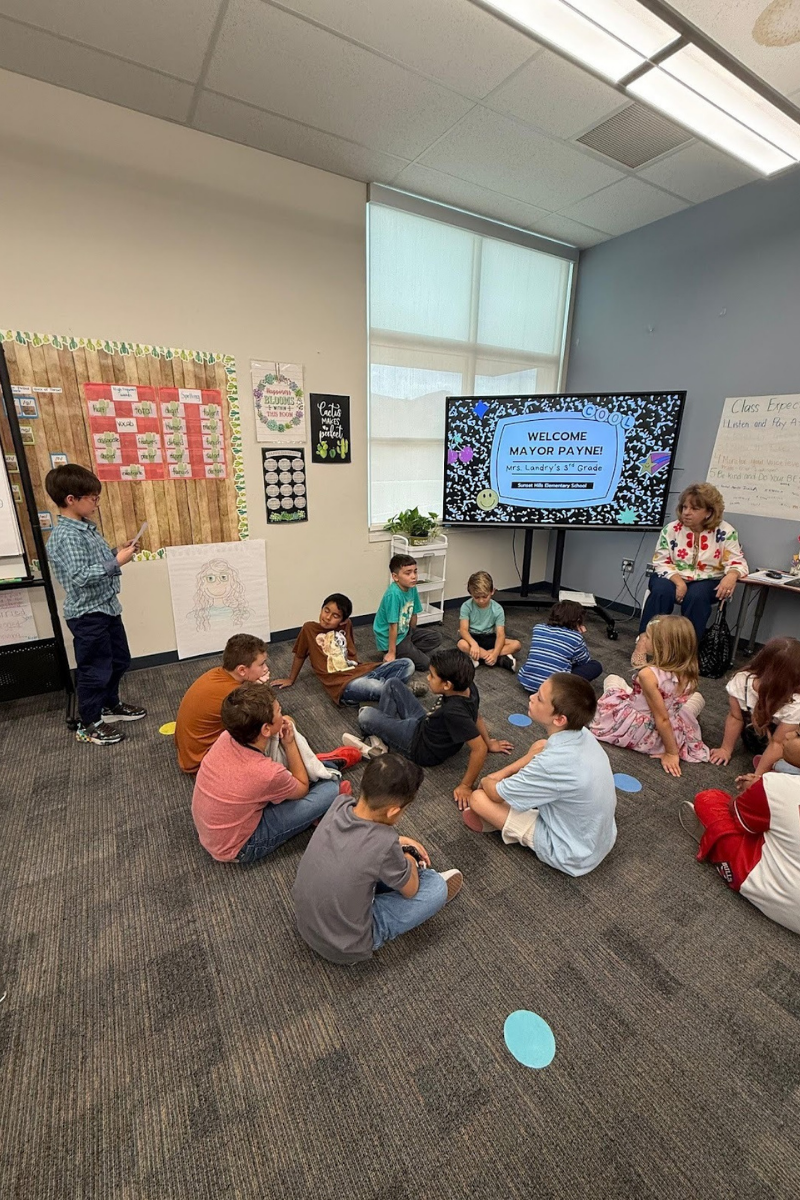
Ms. Landry’s 3rd-graders reading their letters to the Mayor.
The impact on families was just as profound. One mother shared:
“I had a very proud mommy moment where it was so exciting to see her take pride in her community and take the step to go up there and speak! All around, proud of her and just how wonderful Mayor Payne is with all the children! All around perfect moment!”
Another mother reflected on the lasting change in her child:
“Watching my once shy little lady come out of her shell and feel so empowered was one of my proudest moments. She gained so much confidence and got to see that her words really have meaning.”
2. The Great Wolf Debate
The Real World Challenge
While following the SAVVAS ELA curriculum regarding the reintroduction of grey wolves in Yellowstone, my students looked for a local connection through the Alamogordo Alemeda Park Zoo.
The Community Connection
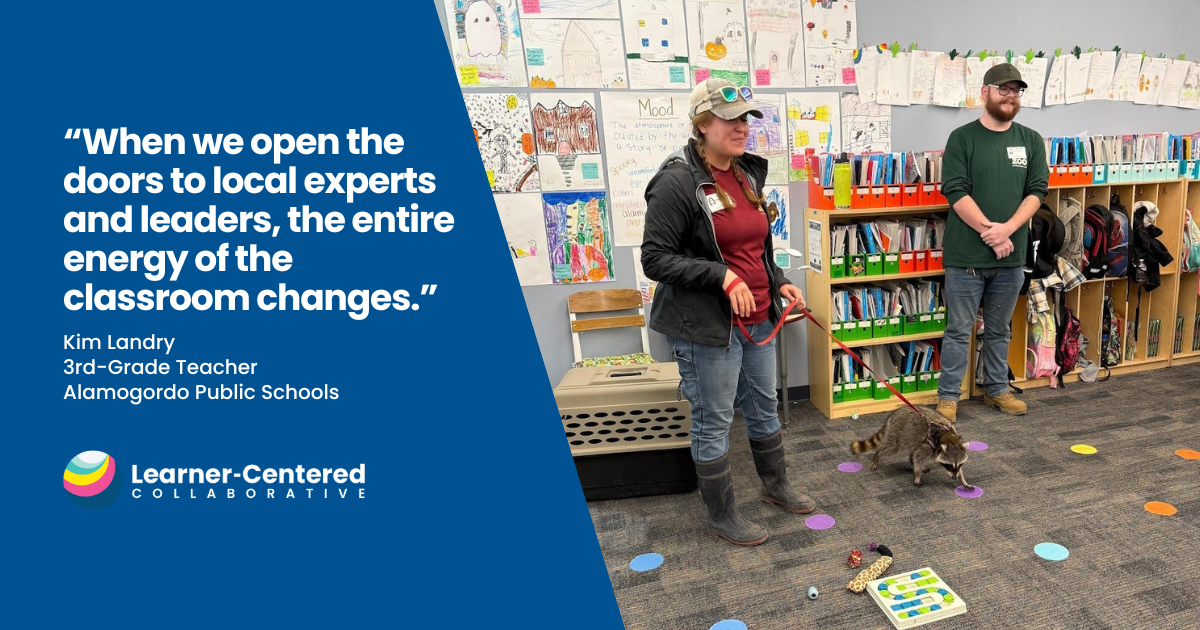
The zoo partnered with my third graders by bringing some of their animals to the classroom. The head of the zoo education department asked us what we had been learning about, and he shared a slideshow about how our local zoo is partnering with the Department of Agriculture to release the Mexican Gray Wolf in controlled areas within New Mexico.
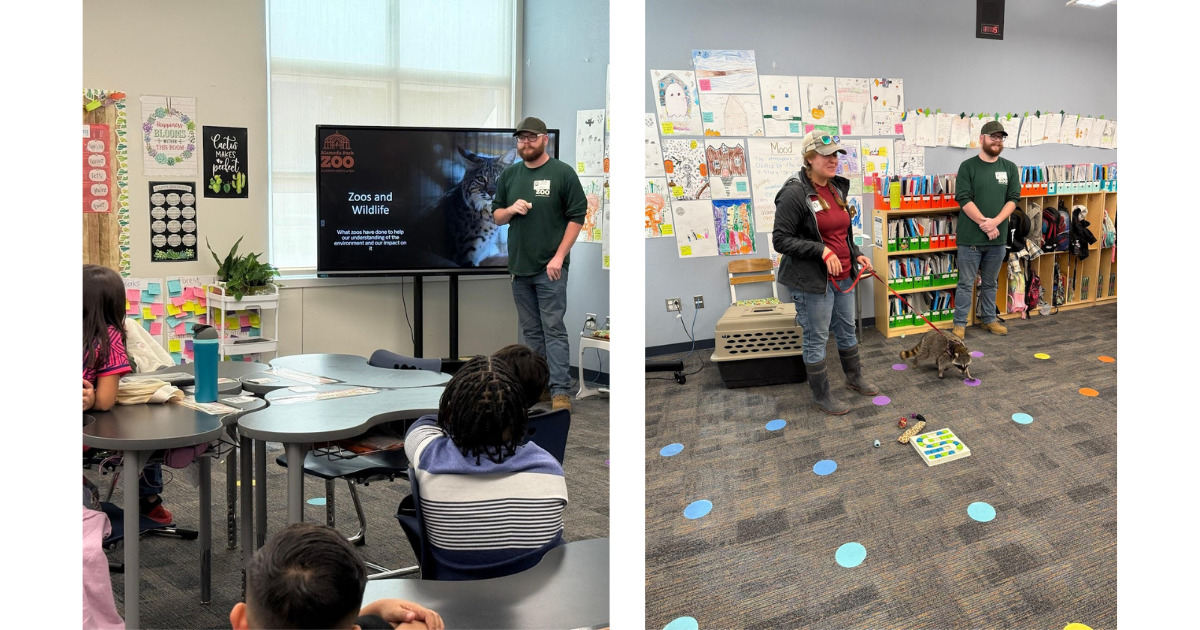
Staff members from the local zoo present to Ms. Landry’s 3rd-graders
The Result
Students didn’t just read about wolves in a far-off park; they also learned about the local wolf release program and the specific challenges faced in their own backyard. Students shared with the presenters what they had learned in our ELA Unit 2 about conservation and endangered species.
Kim Landry was a member of the Alamogordo Innovation Cohort, facilitated by Learner-Centered Collaborative. As part of that experience, she took the Authentic Learning Deep Dive Course. Here is what she shared about her experience:
“Participating in the Innovation Cohort shifted my perspective from delivering content to designing experiences. This course gave me the framework to invite the community into our learning process, making the curriculum feel alive and relevant for every student.”
Interested in bringing an Innovation Cohort to your school or district? Reach out to us here or check out our courses here.
Why Community Connection in the Classroom Works (and How to Do It)
Connecting with the community shifts the student’s role from consumer to contributor. When we open the doors to local experts and leaders, the entire energy of the classroom changes. It is no longer about completing a task for a grade; it’s about participating in a conversation that matters. Here is why that shift is so impactful.
- The audience becomes real: When students know a city official or a local business owner is actually going to hear their ideas, they stop writing for their teacher and start writing for the world.
- The stakes increase: Authentic connection rates a natural accountability. It’s one thing to miss a deadline on a worksheet; it’s another to not be ready when the parks and recreation department is standing in your classroom.
- Feedback is authentic: When a professional gives feedback, it isn’t seen as a grade. It is seen as expert advice to help a project succeed. This makes technical considerations like climate constraints or engineering limits suddenly interesting.
- Revision has a purpose: In a traditional setting, editing can feel like a chore. But when you are prepared to stand at a City Commission meeting, revision becomes a tool for clarity. Students want to be clear, persuasive, and accurate because they want to be heard.
- Impact beyond the gradebook: The ultimate why is that the work doesn’t end when the unit is over. As we saw with Playground architects, the impact endures in the community and in the confidence of the students long after the final grade is recorded.
Here is how you can start:
- Identify: Look at your next unit. Who in town does this for a living? This connects theory to a purpose.
- Reach Out: Send a short, “low-stakes” email. How can I frame this invitation so the professional feels their expertise is essential rather than just helpful? Most professionals are eager to give back to schools.
- Collaborate: Think beyond the guest speaker model. You might ask a partner to:
-
- Provide Professional Feedback: What specific industry standard or unwritten rule can this partner help my students see that I might have missed? Have them review student drafts or project prototypes.
- Facilitate an Experience: What is the one messy part of their job that students can experience through a simulation? Ask them to lead a hands-on lab or a simulation that mirrors their daily work.
- Co-Design a Challenge: What is a problem this professional actually faced this week that can be simplified into a classroom mission? Work together to create a real-world problem for students to solve.
- Celebrate: How can we showcase the student work so that the partner feels their time was a meaningful investment in the future of their industry? Share the results with building leaders and parents to build a culture of innovation.
A Note to My Fellow Educators
It’s okay to feel a little nervous about hitting “send” on that first email. But remember, the community is often just waiting for an invitation to be part of the magic happening in your room. By inviting the world in, you aren’t just teaching a lesson; you’re showing your students their voices matter.