When Educators Build Together, Learners Lead the Way: Lessons from the Pittsburgh–San Diego Educator Exchange
What happens when you ask educators from two different coasts to build something together, not from a curriculum guide, but from what learners actually want to know?
This year, 10 middle school educators from Allegheny County, PA and San Diego, CA found out. Through the Pittsburgh–San Diego Educator Exchange, facilitated by Learner-Centered Collaborative, they tested a simple belief: educators create what they experience. If we want learners to collaborate, take on real problems, and trust a process before they know the outcome, educators have to do it first.
What Learners Made
By the end of the year, learners across both regions were producing original work. In STEM class, learners created data-driven infographics exploring empathy and human behavior. Learners in humanities class recorded podcasts in which they interviewed peers, analyzed evidence, and made connections to history and literature. Listen to two examples: Podcast 1 and Podcast 2.

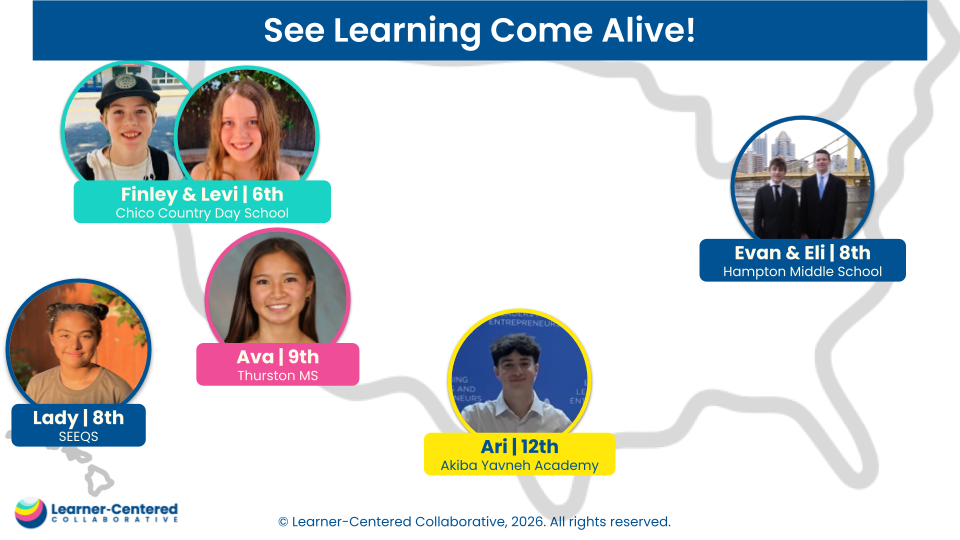
Examples of student work
Pittsburgh learners gave feedback on San Diego learners’ work and vice versa. Kids who had never met were in genuine dialogue with each other across content areas, zip codes, and experiences. None of that happened by accident. Here’s how the educators built it, starting months earlier and hundreds of miles apart.
It Started with Learner Voice
Before educators ever met in person, they did something that set the tone for everything that followed. Together, they designed and distributed a survey, not to each other, but to their learners. What are you curious about? What matters to you? What do you want to understand about the world?
Ready to discover the power of learner surveys? Reach out to our team to learn more about learner-centered survey design, distribution, and how to take meaningful action based on the results.
One hundred and thirty-seven learners across Pittsburgh and San Diego responded. Their answers shaped the unit’s essential questions, its themes, and its core purpose. That decision, to anchor the work in learner curiosity before a single lesson was planned, was made by the educators themselves. It wasn’t in the original design. It emerged because the educators were already thinking like learners.
Building Across Distance
The exchange brought educators together for a 1.5-day in-person convening in San Diego, including classroom visits at High Tech High. For several Pittsburgh educators, it was their first time visiting classrooms outside their own district and their first trip to the West Coast.
“Meeting in person is so important when working with a group,” reflected Lisa Harrison, a teacher from Vista Unified. “I walked away with so many resources.”
For Sheila Applegate of Avonworth School District, the cross-regional connection surfaced something deeper: “It was exceptionally valuable to talk about the shared experiences educators have across the country as well as the differences in our local cultures. We are one united country yet so beautifully diverse.”
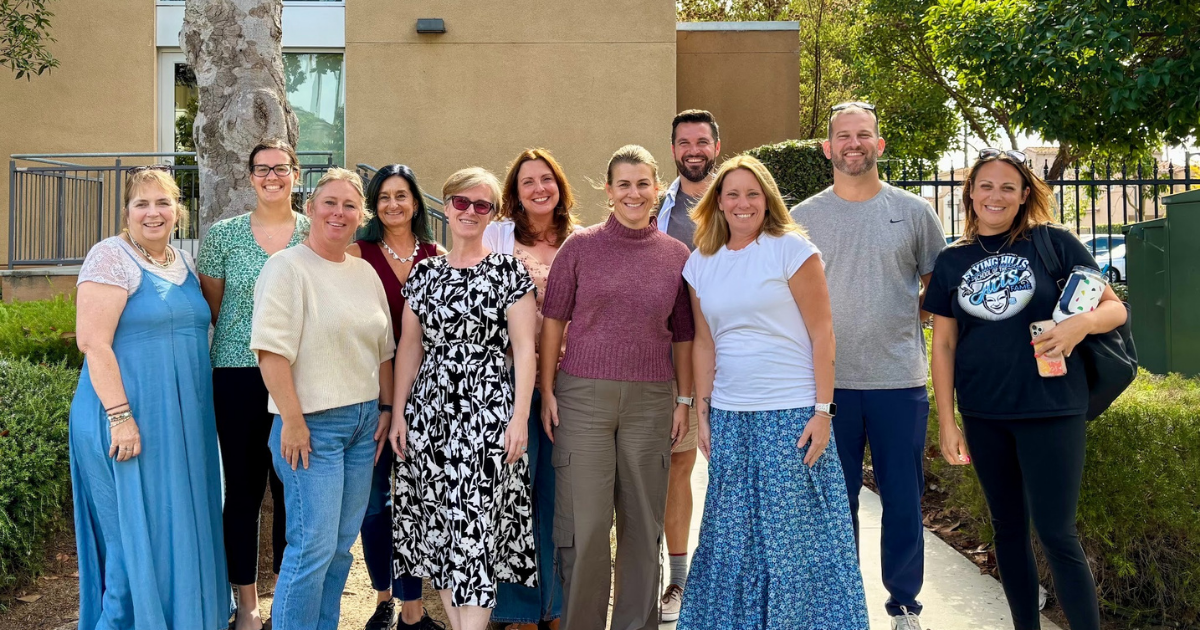
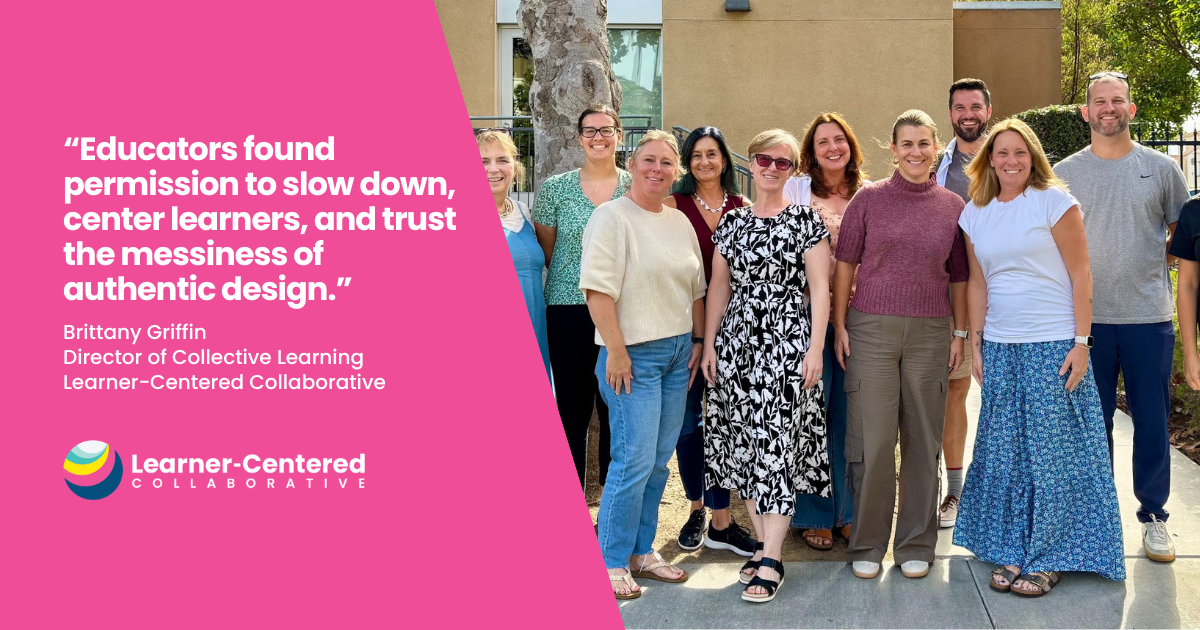
Pittsburgh-San Diego Educator Exchange Participants
What educators found wasn’t a polished model to replicate. It was permission to slow down, center learners, and trust the messiness of authentic design.
They left the convening aligned on a shared essential question: “What does it take to make change in the world, and what role can young people play?” From there, they built an interdisciplinary unit called “Experience My Experience,” focused on empathy, learner agency, and real-world problem-solving.
For Katie Libbon, an ELA and World of Work teacher at Avonworth, the experience rekindled something important: “It was nice to be in the world of PBL again. It was reinvigorating professionally.”
Dive into the 10 elements that make a quality project-based learning experience through our online course led by Dr. Katie Martin.
Educators Create What They Experience
The educators’ own experience was designed with the same intention they’d later bring to their students. During their 1.5 days at High Tech High in San Diego, they visited classrooms to see project-based learning and flexible structures in action, then used dedicated in-person time to plan together, imagining experiences that could stretch across two coasts.
From there, the group shifted to monthly virtual planning calls, staying connected and building on the momentum from their time together. Every part of it, in person and virtual, was built to maximize teacher collaboration and agency, not to deliver information.
The team named what success would look like before the work began, then checked their progress against it throughout the year, making edits and pivots when something wasn’t working. It’s the same experience they hoped to build for their learners: personalized to who was in the room, authentic in the real classrooms and real planning it required, competency-based in how progress was tracked against named goals instead of a fixed script, and grounded in a genuine community of practice from day one.
Are you hitting the four elements of a learner-centered experience with your lesson designs?
The Messy Middle Is the Work
There is no answer key for what happens when 10 educators with different content areas, district contexts, and levels of experience with project-based learning sit down to build something together from scratch.
It was hard work. Educators moved at different paces. Aligning on shared outcomes across STEM and Humanities took longer than planned. Some sessions required us to slow down entirely, name the uncertainty out loud, and celebrate the fact that the group was doing something genuinely difficult.
Weave together authentic, personalized, and competency-based learning with the Learning Experience Design Cycle.
Amy Williams, a Social Studies teacher from Elizabeth Forward, named it plainly: “I realize this is going to be a process and not something that is done in a day.”
That messiness wasn’t a failure of the design. It was the design working. Because what learners ultimately experienced, an interdisciplinary unit grounded in their own curiosity and assessed through podcasts and infographics they created themselves, was only possible because their educators had gone through something real together first.
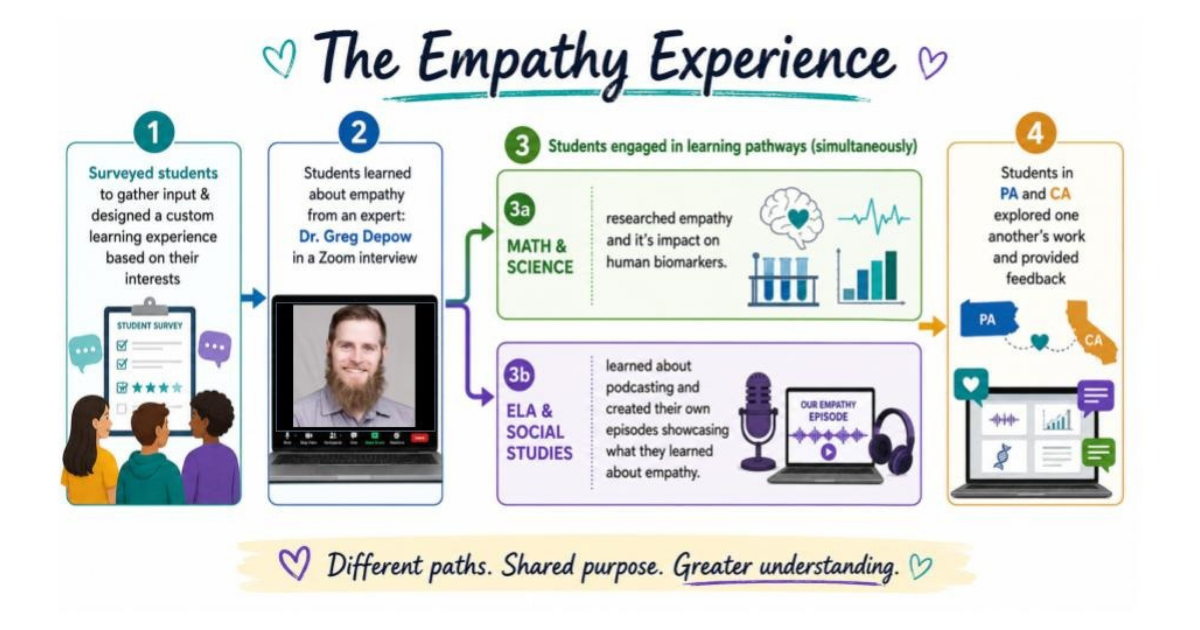
The step-by-step process of the empathy experience educators created with their learners
Why This Matters
It’s tempting to read this only as a story about kids across the country connecting with each other. That part matters, but underneath it is a different story: what happens when educators are trusted enough to design together, sit in ambiguity together, and build real community with colleagues they’d never met before this project?
The Pittsburgh–San Diego Educator Exchange worked because 10 educators were given real autonomy, peer support, and enough time to figure it out. What they built for their learners was only possible because of what they’d already built with each other.
We’re grateful to the Grable Foundation (Pittsburgh) and the Prebys Foundation (San Diego) for making this work possible, and to the 10 educators who showed up, stayed curious, and made something worth sharing.
Creating learner-centered experiences requires reimagining what professional learning looks like in your school or district. Learner-Centered Collaborative has supported this work in over 30 states across the country. Connect with our team to learn how we might support your learning community!