Physical Space Design
Overview
Physical spaces, when designed with intention, can enable the Learning Model to be fully embraced by a school, shaping the learning environment to align with the Portrait of a Learner. The guiding principle is that form drives function and that both influence and reflect a school’s culture. Thoughtful care for physical space demonstrates care for learners and fosters a sense of ownership and agency, especially when students participate in the design process. Well-designed spaces help meet the needs of all learners by creating the space and flexibility for more personalized, collaborative and community-based learning to happen.
Below are some examples of ways to utilize physical space for a learner-centered environment:
- Authentic Learning Zones: Dedicated areas for interdisciplinary projects and real-world problem-solving, such as maker spaces or collaborative labs.
- Fieldwork Integration: Environments that simulate real-world contexts, such as mock businesses, service-learning hubs or labs.
- Multi-Use Learning Spaces: Flexible spaces that can serve many purposes through rearranging furniture and allow for small learning communities (such as advisories) or other groups of learners to come together.
- Resource Centers: Hubs providing access to materials and technology that support competency-based and personalized learning.
- Flexible Seating & Configurations: Adaptable spaces, potentially with moveable walls, and flexible furniture that can be reconfigured to support independent learning, collaborative activities, 1:1 or small group learning and even allow classroom spaces to be combined for co-teaching.
- Quiet Zones & Reflection Areas: Designated spaces for focused work, self-reflection or even a calming space for self regulation.
- Outdoor Learning Spaces: Utilize outdoor areas for gardens, learning spaces and interactive brain break areas.
Bright Spots
Flexible, Multi-Use Rooms
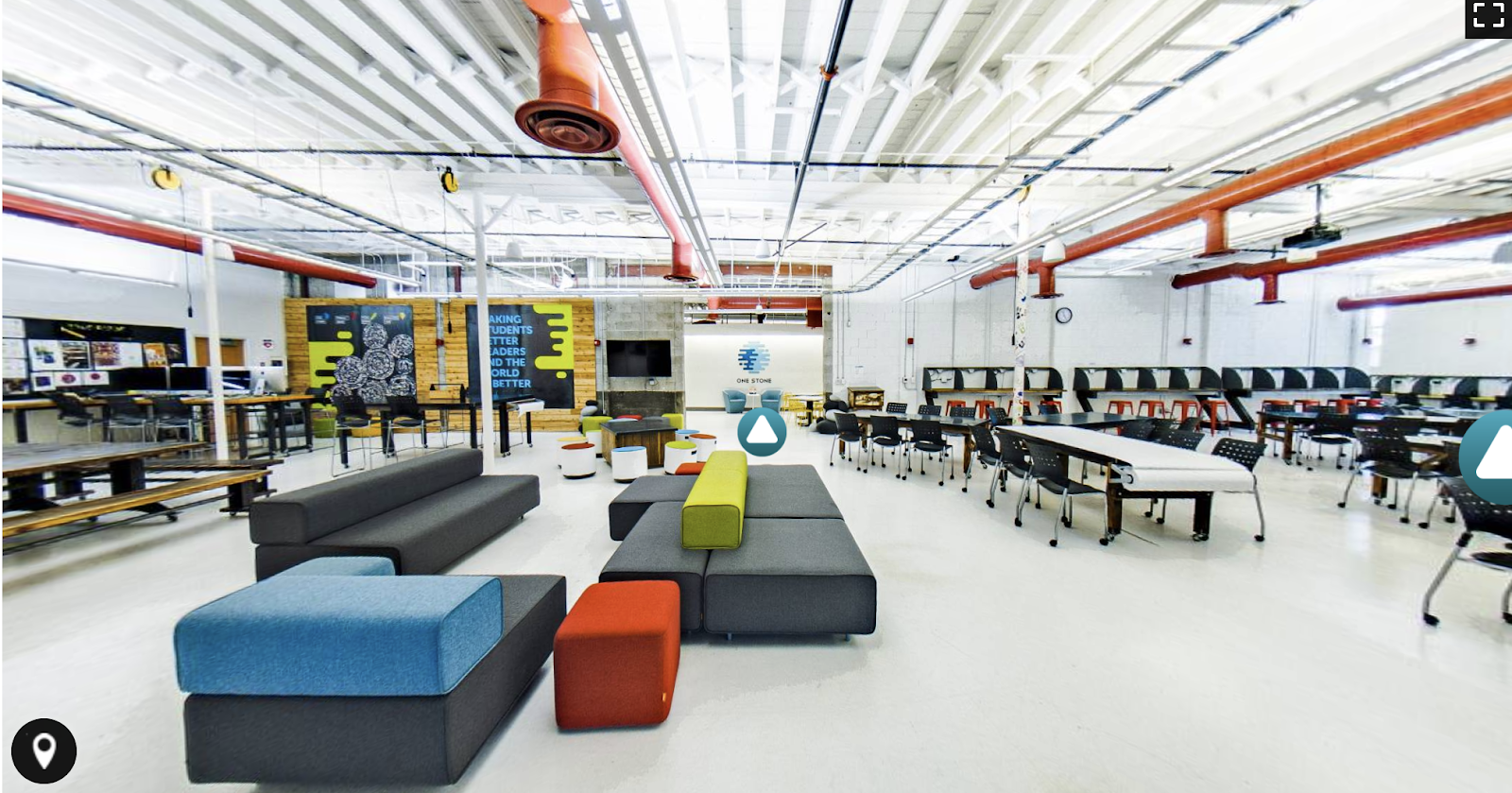
The Great Room at One Stone allows students to meet all together or in small groups, aligned to their self-directed, project-based learning model. See more in their interactive building tour here (scroll to the bottom of the page).
Indoor-Outdoor Learning Spaces
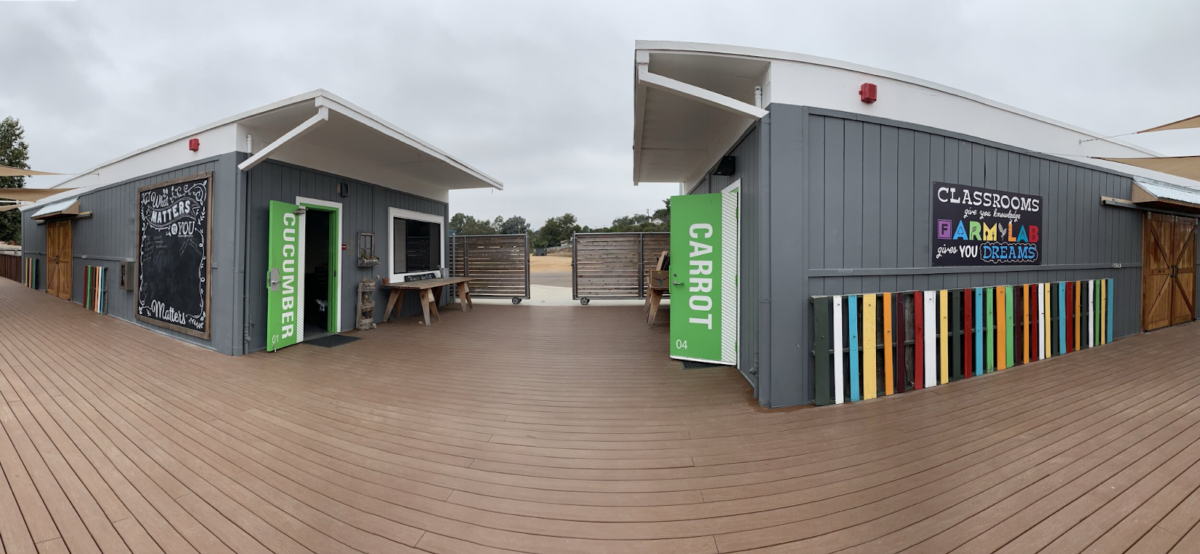
The Farm Lab at Encinitas Union School District serves as a hub for sustainability education, learner-driven agricultural projects, and community partnerships. Students engage in hands-on learning about food systems, ecology, and environmental stewardship, while local businesses and community members collaborate on projects that extend learning beyond the classroom. Read More.
Flexible Furniture
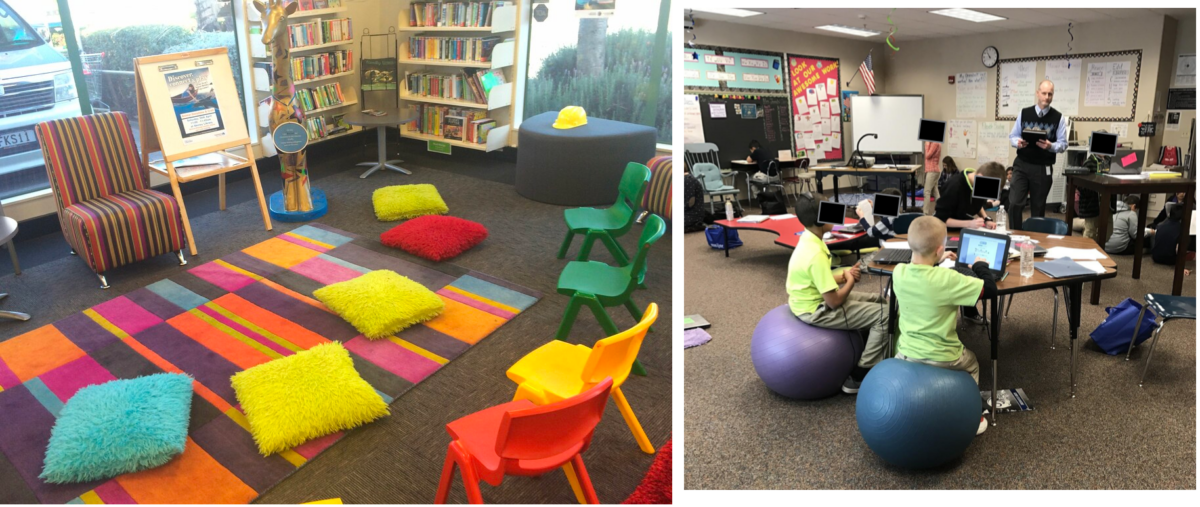
Providing different choices of spaces and furniture for learners to use throughout the day fosters learner agency and supports a community space. Involving learners in choosing the furniture and the layout of spaces can support a feeling of ownership in the space as well.
Large Community Spaces
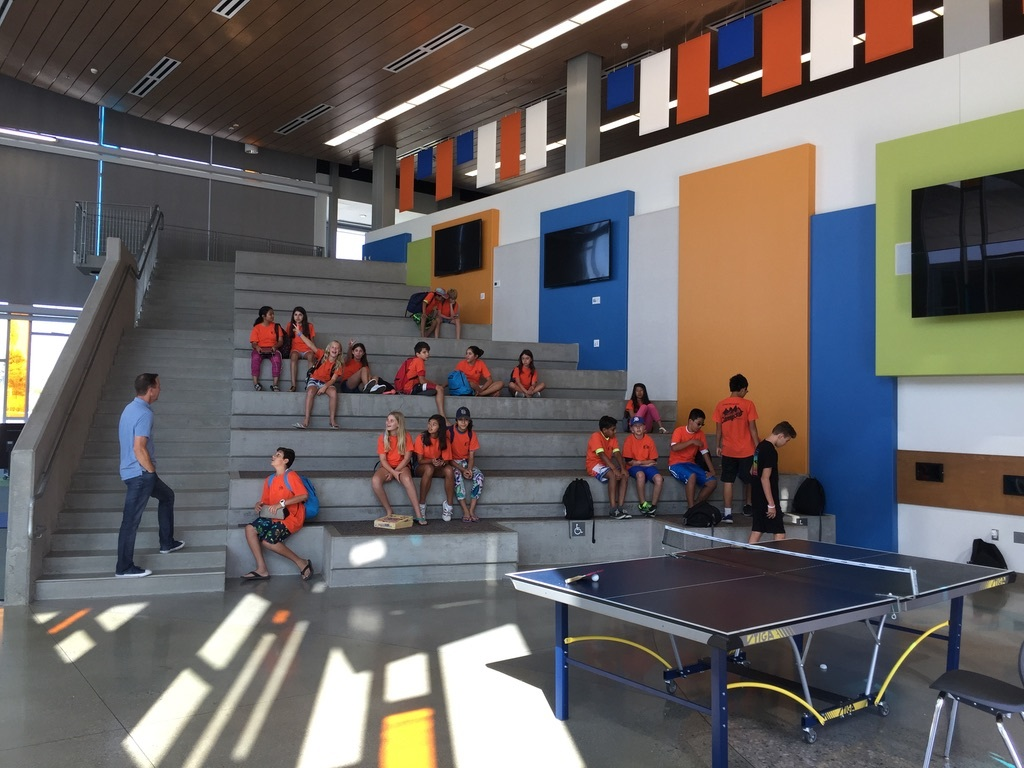
This auditorium space at Design 39 campus doubles as a group presentation space with tvs and screens and a fun hangout space with a ping pong table.
Outdoor Learning Spaces
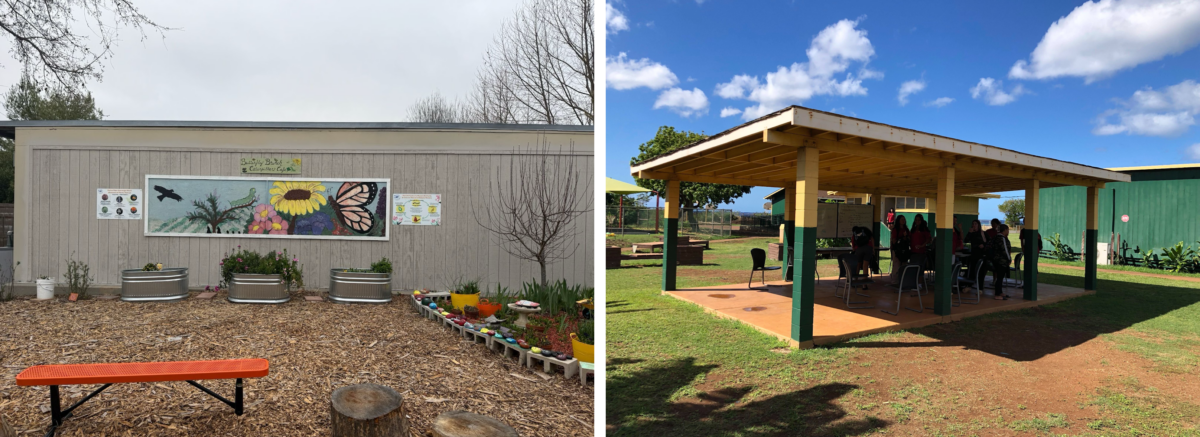
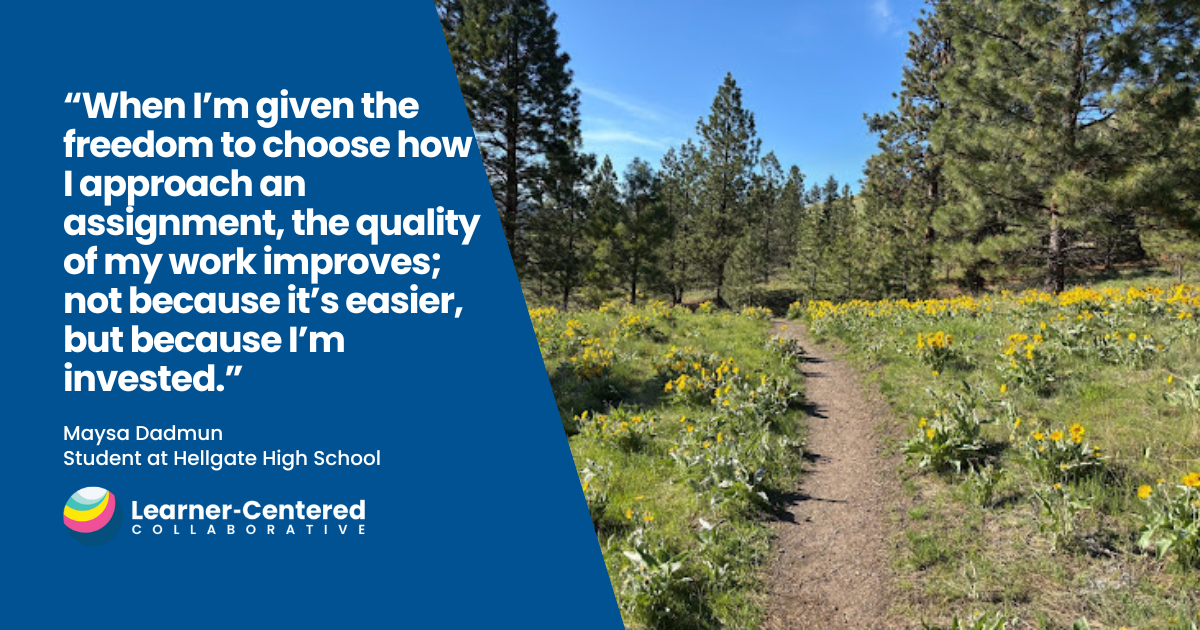
Outdoor learning spaces can include gardens, outdoor benches or even intentional structures that allow for outdoor-indoor learning, depending on the weather.
Different Zones for Different Activities
Source: ASU Next Generation Workforce
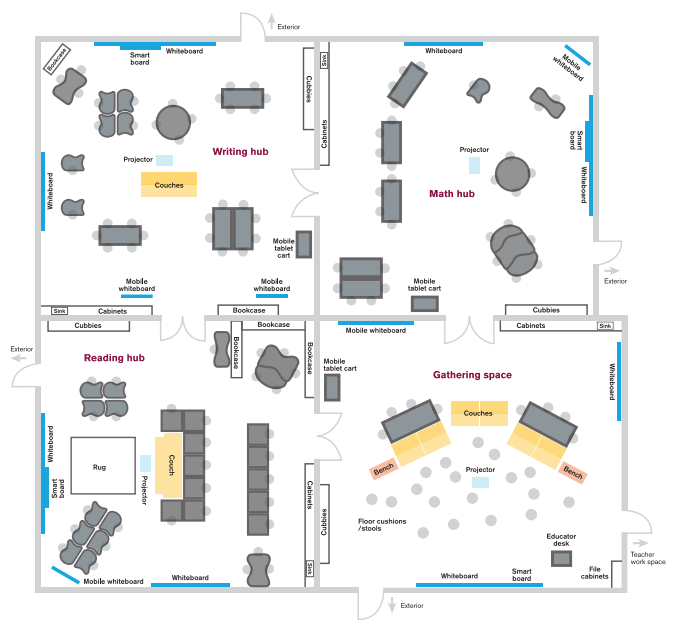
At Stevenson Elementary, the third grade team who shares a cohort of 75 students created different zones in different classroom spaces to support flexible learning spaces including large gathering zones.
Questions to Consider:
- In what ways do our physical spaces reflect our vision and support our learning model? What opportunities are there for us to improve that connection?
- How might learners be involved in the design and implementation of physical spaces?
- How are we incorporating considerations about physical space in our strategic and fiscal planning processes?
- How are we leveraging existing assets, such as outdoor spaces or underutilized rooms, to blur the lines between traditional classrooms and natural learning environments?